
Lieferung heute & morgen

Qualitätsgarantie

Willkommens-Angebote freischalten: KOSTENLOSE Lieferung | Bis zu 80 % RABATT | Kostenlose 30-Tage-JoyPlus-Testphase
App herunterladen
A dish drainer should hold wet dishes securely, catch the water and keep your worktop dry. In small British kitchens, every centimetre counts too. Families, on the other hand, need enough capacity for plates, glasses and cutlery. Many models look similar at first glance, but differences in size, material, drip tray and stability become clear with everyday use.
Claims such as ‘holds lots of plates’ don’t tell you much if the kitchen dish drainer is too wide or too deep for the space beside your sink. Before buying, measure the available area and take into account the distance from the tap, wall cupboards and wall.
A two-tier dish rack makes better use of vertical space, but needs enough clearance above it. A low, single-tier model may be more practical if your kitchen shelves are low.
A loose or undersized tray can overflow and send water onto the worktop. Look for:
A dish rack with a drip tray will only keep the surface dry if the tray and rack sit securely together and the tray is emptied regularly.
‘Metal’ doesn’t automatically mean corrosion-resistant. A stainless steel dish rack is generally easy to care for when it comes into regular contact with water. However, the thickness of the material, the finish on the edges and the quality of the coating also matter. Scratches can be a problem on painted steel if moisture remains on damaged areas.
Bamboo can be a natural alternative, but it needs more care: avoid standing water and surfaces that stay damp for long periods. Plastic parts are easy to clean, but should be securely attached to the rack.
Measure the space available in length, width and height. Then compare those measurements with the amount of washing-up you do each day. A model measuring around 39 × 33.5 cm may be enough for one person or a small household. Families often benefit from a larger or two-tier design.
Bear in mind that manufacturers may describe capacity in different ways. For example, a model might hold plates, glasses and cutlery at the same time, even if its maximum plate capacity is listed separately. The shape of your plates matters too: deep plates take up more room than flat dinner plates.
A good dish rack should stand securely on a level surface. Useful features include:
If you’re considering a foldable dish rack, check that it will actually fit in a cupboard or drawer when folded. When in use, the folding mechanism should be fully locked into place.
A dish drainer regularly comes into contact with water and food residue, so the tray and cutlery basket should be easy to remove. Clean the rack with a damp cloth and mild detergent, unless the manufacturer recommends otherwise. Empty the tray regularly to reduce limescale and unpleasant smells.
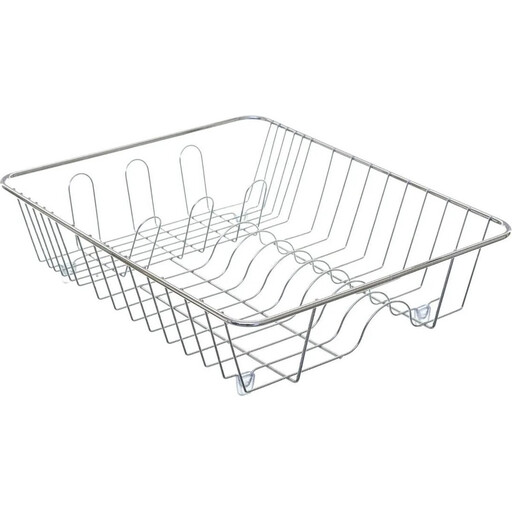
Why it suits this profile: Its compact size makes it a good fit for smaller worktops and kitchens, or for taking camping. It also has an integrated cutlery basket.
Its low profile helps it fit beneath wall cupboards. The raised edge is designed to catch draining water.
Steel and ABS plastic construction, a cutlery basket and a product weight of 610 g.
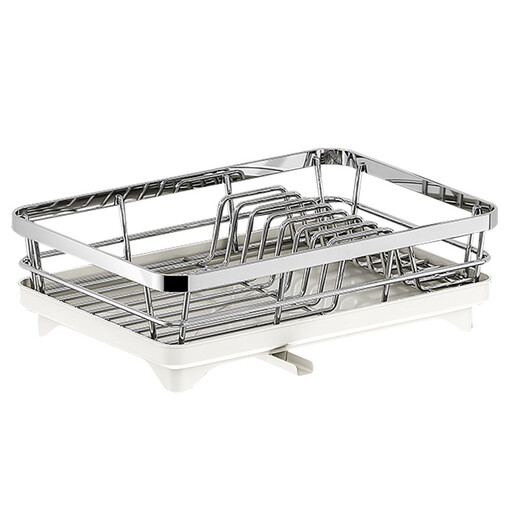
Why it suits this profile: The stainless steel rack, PP tray and drainage system are designed for regular use on the kitchen worktop.
The integrated PP drip tray catches water beneath the rack. A swivelling spout helps direct it where you want it to go.
Stainless steel and PP construction, measuring 42 × 29 × 12.7 cm, with integrated drainage and no permanent installation required.
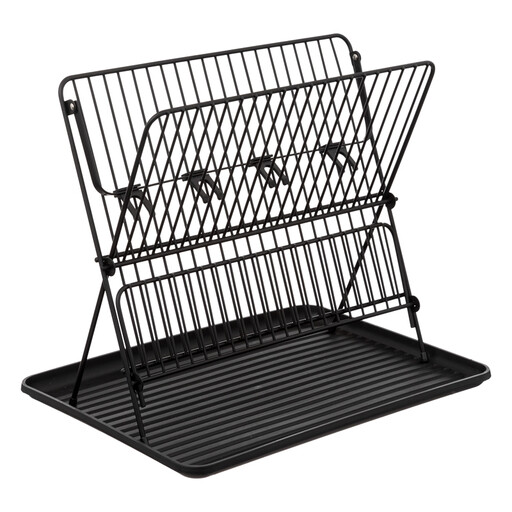
Why it suits this profile: The two-tier design makes good use of vertical space and folds flat for storage. That also makes it a flexible choice for the kitchen or camping.
Its foldable design means the rack doesn’t have to take up worktop space all the time. The removable tray makes emptying and cleaning easier.
Two tiers, steel and PP components, and a removable drip tray for dishes and larger cooking utensils.
We’ve put together a comprehensive, regularly updated list of products that meet these strict selection criteria and the applicable EU safety regulations.
The right size depends on the space available and how much washing-up you do each day. Measure the clear area beside the sink and leave extra room to remove the drip tray. A space-saving dish drainer or foldable model makes sense in a small kitchen. For larger households, a two-tier rack can provide more usable space without taking up much more room on the worktop.
Empty the drip tray regularly and wipe away any remaining water. Clean the rack, tray and cutlery basket with a suitable mild detergent. Dry bamboo models thoroughly after cleaning and avoid leaving them in contact with standing water for long periods. Always follow the care instructions from the manufacturer.
Stainless steel is resistant to moisture and can usually be cleaned with a damp cloth. Plastic trays are lightweight and can catch water effectively. However, everyday practicality depends on more than just the material: the finish, stability, size of the drip tray and ease of cleaning each part thoroughly all matter too.