
Lieferung heute & morgen

Qualitätsgarantie

Willkommens-Angebote freischalten: KOSTENLOSE Lieferung | Bis zu 80 % RABATT | Kostenlose 30-Tage-JoyPlus-Testphase
App herunterladen
A dish drainer should hold wet dishes securely, direct water away neatly and keep your worktop tidy. Whether you have a small kitchen, live alone, have a family kitchen or are camping, it also needs to suit the space available and the amount of washing-up you actually have. However, not every model lives up to what its product images and marketing claims suggest.
A two-tier kitchen dish drainer can look compact in photos. What really matters, though, is its length, width and height when assembled. Before you buy, check:
A model measuring 50 cm long may already be too wide for a small worktop. Compact or folding versions are often more practical in a cramped kitchen.
A tray is only useful if it’s large enough, sits securely and can be emptied regularly. Otherwise, water can collect beneath the dish rack, potentially leaving limescale marks or damp patches on the worktop. Look for a raised edge, a removable tray and gaps that are easy to reach.
Claims such as ‘holds 17 plates’ usually refer to a particular plate size and an evenly arranged load. Large bowls, cups, glasses and pans take up more room. Weight distribution matters too: heavy pots shouldn’t automatically go on the top tier. A dish drainer should sit on a level surface and shouldn’t be overloaded.
Measure the available space, allowing for handles, pull-out drawers and the tap. A two-tier dish rack makes use of vertical space, but needs enough clearance above it. For cupboards or drawers, a pot and pan organiser or a low plate rack may be a better fit.
Folding models are useful if you want to put your dish drainer away after washing up. Check that the joints feel sturdy and that the folded model will actually fit in the cupboard you have in mind.
Dish racks are commonly made from steel, stainless steel or coated metal. Stainless steel stands up well to moisture, while coated steel should be protected from scratches and rust. Plastic parts, such as cutlery holders and drip trays, can usually be wiped clean with a damp cloth.
Follow the care instructions for the model you choose. Don’t put a rack in the dishwasher unless it’s designed for dishwasher cleaning. Regularly cleaning the drip tray and thoroughly drying hard-to-reach areas can help reduce build-up.
Non-slip feet, a steady base and well-positioned holders matter more than maximum capacity. For a kitchen pot stand or pan organiser, also check whether the dividers are adjustable and whether there’s enough room for your pan handles.
If the manufacturer doesn’t state a maximum load, take care to distribute items evenly and avoid overloading the rack. Heavy cookware should go on a lower tier or directly onto a sturdy shelf wherever possible.
The models below cater to a range of needs, from compact starter options and folding designs to storage for pots and pans.
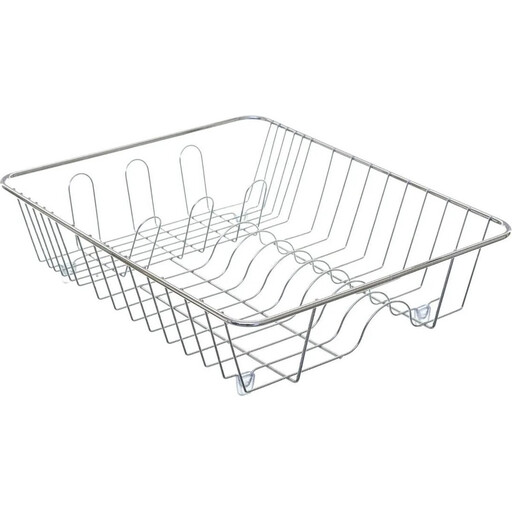
Why it suits this type of buyer: This compact rack holds up to 10 plates and comes with a cutlery holder. At 39 cm long and 33.5 cm wide, it’s a good fit for smaller worktops and for taking camping.
Its manageable overall dimensions make it easier to plan where it will go. The raised edge is designed to help contain draining water.
Steel and ABS construction, a cutlery holder and a product weight of 610 g.
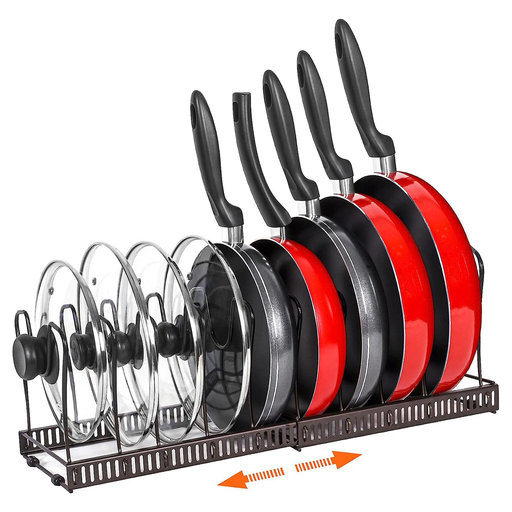
Why it suits this type of buyer: These two pull-out organisers have adjustable dividers and can be used in a cupboard, pantry or on a worktop. They keep pot lids, chopping boards and baking trays upright and organised.
According to the product details, the extendable frame adjusts to lengths of 12 to 23 inches. Rubber feet are designed to help prevent slipping and reduce contact with the surface.
304 stainless steel frame, 10 adjustable dividers per organiser and tool-free adjustment.
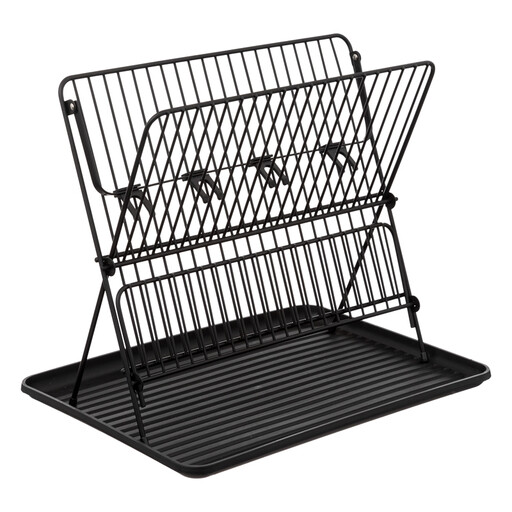
Why it suits this type of buyer: This folding dish drainer has two tiers and folds flat for storage when not in use. It’s designed to hold dishes, cups and larger cookware.
The removable drip tray can be emptied and cleaned regularly. A guard rail on the top tier helps keep dishes in position.
Two tiers, a folding design, steel and PP materials, plus a separate shelf for larger pots and pans.
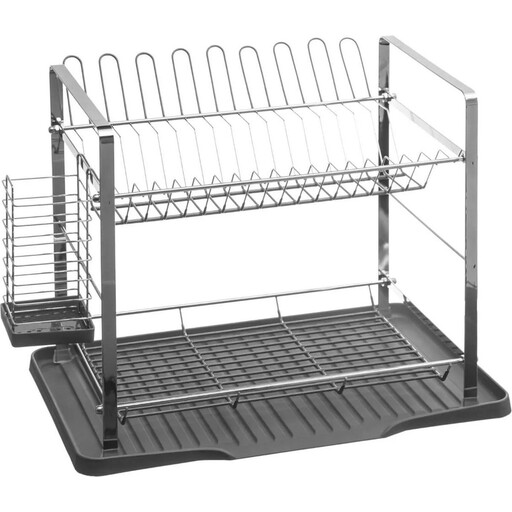
Why it suits this type of buyer: This larger, two-tier design is made for households with plenty of washing-up and, according to the product details, holds up to 17 plates.
The dimensions are clearly listed. A removable cutlery holder, drip tray and non-slip feet make it well suited to everyday use.
Two tiers, space for up to 17 plates, a removable cutlery holder and a stated product weight of 1.64 kg.
We’ve put together a complete, regularly updated list of products that meet these strict selection criteria and fully comply with the safety regulations in force in the EU.
For products with assembly or adjustable parts, make sure all dividers and tiers are fitted correctly. Products sold in Germany and the EU are covered by the relevant statutory consumer rights. Some products are listed as having a statutory warranty of at least two years.
It depends on the worktop space available and how much washing-up you do each day. Compact models up to around 40 cm long are often enough for one person or a small kitchen. Families should also allow room for bowls, pots and cutlery. Measure the space before you buy, and don’t forget to check the height.
A two-tier dish rack can be stable when loaded correctly. Non-slip feet, a sturdy frame and an even weight distribution are all important. Don’t put heavy pans or pots on a high, narrow tier unless the manufacturer says it’s suitable.
Its lifespan depends on the materials, load, moisture and how well it’s cared for. Regularly emptying the tray, avoiding overloading and following the manufacturer’s cleaning instructions can help keep it in good condition. Damaged coatings, loose joints or unstable feet are signs that you should check or replace the product.