
Lieferung heute & morgen

Qualitätsgarantie

Willkommens-Angebote freischalten: KOSTENLOSE Lieferung | Bis zu 80 % RABATT | Kostenlose 30-Tage-JoyPlus-Testphase
App herunterladen
A dish drainer should reliably hold plates, cups and cutlery after washing up, without permanently taking over your kitchen. In small flats, shared homes or family households, it quickly becomes clear whether a dish rack really suits the washing-up area. A drip tray that is too short, unstable tiers or delicate materials can significantly limit its practical usefulness.
A compact dish rack may take up very little space on the worktop, but it might only have room for a few plates. Conversely, a 2-tier dish drainer may hold a lot, but be too tall to fit beneath wall units. Before buying, you should therefore measure the available length, width and height beside the sink.
It is also important to check whether cupboard doors, windows or taps can still be opened. For particularly small worktops, a dish rack for the sink with extendable side sections may be more practical than a freestanding model.
A dish drainer with a drip tray only protects the worktop from water reliably if the tray is large enough and easy to empty. With some designs, water collects in the corners. This encourages limescale deposits and increases the cleaning effort.
Look for a removable tray, an easily accessible drainage opening or an outlet directed towards the sink. If the model does not have a drip tray, the rack should stand directly over the sink and have a secure base.
A stainless steel dish rack is not automatically resistant to every environment. Water, salt and cleaning-product residues should be removed regularly. With bamboo, prolonged soaking should be avoided, as the material may warp or become discoloured. Plastic is usually easy to clean, but you should check that the supports are sufficiently sturdy and that the rack stands securely.
Load capacity also deserves attention: a statement such as “large capacity” is no substitute for specific information about dimensions, the number of plates or the maximum load.
Measure the space beside or above the sink, including the tap. A freestanding kitchen dish drainer should remain accessible from all sides so that water can drain away and you can remove crockery safely.
A plate rack with clearly separated grooves prevents plates from touching one another. Side holders or sufficient space between the supports are helpful for cups. A separate cutlery holder should be positioned so that water can drain away and sharp knives can be placed safely.
The “up to 17 plates” specification for the 5five 2-Tier Dish Drainer refers to the intended plate capacity. You should also check how much room remains for bowls, glasses and cookware.
A drip tray should be emptied regularly and cleaned with a mild detergent. This also applies to plastic parts. For wooden or bamboo elements, only a damp cloth followed by thorough drying is recommended. Do not assume that a product is dishwasher-safe: the 5five Dish Drain Rack with Tray, for example, is stated to be unsuitable for dishwasher use.
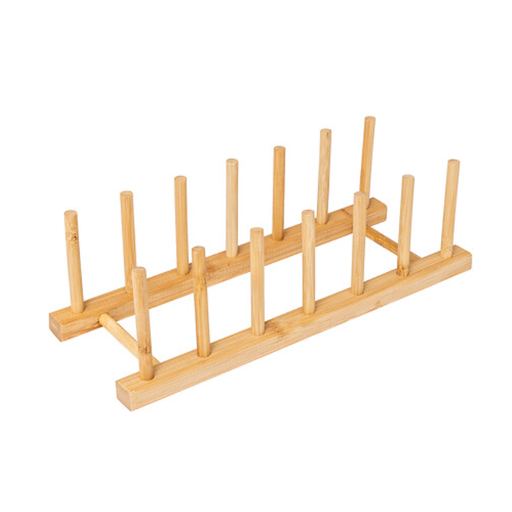
Why this product suits the profile: The compact bamboo rack measures 11,5 × 30 × 9,5 cm and is designed to hold up to six plates or similar crockery. It is suitable for single-person households, small kitchens or creating extra order inside a cupboard.
The specific dimensions and recommended capacity make the rack’s limitations clear. Bamboo should not be soaked, overloaded or placed next to heat sources.
Compact dimensions; low product weight of 0,185 kg; six separate plate slots.
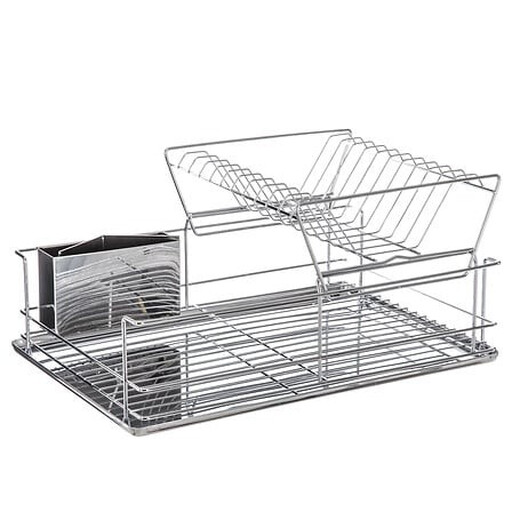
Why this product suits the profile: The two-tier design makes use of vertical space and, at 47 × 32,3 × 22,5 cm, is designed for larger households. According to the product description, it can hold up to ten plates and twelve cups.
The specified combination of corrosion-resistant steel and stainless steel is suited to damp environments. The open design supports air circulation and water drainage.
Two tiers; specific capacity information; silver-coloured stainless steel and steel construction.
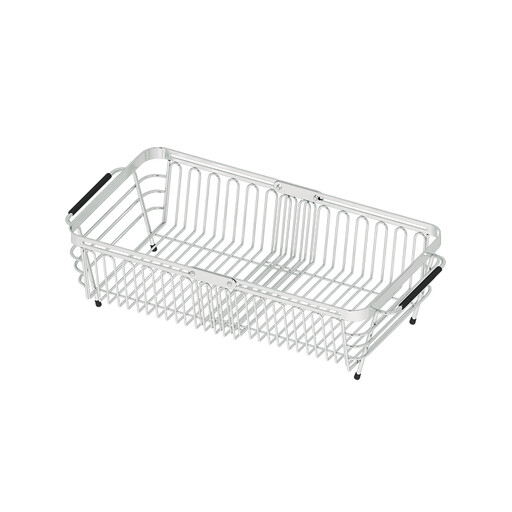
Why this product suits the profile: This extendable 304 stainless steel model can be adjusted from 29 to 44 cm and is used over the sink. It is ideal for households that want to keep their worktop clear while dishes dry.
Water drains directly into the sink. Before loading it, check that the extended length rests securely on the edges of the sink and cannot slip.
Adjustable length of 29–44 cm; 304 stainless steel according to the product information; can be used as a dish drainer and colander.
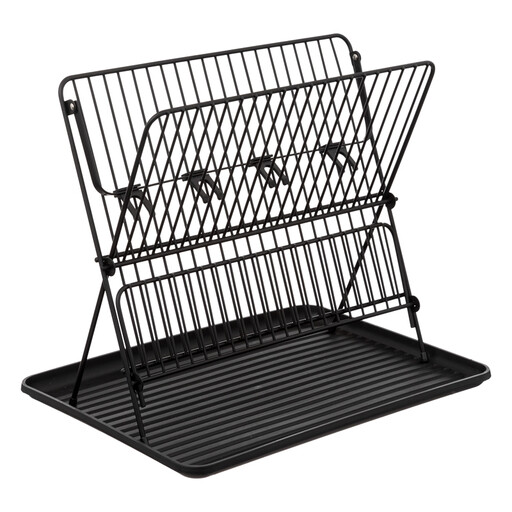
Why this product suits the profile: This folding dish drainer has two tiers and can be stored flat when not in use. The upper tier is designed for plates and cups, while the lower tier is suitable for larger pots and pans.
The folding design helps solve storage problems. The removable drip tray should be emptied regularly, and the upper tier must not be loaded unevenly.
Foldable storage; two tiers; removable PP tray; steel and PP construction.
We have put together a complete, regularly updated list of products that fully meet these strict selection criteria and the safety regulations applicable in the EU.
Place the dish drainer on a level, non-slip surface and distribute heavy items as low down as possible. For a model positioned over the sink, all extendable parts must rest securely. After setting it up, check whether the rack wobbles or shifts under light pressure.
The drip tray should not be left full of water permanently. Remove limescale deposits in accordance with the material specifications and dry bamboo surfaces immediately after cleaning. Damaged, loose or unstable supports are a reason to stop using the product.
This depends on the amount of crockery washed each day and the available space. For one person, a small rack with six plate slots may be sufficient. Families and shared households generally benefit from two tiers, separate cup holders and a cutlery holder. The key point is that the dimensions must fit the worktop and sink.
Stainless steel and corrosion-resistant steel are designed for damp kitchen areas and can usually be cleaned with a damp cloth. Bamboo requires more care: it should not be soaked and must be dried immediately after cleaning. The specific care instructions for the product in question remain the deciding factor.
A dish drainer with a drip tray collects the water running off onto the worktop. An extendable model positioned over the sink is even more direct, provided it rests securely. In both cases, the collection surface should be emptied and cleaned regularly.