
Lieferung heute & morgen

Qualitätsgarantie

Willkommens-Angebote freischalten: KOSTENLOSE Lieferung | Bis zu 80 % RABATT | Kostenlose 30-Tage-JoyPlus-Testphase
App herunterladen
A dish draining rack should hold plates, cups and cutlery neatly after washing, collect excess water and keep the worktop dry. In practice, however, dish racks vary considerably in terms of footprint, drainage, materials and maintenance. Anyone who focuses solely on the stated capacity or an appealing product photo may end up buying a model that does not suit their sink.
This buying guide from the Joybuy Product Recommendation Officer explains which details matter before purchasing a dish drainer and which models suit different usage scenarios.
A kitchen dish drainer needs more than just space for the rack itself. You must also allow for the drip tray, water outlet and distance to the sink. A 2-tier dish rack can make efficient use of vertical space, but it often requires additional height. Before buying, measure the length, width and height of the intended location.
With a dish draining rack that includes a drip tray, the key question is whether water is simply collected or deliberately channelled towards the sink. A shallow tray can fill up quickly with frequent washing. Models with a drain or outlet opening reduce the need for manual emptying, provided the outlet can be positioned correctly towards the sink.
“Metal” or “stainless steel” alone reveals little about the construction. The material combination, coating, feet and cleaning instructions are all relevant. The Maxcook model, for example, measures 42 × 29 × 12.7 cm and specifies stainless steel for the rack and PP for the drip tray. The 5five rack combines steel, PVC-coated polyester, ABS plastic and a cutlery basket made from steel and ABS.
First, measure the available worktop space beside the sink. For small kitchens, a space-saving dish drainer with a single tier can be a practical choice. For households with several people or frequent washing-up, a two-tier model offers more sorting options without increasing the overall width.
The “up to 17 plates” specification for the 5five 2-Tier Dish Drainer refers to a specific manufacturer claim. It should not be confused with the total capacity for cups, bowls and cutlery. Large plates, frying pans and unusually shaped crockery can reduce the actual usable capacity.
A suitable dish drainer for plates and cups should collect or divert water reliably. Check the following:
A dish drying mat is a flexible alternative for a small number of items. The blue Draining Mat, made from textured rubber, measures 34.5 × 26.5 cm and has a non-slip surface. According to the product information, it is not suitable for washing machines or dishwashers and should instead be wiped with a damp cloth and mild soap. It must not be used as a trivet for hot pots.
Water residue should be removed regularly to prevent deposits and unpleasant odours from forming. According to the product descriptions, many models may only be cleaned with a damp cloth and are not dishwasher-safe. For wooden components, such as bamboo, also ensure that the material is not left soaking for extended periods.
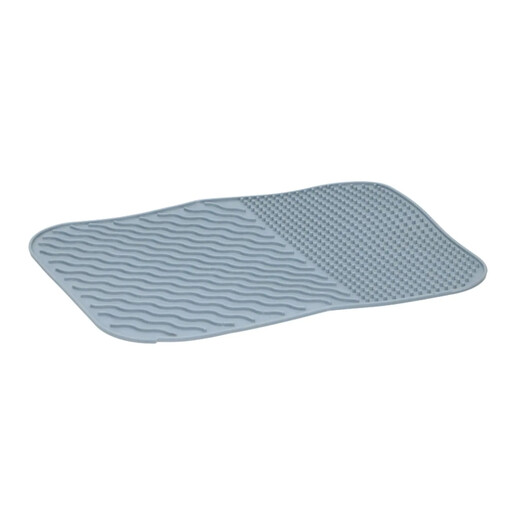
Why This Fits Their Persona: Ideal for single-person households, compact kitchens or campers who want to dry just a few items on a space-efficient surface.
The dimensions of 34.5 × 26.5 cm are clearly specified. The textured rubber surface is designed to help prevent crockery from sliding during drying.
Freestanding design, compact dimensions and a wipe-clean surface. Not suitable for hot pots, washing machines or dishwashers.

Why This Fits Their Persona: For households seeking an all-in-one rack with a clearly defined water collection solution for everyday washing-up.
The product description specifies a PP drip tray and a rotating outlet. This provides a more clearly defined drainage system than a simple collection surface.
Stainless steel rack, integrated drip tray and dimensions of 42 × 29 × 12.7 cm. According to the description, the construction requires no assembly.
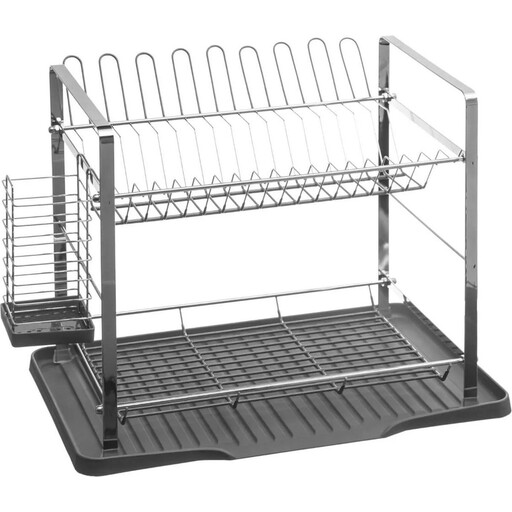
Why This Fits Their Persona: For families or frequent users who want to dry plates, cups and cutlery separately across two levels.
The capacity of up to 17 plates, dimensions of 50 × 30.5 × 34 cm and removable cutlery basket are clearly specified.
Two-tier construction, removable cutlery basket, non-slip base and drip tray. Clean with a damp cloth.
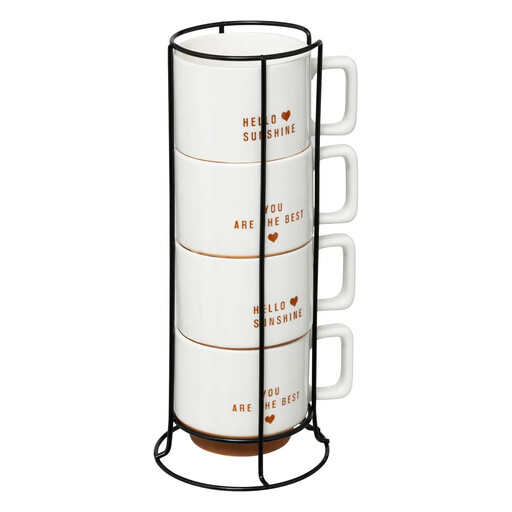
Why This Fits Their Persona: For households that primarily need cups to be kept close at hand and organised compactly, rather than accommodating a large number of plates.
The intended use and dimensions of 29 × 13 × 13 cm are clearly described, making it easier to compare the rack with the available space.
Compact Bone China construction according to the product information, designed to hold four cups. Clean with a damp cloth and mild detergent.
The category features a current selection of dish racks for different footprints, materials and usage scenarios in kitchens across Germany.
Place the dish draining rack on a level, stable and heat-resistant surface. Plates should stand in the designated slots, while cups should be positioned so that water can drain away. Cutlery baskets should not be loaded so heavily that they cause the rack to tip over.
For a longer service life, we recommend:
A fixed service life cannot be specified universally. It depends on the material, water hardness, load, location and level of care. Statutory warranty rights remain unaffected; for several of the products mentioned, a minimum two-year statutory guarantee or warranty is stated in accordance with the relevant product information.
For a small kitchen, options include a compact drying mat, a single-tier stainless steel dish drainer or a narrow model with directed drainage. The measured footprint and distance to the sink are decisive. A two-tier dish rack makes use of vertical space but requires more room above the worktop.
Choose a model with a suitable drip tray or drainage outlet, and position the outlet towards the sink. With a mat, the surface should be emptied or wiped down regularly. The dish draining rack must also not be placed on a sloping surface.
Many stainless steel racks are designed for everyday dish drying and can usually be cleaned with a damp cloth. Plastic trays may be lighter and are effective for collecting water. Ultimately, however, the specific care instructions for the product are what matter—not the material designation alone.