
Lieferung heute & morgen

Qualitätsgarantie

Willkommens-Angebote freischalten: KOSTENLOSE Lieferung | Bis zu 80 % RABATT | Kostenlose 30-Tage-JoyPlus-Testphase
App herunterladen
A dish draining rack with sponges brings together two everyday tasks: letting your washing-up dry neatly while keeping sponges close at hand for pots, plates and worktops. For small kitchens, family homes and shared households, the right set can save space and make washing up easier.
However, eye-catching product claims don’t automatically mean you’ve found the right solution. What matters most is the size, drainage, materials and care needed for the cleaning accessories.
The phrase “large capacity” doesn’t mean much if the kitchen dish rack won’t fit next to your sink. Before buying, measure the width and depth of your worktop, as well as the clearance beneath any wall cupboards. You’ll also need to allow enough room for pan handles and tall glasses.
A single-tier model may be enough for plates, cups and cutlery, while families with lots of cooking utensils may need several tiers. That’s why the actual external dimensions matter more than general marketing claims.
A dish drying rack with a draining tray should collect water as it runs off. If the tray has no raised edge or is too small, water can end up on your worktop. This may leave water marks on delicate surfaces.
Check that the tray sits securely under the rack, can be removed and is easy to empty after washing up. A drain that empties straight into the sink is handy, but not every model has one.
“Natural”, “green” or “zero waste” aren’t enough to make an informed choice. For loofah washing-up sponges, check that the material, pack size and disposal options are clearly stated. Natural fibres aren’t automatically suitable for every surface.
Reusable cloths also need looking after. To get a realistic idea of how much washing-up kit you’ll use, take cleaning, drying and replacement into account.
Compare the rack’s footprint with the space you have available:
The Maxcook rack in the kitchen set described here measures 42 × 29 × 12,7 cm. These dimensions give you a useful guide, but you should still measure the space beside your own sink.
A stainless steel dish rack may be suitable for regular contact with water. Even so, look for a good finish, sturdy joints and surfaces that are easy to reach and clean. If the specific grade of stainless steel is important to you, check that it’s listed in the product details.
The material of the draining tray matters too. According to the product description, the integrated tray in the Maxcook set is made from PP plastic. It catches drips beneath the rack. Empty and dry the tray after use.
Natural loofah sponges can be an alternative to conventional plastic sponges. Loofah fibres soften when wet and can be used on a range of kitchen surfaces. Rinse the sponge before using it for the first time.
Look out for:
If a product is advertised as compostable washing-up sponges, check which disposal options are available where you live. Local authority guidance can vary. Loofah sponges aren’t always suitable for heavily soiled surfaces or use with harsh cleaning products.
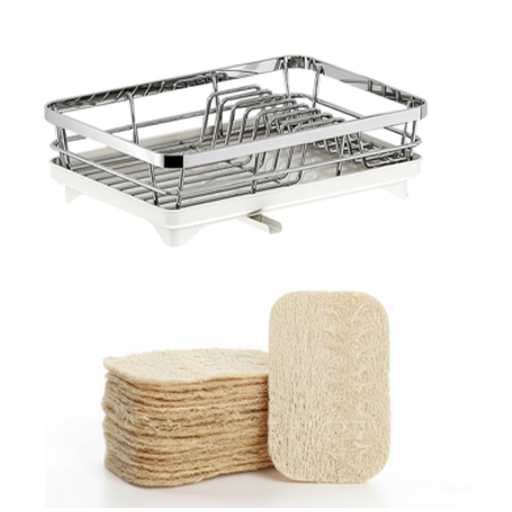
Why it suits this household: This set pairs a single-tier draining rack with 30 loofah sponges. At 42 × 29 × 12,7 cm, its footprint is clearly stated, making it easier to plan for many compact kitchens.
The dimensions, single-tier design and integrated PP draining tray are all clearly described. This makes it easier to check whether the rack will fit your available space before you buy.
Stainless steel rack with an integrated PP tray; 30 loofah sponges, each measuring 11 × 7 cm.
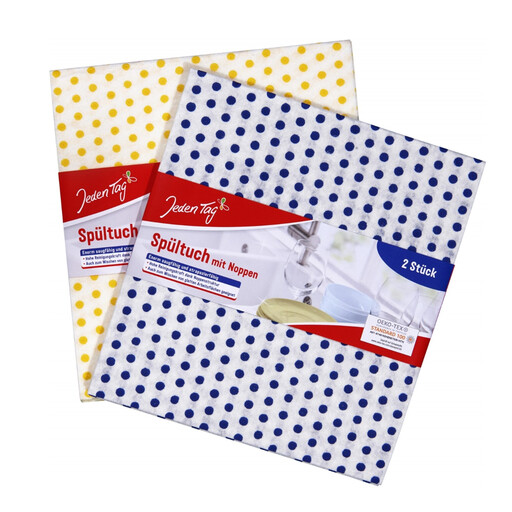
Why it suits this household: This cloth with a raised-dot texture is designed for smooth surfaces and can be washed at up to 60 °C. It’s a good choice for households looking for reusable washing-up accessories with clear care instructions.
The washing temperature is stated, along with instructions not to bleach, tumble dry or iron the cloth. This makes it easier to understand the care involved over time.
Measures 38 × 35 cm; raised-dot texture; pack of two cloths; designed for repeated use.
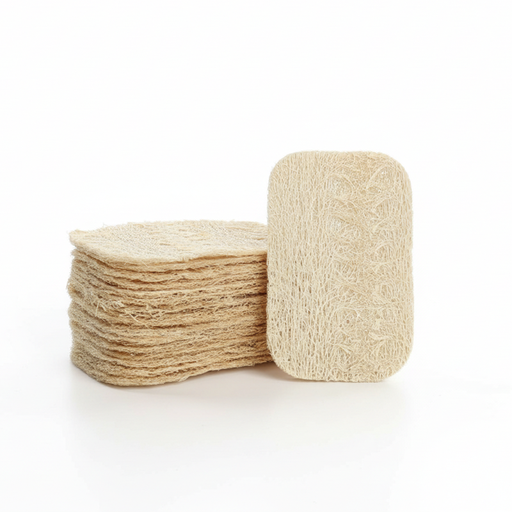
Why it suits this household: The pack of 30 is suited to households that wash up regularly, shared homes and anyone who wants to replace individual sponges as they wear out.
The material, size, pack quantity and care instructions are listed. Rinse the sponge and let it dry completely after use; replace it if it starts to fray.
Made from natural loofah fibre with no added materials, according to the product information; 30 per pack; each sponge measures 11 × 7 cm.
We’ve put together a complete, regularly updated list of products that meet these strict selection criteria and fully comply with the safety regulations in force in the EU.
Place the dish rack on a flat, dry surface. Make sure plates sit securely in their holders so they don’t knock against each other. Empty the draining tray regularly and, when needed, wipe it clean with a mild detergent.
Rinse sponges and cloths thoroughly after use, then leave them somewhere with good airflow. A kitchen sponge set with several sponges makes it easier to replace them, but you should still check them regularly for signs of wear. If you’re cleaning a delicate coated surface, test the sponge on an inconspicuous area first.
Measure the available depth and width beside your sink. You should also leave enough clearance beneath wall cupboards for plates and glasses. A space-saving, single-tier dish rack with clearly stated external dimensions is usually easier to plan for.
A suitably sized draining tray with a raised edge catches water beneath the rack. Empty and dry it regularly. Also check that all your dishes sit over the tray and that the worktop is level.
How long they last depends on how often you wash up, how dirty the dishes are and how well the sponges dry. Replace a sponge if it smells, starts to fray or no longer cleans effectively. Rinse and wring it out after each use, then leave it to dry completely.