
Lieferung heute & morgen

Qualitätsgarantie

Willkommens-Angebote freischalten: KOSTENLOSE Lieferung | Bis zu 80 % RABATT | Kostenlose 30-Tage-JoyPlus-Testphase
App herunterladen
A dish-drying rack is part of the everyday kitchen essentials in many homes. After washing up, plates, glasses and cutlery need to dry quickly without taking over the worktop. In smaller kitchens, or when you have a lot of washing up, the design can make all the difference between a rack that’s practical and one that soon gets in the way.
Many options look similar at first glance. The differences become clear when you consider footprint, drainage, material, capacity and cleaning. If you choose based only on the lowest price or the largest surface area, it’s easy to overlook important details.
A high stated capacity doesn’t automatically mean all your dishes will fit securely and neatly. What matters is whether the plate slots, cup holders and cutlery section suit the amount you wash up. A wide kitchen dish drainer can quickly take up a large part of the worktop in a small kitchen.
Before buying, measure the space available next to your sink. Remember to allow for the tap, the distance from the wall and the space you need to set down wet pans.
A loose or overly shallow drainboard can leave water pooling on the worktop. For a dish rack with a drainboard, check that the board sits fully beneath the rack and that water is directed towards the sink or a drainage outlet.
It’s also important that the board can be removed for cleaning. Empty standing water regularly to prevent residue building up and unpleasant smells developing.
A stainless-steel dish rack can be a suitable choice for damp conditions, but the finish on the edges, joints and feet matters too. For metal racks, look for an even coating or a clearly specified stainless-steel construction. Plastic parts, such as drainboards or cutlery holders, should fit securely and be easy to wipe clean.
A material description alone doesn’t tell you everything about the overall design. With multi-tier models in particular, a wide base and even weight distribution are important.
Compare the rack’s length, width and height with the space you have available. For a small kitchen, a space-saving single-tier dish rack may be more practical than a wide model. If you have lots of plates or limited worktop space, a two-tier dish rack lets you make use of the height available.
Check the clearance beneath wall units too. The rack shouldn’t block access to cupboards or sockets.
Clear information about the number of plate slots, glasses or cutlery compartments makes it easier to compare options. A dish drainer should hold plates upright, with space between them where possible. A separate kitchen cutlery holder is handy, as it keeps knives, forks and spoons from getting mixed in with the plates.
A two-tier model may be useful for larger households. Singles and couples often don’t need a tall design and may be better served by a compact option that’s easy to put away.
Check whether the drainboard can be removed and whether water can drain straight into the sink. A raised edge can help prevent water from spilling over, but you’ll still need to empty the board regularly. Smooth surfaces are usually easier to clean with a damp cloth and mild detergent.
Follow the manufacturer’s cleaning instructions. For example, the PET cutlery holder listed below is not dishwasher-safe according to the product description and should be washed by hand.
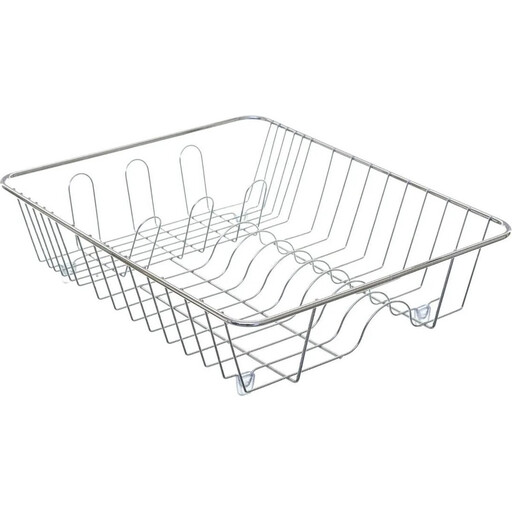
Why this product suits this profile: According to the product details, this compact metal rack holds up to 10 plates and comes with a cutlery basket. At 39 cm long, it’s a good fit for households looking for a simple solution that doesn’t need assembling.
The stated dimensions make it easier to plan how much space you’ll need. According to the product description, the raised edge is designed to help prevent water from spilling out.
39 × 33.5 × 10.5 cm; steel and ABS plastic construction; cutlery basket; suitable for the kitchen or camping.
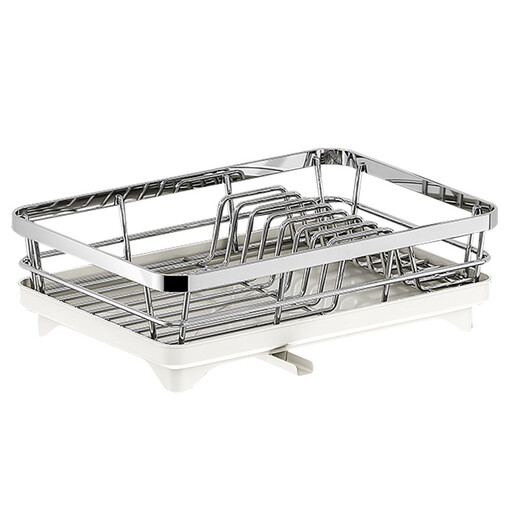
Why this product suits this profile: This model combines a stainless-steel dish rack with a PP drainboard and a rotating water spout. It’s aimed at buyers who pay particular attention to material specifications and drainage.
The integrated drainboard and water spout help prevent water from running unchecked onto the worktop. According to the description, the rack doesn’t need assembling.
Stainless-steel rack with PP drainboard; dimensions 42 × 29 × 12.7 cm; separate slots; rotating water spout according to the product description.
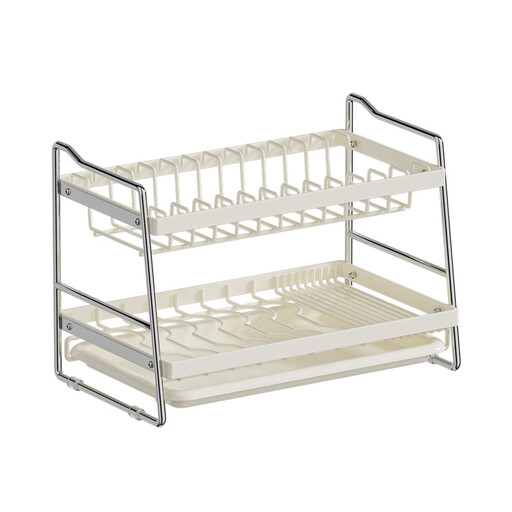
Why this product suits this profile: Its two tiers make use of the available height, not just the width of the worktop. Measuring 40 × 23.6 × 28.7 cm, it’s designed for households with more washing up and limited space.
The vertical layout reduces the depth of space required. According to the product description, the drainboards direct water towards the sink or a designated container.
Two tiers; integrated drainboards; freestanding design; room for plates, cups, cutlery and kitchen utensils according to the product description.
We’ve put together a complete, regularly updated list of products that meet these strict selection criteria and fully comply with the safety regulations in force in the EU.
Place your worktop dish drainer on a level surface as close to the sink as possible. Put heavy plates on the bottom or in the slots designed for them. Make sure glasses are stable and not touching one another. If you have a multi-tier model, distribute the weight evenly.
Empty the drainboard regularly and wipe the rack and board with a soft cloth. Don’t use abrasive sponges on coated metal parts. Also check the joints, edges and feet from time to time for any build-up of residue.
It depends on the worktop space available and how much washing up you do each day. Measure the space next to your sink and compare it with the rack’s external dimensions. Compact or two-tier models are often more practical in small kitchens than particularly wide designs.
Stainless steel is easy to wipe clean and is often used in damp kitchen areas. However, you should also consider the drainboard, joints and feet. Check the full material specifications and look for a design that prevents water from being left standing for long periods.
Choose a model with a suitable drainboard and, ideally, a direct route for water to drain into the sink. Make sure the rack is level, empty the board regularly and wipe up any water left on the worktop. A raised edge can offer extra protection, but it doesn’t replace regular care.