
Lieferung heute & morgen

Qualitätsgarantie

Willkommens-Angebote freischalten: KOSTENLOSE Lieferung | Bis zu 80 % RABATT | Kostenlose 30-Tage-JoyPlus-Testphase
App herunterladen
A dish drying rack needs to hold plates, bowls, cups and cutlery securely, channel water away in a controlled manner, and keep your kitchen worktop dry. In smaller British kitchens, every centimetre counts. A model with a large footprint can quickly take up more space than you expect.
Before you buy, it's worth looking at the actual construction rather than just the marketing claims. The following criteria will help you avoid the typical pitfalls.
A removable tray can catch dripping water. However, if it lacks a spout or isn't slightly tilted, water will pool underneath your dishes. This makes cleaning more difficult and, if the tray overflows, water can spill onto your worktop.
Far more practical is a built-in water drain, a spout that directs water towards the sink, or a design where water flows directly into the basin. The drainage must be positioned correctly for your chosen location.
A 2-tier dish rack makes use of vertical space and can hold more dishes than a flat model. However, poor weight distribution creates a risk of tipping. Plate holders, bowl compartments and cup shelves should be securely connected and sit on a level surface.
Pay attention to the external dimensions, including the drip tray. A rack measuring 42 × 32 × 30 cm requires considerably more height than a single-tier model measuring 42 × 29 × 12.7 cm.
"Metal" or "rustproof" are not sufficient descriptions when it comes to material choice. With a stainless steel dish drying rack, you should be able to see clearly which components are stainless steel and which are plastic. Some models, for example, combine stainless steel and PP.
This means: the shelf may be made from stainless steel, while the drip tray, drain or feet are made from polypropylene. This information is relevant for cleaning, load capacity and replacement parts.
Measure the available space on your worktop or the internal width of your sink. Also consider:
A single-tier dish rack is often suitable for singles or couples who regularly have a smaller amount of washing up. Families and households with lots of dishes can benefit from two tiers, provided the footprint and stability are adequate.
A dish rack with a drip tray should be designed so that water doesn't sit permanently under plates or cups. Removable trays make it easier to empty and clean. A swivel or integrated outlet can direct the flow towards the sink.
Clean stainless steel and PP with a mild detergent and a soft cloth or sponge. Abrasive cleaners and steel wool can scratch the surfaces. After cleaning, drying helps to visibly reduce limescale residue.
According to product information from Maxcook, several models are made from stainless steel and PP. This combination is designed for the intended use in a damp kitchen environment. The pull-out sink model is said to use 304 stainless steel.
The designation 304 describes a stainless steel alloy. However, it is not a blanket guarantee that every component of the entire product is made from this material. Always check the specific material description and care instructions.

Why this product fits the profile: This single-tier model has a modest height and is suitable for smaller households or limited worktop space.
According to product information, it features a PP drip tray and a swivelling water deflector. This allows you to direct the drainage precisely.
Stainless steel and PP construction, dimensions of 42 × 29 × 12.7 cm, and integrated compartments with no complicated assembly required.
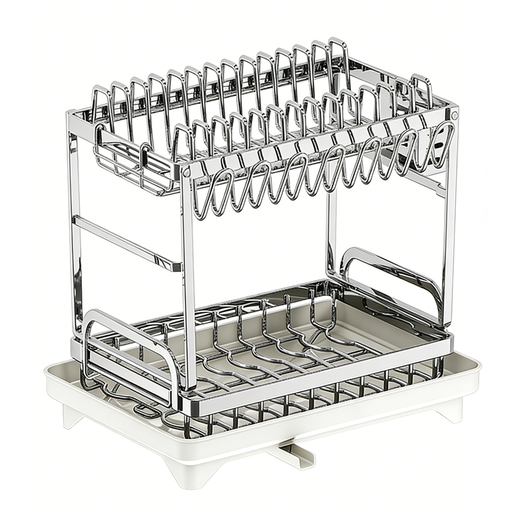
Why this product fits the profile: The two-tier layout separates plates, bowls and other dishes on your worktop.
The separate tiers reduce the stacking of wet dishes. The pull-out drip tray and drain are designed for controlled water drainage.
2-tier design, classified compartments and, according to product information, a construction made from stainless steel and PP.
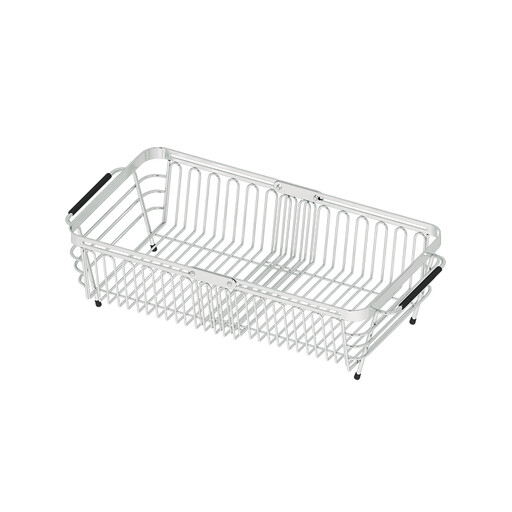
Why this product fits the profile: This sink dish drying rack is designed for households that want to keep their worktop clear and also use the rack as a vegetable colander.
The pull-out length of 29 to 44 cm must match your sink width. When correctly positioned, water drains directly into the basin rather than onto your worktop.
According to product information, 304 stainless steel, dimensions of 29–44 × 21.2 × 10.5 cm, and use as a dish rack or vegetable colander.
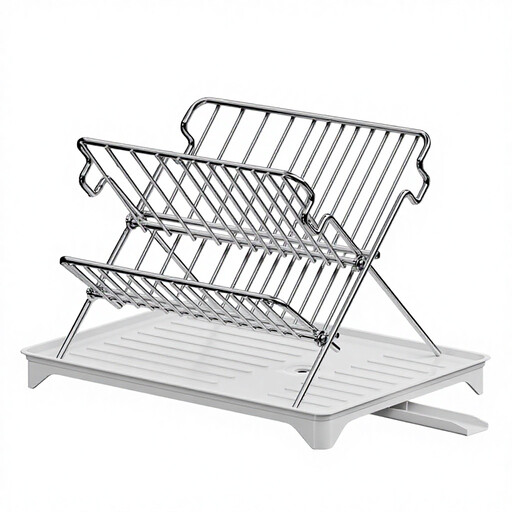
Why this product fits the profile: A foldable dish rack can be stored flat after washing up and set up again when needed.
According to product information, this model is set up without permanent installation and can be folded away when not in use. The drain hose must point towards the sink.
Dimensions of 42 × 32 × 30 cm including tray, foldable construction and adjustable spacing according to the product description.
We've put together a complete, regularly updated list of products that fully meet these strict selection criteria and the safety regulations in force in the EU.
Place a dish rack for your kitchen worktop on a level, stable surface. Heavy plates should go in the designated plate holder compartment where possible. Arrange cups and cutlery so that air can circulate between the items.
With a space-saving drying rack that sits over the sink, check before first use that both support surfaces are resting securely. The pull-out elements must not be only partially resting on the sink rim.
Empty a drip tray regularly and remove limescale deposits according to the care instructions. With foldable models, keep the joints free from food residue. Visible deformation, loose connections or an unstable base are signs that you should stop using the product.
That depends on your household size, the amount of dishes you have and the available space. For smaller households, a single-tier model is often sufficient. Families tend to benefit more from two tiers. Before buying, measure the length, width and height at your intended location.
A drip tray catches water and makes cleaning easier. However, it doesn't replace regular maintenance. Water shouldn't be left standing for long periods; clean and dry your dishes, tray and drain according to the manufacturer's instructions.
A worktop model with a drip tray usually offers more fixed shelf space and is independent of your sink size. A sink dish drying rack, on the other hand, saves space on your worktop and can channel water directly into the basin. The deciding factors are the dimensions, the load capacity and a secure fit.