
Lieferung heute & morgen

Qualitätsgarantie

Willkommens-Angebote freischalten: KOSTENLOSE Lieferung | Bis zu 80 % RABATT | Kostenlose 30-Tage-JoyPlus-Testphase
App herunterladen
A dish drying rack is a practical addition for many households without a dishwasher, for small kitchens, or for everyday hand washing. However, not every model suits every sink or worktop. Often, it's not the flashy extra features but the dimensions, water drainage and stability that determine how well it works day to day.
A tall or two-tier dish rack can hold plenty of plates and cups. What really matters, though, is whether the floor space next to the sink stays clear and whether wall cabinets or windows limit how you can set it up. So, before you buy, check the length, width and height of the space you have in mind.
A two-tier dish rack makes use of height, but needs enough clearance above. A flat dish drying rack fits better under low wall cabinets, but offers less vertical storage.
A loose tray collects water but doesn't drain it away automatically. If you don't empty it regularly, limescale marks or standing moisture can build up. Look for a removable, easy-to-clean drip tray, as well as a spout or a sloped design if you want water to flow directly into the sink.
"Metal" on its own doesn't tell you much about everyday usability. With a stainless steel dish drying rack, the quality of the material, the edges, the joints and the feet all matter. Coated steel can also be suitable, but it shouldn't have any damaged or sharp edges. Plastic parts, like a drip tray, should be easy to remove and clean without much effort.
Measure the available space fully. Also take into account the tap, the sink rim and the room you need for loading and unloading. For a dish drying area next to the sink, compact models around 40 to 47 cm long are often easier to fit in. If space is very tight, a kitchen drying basket that sits directly in the sink can be a good option.
Freestanding models can be moved around and don't need any installation. An insert that sits in the sink saves worktop space, but must match the inner width and shape of the basin.
A single plate compartment stops crockery from resting on top of each other. Extra sections for cups, bowls and cutlery make sorting easier. The manufacturer's capacity figures should be taken as a guide: the diameter of your plates, their weight and shape all affect how much you can actually fit.
A two-tier design increases storage space upwards. Even weight distribution is important here. Heavy pots shouldn't sit only on one side or on the top level.
A dish rack with a drip tray should catch water reliably without wetting your worktop unnecessarily. Removable trays, smooth surfaces and few hard-to-reach gaps are ideal. Empty the tray regularly and dry the rack and tray completely after cleaning. This reduces build-up and unpleasant odours.
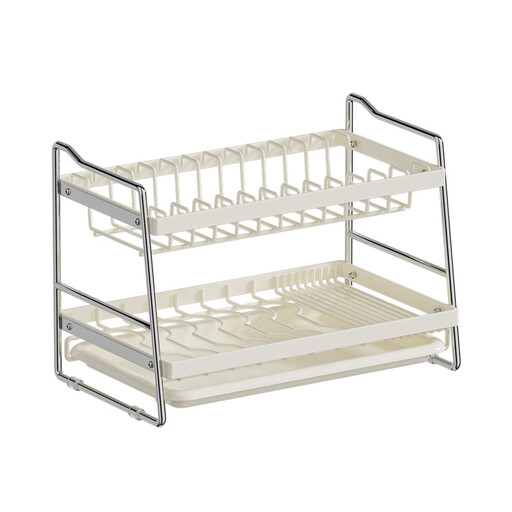
Why this product fits the profile: This freestanding model offers two tiers with dimensions of approximately 40 × 23.6 × 28.7 cm. It's ideal for households that want to dry crockery, cups and kitchen utensils in an organised way on the worktop.
The integrated draining surfaces collect water, while the vertical design limits the worktop space taken up. The trays should be emptied and cleaned regularly.
Two tiers, freestanding use and stated dimensions of approximately 40 × 23.6 × 28.7 cm.
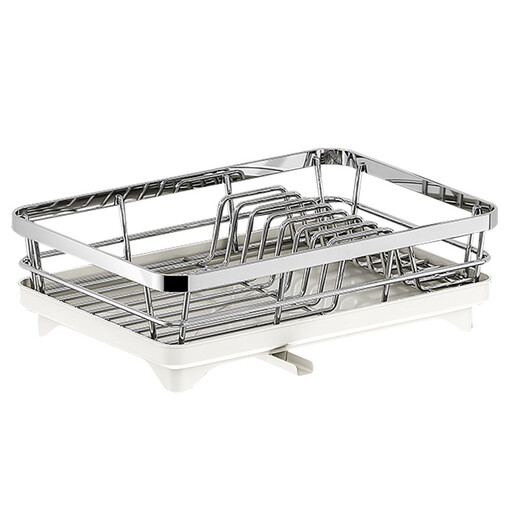
Why this product fits the profile: This model combines stainless steel with a PP drip tray and measures approximately 42 × 29 × 12.7 cm. It's aimed at users who prefer a flat, integrated solution without any assembly.
The drip tray is part of the construction and can be removed for cleaning. A rotating water deflector helps you direct the drainage.
Stainless steel frame, PP tray, integrated construction and flat format.
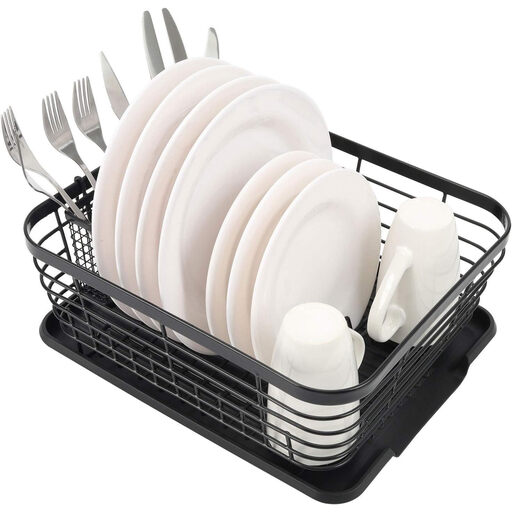
Why this product fits the profile: This three-piece set can be used in the sink or on the worktop, depending on your kitchen setup. It includes a frame, a plastic tray and a cutlery holder.
The removable tray can be emptied, and the cutlery holder with a tighter grid keeps smaller items secure. The stated capacity is 8 or more pieces of crockery.
Use on the worktop or in the sink, no assembly required, three components.
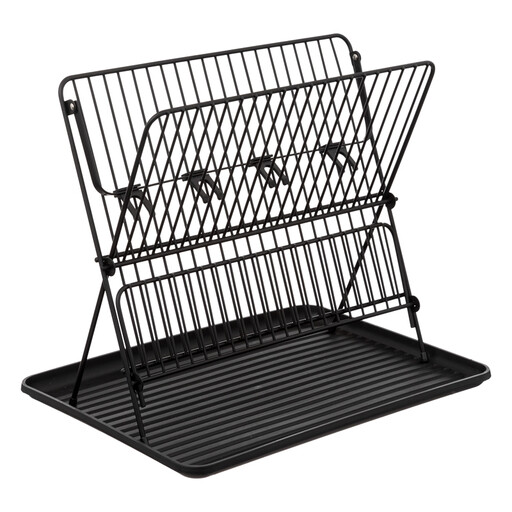
Why this product fits the profile: This two-tier dish rack folds flat when not in use. That's useful for small flats, second kitchens or changing worktop layouts.
The foldable design reduces storage space needed. Before use, make sure the rack is fully opened and placed on a level surface.
Two tiers, removable drip tray and a flat foldable design.
We've put together a full, regularly updated list of products that fully meet these strict selection criteria and the safety regulations in force in the EU.
How long a dish drying rack lasts depends a lot on how you use and look after it. Remove water from the drip tray before it sits there for a long time. Clean metal and plastic parts with a soft cloth and a mild cleaning agent. Abrasive cleaners can damage surfaces. Also check the welds, coating, feet and plastic connections regularly.
With a drying rack for plates and cups, the weight should be spread evenly. Heavy pans or pots should only go in the rack if the manufacturer explicitly says it's suitable.
That depends on how many items you dry each day and how much space you have. Singles often manage fine with a compact, single-tier model. Families tend to benefit more from two tiers or a larger tray. Measure the available space and the height up to the next cupboard before you buy.
Stainless steel, or rust-resistant steel, holds its shape well and can be cleaned with a damp cloth. Plastic can save weight on the drip tray and is easy to remove. What really matters is the specific material, sturdy connections and a design that's easy to access.
Empty the tray regularly, wipe away any water residue and clean the dish drying rack at short intervals. If you have hard tap water, you can use a suitable, material-safe cleaning solution. After cleaning, let all parts dry completely.