
Lieferung heute & morgen

Qualitätsgarantie

Willkommens-Angebote freischalten: KOSTENLOSE Lieferung | Bis zu 80 % RABATT | Kostenlose 30-Tage-JoyPlus-Testphase
App herunterladen
A dish drying rack should hold washed plates, glasses, cups and cutlery neatly, without leaving your worktop wet. In small kitchens, student flats, on camping trips or in homes without a dishwasher, looks aren’t the only thing that matters. The key considerations are choosing the right size, a sturdy design and a drainage system that’s easy to clean.
Many products look larger or better made in photos than they are in everyday use. Before buying a dish rack, check for these three common pitfalls.
A two-tier dish rack makes use of vertical space, but depending on its design, it may need more clearance above it and could reach up to wall cabinets or a window. A single-tier model measuring 50 cm long won’t necessarily fit beside every sink, either.
So measure the available space, including:
A loose plastic tray collects water, but you’ll need to empty it regularly. If it isn’t level or doesn’t have a sufficiently high edge, water may run onto the worktop. A dish rack with a drip tray should therefore have either a clearly defined collection area or a spout that directs water towards the sink.
Also check whether the tray can be removed. This makes cleaning easier and helps prevent water from sitting in it.
Not all metal is the same. For a metal dish rack, the product information should clearly state the material, surface finish and care instructions. Stainless steel, coated steel and plastic differ in weight, ease of cleaning and sensitivity to moisture.
Wooden or bamboo elements can look attractive, but shouldn’t be left standing in water. Good ventilation beneath the dishes is also important, as it helps reduce moisture build-up in hard-to-reach areas.
The overall dimensions alone don’t tell you how much crockery a rack can hold. Check how many plate slots, glass holders and cutlery sections it has, too. A compact kitchen plate rack is suitable for a small household, while families and frequent users may benefit from a wider model or one with two tiers.
For example, according to the product details, the 5five Mayaj Dish Rack measures 43 × 31.3 × 12.8 cm. The 5five Black Metal Dish Drainer is slightly shorter and lower, at 39 × 33.5 × 10.5 cm. Which one suits you best depends on whether you mainly dry plates or also need room for lots of cups and kitchen utensils.
A kitchen dish rack should be designed so that water doesn’t pool beneath plates and bowls. Look for:
Plastic trays can usually be cleaned with a mild detergent. Clean metal parts with a soft cloth, following the manufacturer’s instructions. Abrasive cleaners can damage coatings.
A dish rack must stand securely, even when several plates are placed on one side. With taller models, try to distribute the weight as evenly as possible. A two-tier dish rack gives you more space on a smaller footprint, but needs a sturdy frame and a level surface.
Lightweight, freestanding models are handy for campers or if you move house often. Even so, check whether the rack can stand without being fixed to a wall and whether its parts can be taken apart for transport.
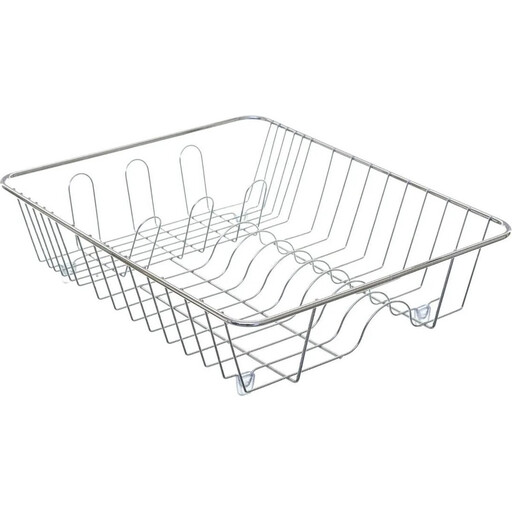
Why this product suits you: Its compact design is a good fit for smaller worktops, kitchens or camping trips. According to the product details, it holds up to 10 plates and comes with a cutlery basket.
The overall dimensions are clearly stated. According to the product description, a raised edge helps prevent water from spilling out.
Steel and ABS plastic components, a product weight of 610 g, six stated glass holders and a cutlery basket.
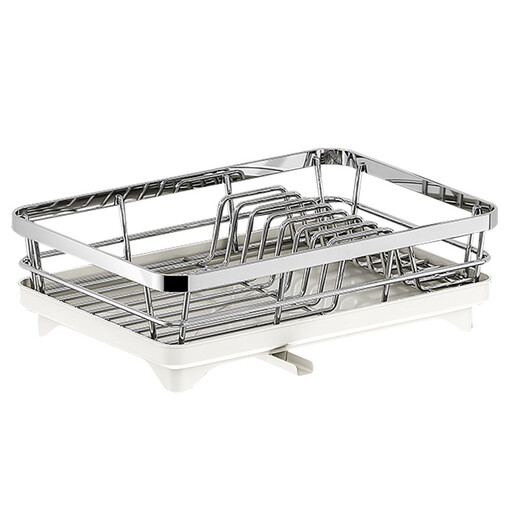
Why this product suits you: The stainless steel rack and PP tray combination is designed for households that value clearly specified materials and integrated water collection.
The drip tray is part of the system. According to the product description, a rotating spout directs the water where you want it to go.
Stainless steel rack, PP drip tray, dimensions of 42 × 29 × 12.7 cm and built-in slots for crockery.
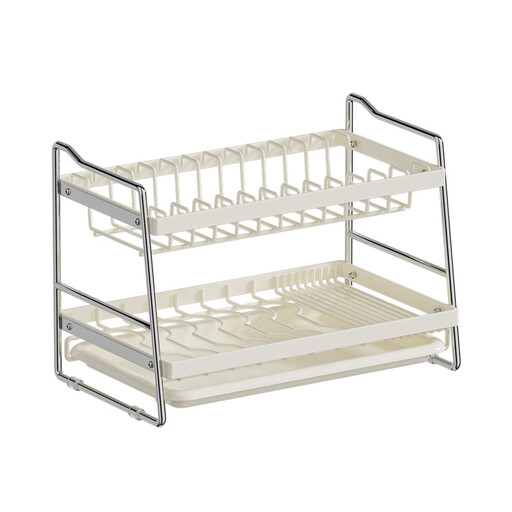
Why this product suits you: Its two-tier design makes use of vertical space and is intended for households that wash dishes regularly. According to the product description, it measures approximately 40 × 23.6 × 28.7 cm.
The vertical layout gives you extra drying space without increasing the footprint by the same amount. The draining boards are built in.
Two tiers, freestanding design, integrated drainage and separate sections for plates, cups, kitchen utensils and cutlery.
Empty the drip tray regularly and dry it if needed. Don’t pack dishes so tightly that air and water can’t circulate. Place heavy plates in the slots provided, and make sure glasses and cups sit securely on separate holders.
It’s also a good idea to clean the cutlery holder regularly, as water and food residue can collect there. Use soft cloths and a mild detergent. Don’t soak wooden parts. If you notice cracks, sharp edges or corrosion, check that the rack is stable before using it again.
We’ve put together a complete, regularly updated list of products that meet these strict selection criteria and fully comply with the safety regulations in force in the EU.
First, measure the clear space beside your sink. Compact models up to around 40 cm long are suitable for small kitchens. If you’re considering a two-tier model, remember to check its height and the clearance beneath your wall cabinets, too.
A drip tray is useful if water can’t drain straight into the sink. It protects your worktop, but needs to be emptied and cleaned regularly. If the rack has a spout, make sure it points towards the sink.
Stainless steel is a clearly specified material and is often used in damp kitchen areas. However, how easy a rack is to care for also depends on its design, joints and the manufacturer’s instructions. Even a stainless steel model should be dried after cleaning and cleared of any standing water.