
Lieferung heute & morgen

Qualitätsgarantie

Willkommens-Angebote freischalten: KOSTENLOSE Lieferung | Bis zu 80 % RABATT | Kostenlose 30-Tage-JoyPlus-Testphase
App herunterladen
A dish drying rack is a practical kitchen accessory when washed plates, cups and cutlery cannot be put straight away in the cupboard. Options range from a simple kitchen dish rack to a two-tier dish rack with a drip tray and water drainage. However, not every design is suitable for every worktop or volume of washing-up.
The key considerations are not eye-catching product claims, but dimensions, material, water drainage and actual capacity. Checking these points before buying reduces the risk of your dish rack getting in the way after a short time, dripping water onto the worktop or proving difficult to clean.
Claims such as “for lots of plates” or “Large Capacity” are difficult to assess without specific figures. A rack may hold a large number of plates, but could require 50 cm or more of worktop space. In small kitchens, you should therefore measure the available area next to the sink first.
Look out for:
A loose tray collects water, but needs to be emptied and cleaned regularly. With a dish drying rack featuring a drip tray, it is therefore important to check whether the water is simply collected or deliberately channelled away through a spout or rotating drainage aid.
Without such a solution, water can collect underneath the dish rack. This is particularly unsuitable for wooden worktops or sensitive surfaces.
Terms such as “rust-free” or “easy to care for” should not be accepted uncritically. For metal racks, the precise material, coating and contact with standing moisture are all relevant. Stainless steel is generally practical for damp kitchen areas, but it does not replace regular drying and cleaning.
Plastic components also have different care requirements. According to the product information, some products are not dishwasher-safe and should only be cleaned with a damp cloth or mild detergent.
For a narrow worktop, a space-saving dish rack with two tiers can be a sensible choice. The vertical arrangement increases the usable storage area while keeping the footprint limited. However, check that the height fits beneath wall cupboards and that the loaded rack stands securely.
A single-tier model requires more width, but is generally easier to load and clean. A compact design is often sufficient for individuals or small flat shares. Families with several washing-up loads are more likely to benefit from separate areas for plates, cups and cutlery.
A stainless steel dish rack or a rack with rust-resistant metal components is suitable for regular contact with water. The product should stand on non-slip feet and have a well-designed construction without sharp edges.
With coated steel frames, buyers should ensure that the coating is not easily damaged in heavily used areas. Plastic drip trays are usually lighter and easy to remove. What matters most is whether the manufacturer states that the material is suitable for the intended use.
Effective water drainage does not automatically prevent build-up. Removable trays, open gaps between the bars and smooth surfaces make cleaning easier. A cutlery drainer with several compartments also helps ensure that knives, forks and cooking utensils do not lie on top of one another.
If you use the rack every day, you should rinse the drip tray regularly and allow all components to dry completely. For products that require assembly, it is also advisable to check the connections after putting the rack together.
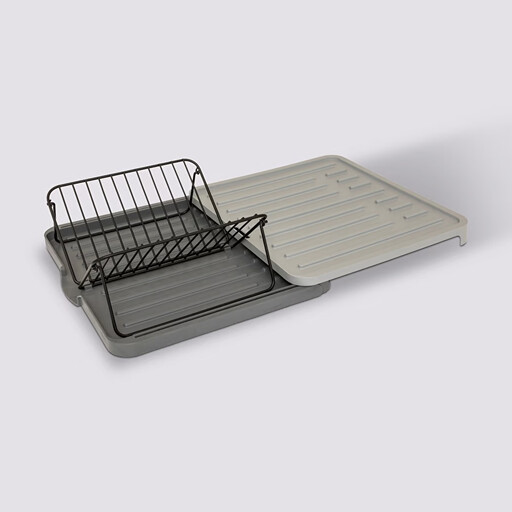
Why this product suits this profile: Measuring 58,2 × 36,2 × 10,3 cm, this single-tier rack offers a straightforward solution for households with a normal amount of washing-up.
The product details specify exact dimensions, a steel construction and a polypropylene drip tray. This makes it easier to assess the required space before buying.
Steel rack, PP tray and stated space for six glasses; according to the product information, not dishwasher-safe.
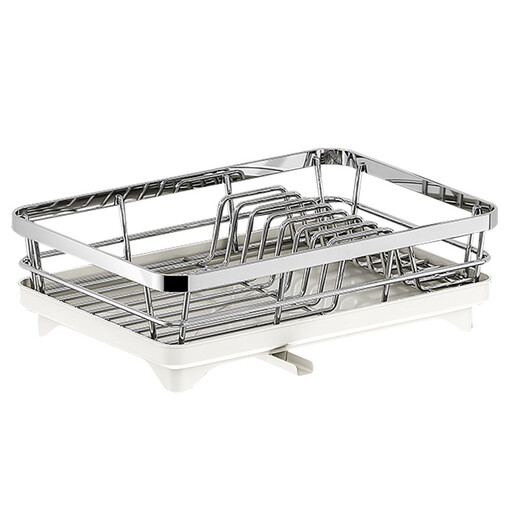
Why this product suits this profile: Designed for use on the worktop, this model combines stainless steel with a PP drip tray and is aimed at households that value clearly specified materials.
The external dimensions are clearly stated as 42 × 29 × 12,7 cm. The described water deflector helps direct water away rather than allowing it to collect uncontrollably.
Stainless steel rack, PP tray, rotating spout and integrated design requiring no assembly according to the product description.
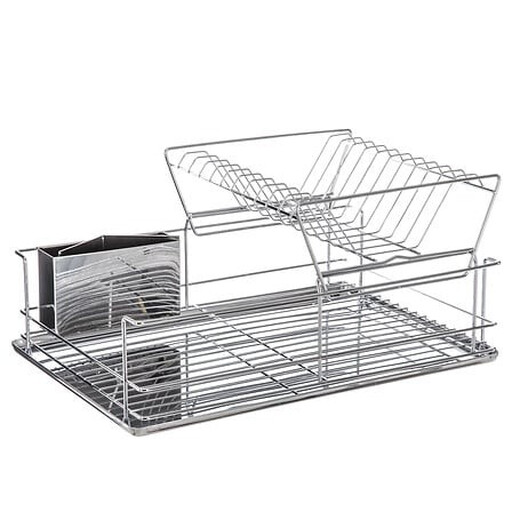
Why this product suits this profile: Two tiers are ideal for families, flat shares or households where several plates and cups need to dry in one go.
The dimensions of 47 × 32,3 × 22,5 cm and the stated capacity of up to ten plates and twelve cups make the space requirements and intended use easy to understand.
Two-tier design, corrosion-resistant steel and stainless steel components, plus stated air gaps and drainage clearances.
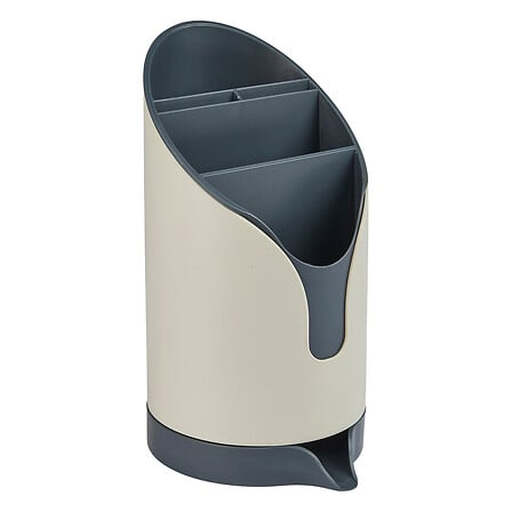
Why this product suits this profile: A separate cutlery drainer is useful when knives, forks, cooking utensils and sponges need to dry in an organised way.
Several compartments stop cutlery from lying on top of one another. The integrated spout addresses the common problem of a permanently wet collection surface.
ABS plastic, 12,8 × 11 × 20,2 cm, several compartments and a spout; according to the product information, clean with mild soap and water.
We have put together a complete, regularly updated list of products that fully meet these strict selection criteria and the safety regulations applicable in the EU.
Place the dish drying rack as close to the sink as possible, but not where water can splash directly onto the wall or worktop. Plates should stand in the slots provided; cups and glasses dry better with sufficient space between them. Ideally, place cutlery with the handles facing down, or follow the manufacturer’s instructions.
Empty the drip tray regularly and remove limescale or soap residue with a mild cleaning product. Avoid abrasive cleaners on stainless steel. According to the care instructions, bamboo models or those with wooden elements often must not be soaked completely in water.
This depends on the amount of washing-up and the available worktop space. A compact single-tier model may be sufficient for one person. Families and flat shares should also check the number of plate slots and whether there are separate areas for cups and cutlery. Before buying, the available centimetres next to the sink matter more than general capacity claims.
A drip tray is useful if water cannot drain straight into the sink. It protects sensitive worktops from drips. A model with a spout or water deflector is even more practical, provided it can be positioned correctly in relation to the sink.
Its service life depends on the material, load, moisture and care. Rust-resistant metal components, sturdy feet and a regularly emptied drip tray can help maintain its suitability for everyday use. Binding information about durability should be taken from the relevant product description and the warranty or guarantee details.