
Lieferung heute & morgen

Qualitätsgarantie

Willkommens-Angebote freischalten: KOSTENLOSE Lieferung | Bis zu 80 % RABATT | Kostenlose 30-Tage-JoyPlus-Testphase
App herunterladen
A dish drying rack needs to hold wet crockery securely, channel water away in a controlled manner and keep your worktop as clear as possible. In small kitchens, flats or households without a dishwasher, choosing the right one is especially important. An affordable model can do the job perfectly well – provided its dimensions, design and care requirements suit your daily use.
Many product descriptions tend to highlight terms like "large capacity", "space-saving" or "rust-resistant". What's far more telling are the concrete details: dimensions, material, number of tiers, type of drip tray and cleaning instructions.
A dish rack with a drip tray needs not only space for the rack itself, but also room to put items in and take them out. With a model measuring 58.2 × 36.2 × 10.3 cm, your worktop needs to accommodate those dimensions fully. It's also a good idea to leave a little gap from the wall to stop water reaching your cabinets or tiles.
Before you buy, you should therefore compare the length, width and height with the available space next to your sink. In very small kitchens, a rack that sits over the sink or a foldable one might be a better option.
A tray catches water, but it needs to be emptied regularly. If there's no spout or the tray can't be removed, liquid will sit under your crockery for longer. That makes cleaning harder and can encourage limescale build-up.
Look for a removable drip tray, a drainage spout or a design that channels water directly into the sink. This is just as important for a stainless steel dish rack as it is for plastic models.
"Large capacity" doesn't tell you much if it's not clear what items actually fit. Plate slots, cup holders and a separate cutlery drainer determine practical use far more than the overall surface area.
Think beforehand about whether you mainly want to dry plates and glasses, also pots and pans, or mostly cutlery and kitchen utensils. A two-tier dish drying rack gives you more sorting space on a smaller footprint, but it's taller and needs to be stable.
The dimensions must suit your sink and worktop. For a space-saving dish rack, these questions are crucial:
A foldable dish rack is particularly suitable for occasional use, small worktops or kitchens where the rack needs to be stored away after washing up.
Metal and stainless steel models vary depending on the build. When a product states "304 stainless steel", that's a specific material grade. However, you shouldn't take a blanket claim of permanent rust-resistance from that. After purchase, regular rinsing and thorough drying are sensible.
Plastic parts like drip trays are often made from polypropylene (PP) or ABS. They're lightweight and can usually be cleaned with mild washing-up liquid. Whether a product is dishwasher-safe must be checked against the manufacturer's instructions. For the 5five model with a steel frame and polypropylene tray, for example, it states that it is not dishwasher-safe.
A good design keeps crockery separated and allows air to circulate. Even so, you should empty the drip tray regularly and clean all contact surfaces. Look for:
A kitchen draining mat can be an alternative for just a few items. It takes up little storage space, but usually holds less crockery and must be cleaned according to the manufacturer's instructions. For the drainage mat made from textured rubber, for example, only wiping with a damp cloth and mild soap is recommended.
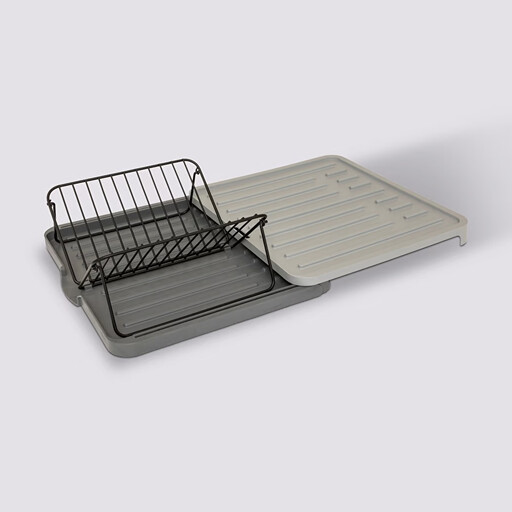
Why this product fits the profile: This model has a clearly defined footprint of 58.2 × 36.2 cm and is suitable for households looking for a classic kitchen drying rack with a tray.
The stated dimensions, steel frame and PP tray make it easy to check space and material before buying. Dishwasher suitability is not specified.
Steel frame material, integrated drip tray and stated capacity for up to six glasses and twelve additional items.
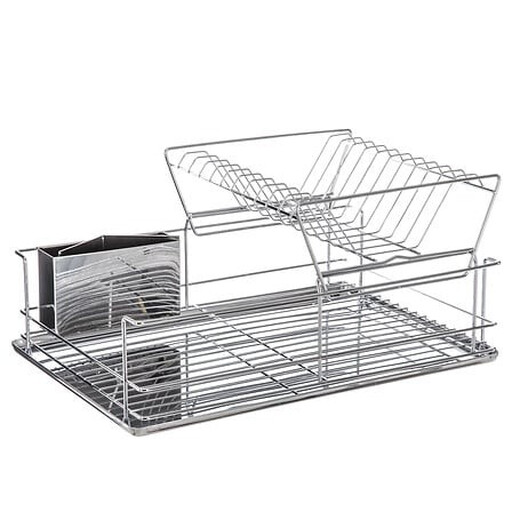
Why this product fits the profile: The two-tier design uses height rather than extra width and is aimed at households with regular washing up and limited worktop space.
The product details give external dimensions of 47 × 32.3 × 22.5 cm and a specific capacity of up to ten plates and twelve cups.
Two tiers, corrosion-resistant steel and stainless steel components, and separate areas for different types of crockery.
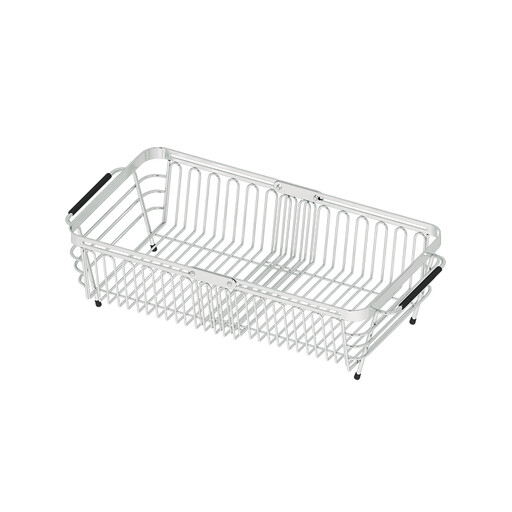
Why this product fits the profile: This extendable model is designed for sinks with a width of 29 to 44 cm and can also be used for rinsing fruit and vegetables.
Instead of using a large tray on the worktop, the raised grid surface channels water directly into the sink. You should check it's securely in place before use.
304 stainless steel, extendable length from 29 to 44 cm and use as a sink drying rack or colander.
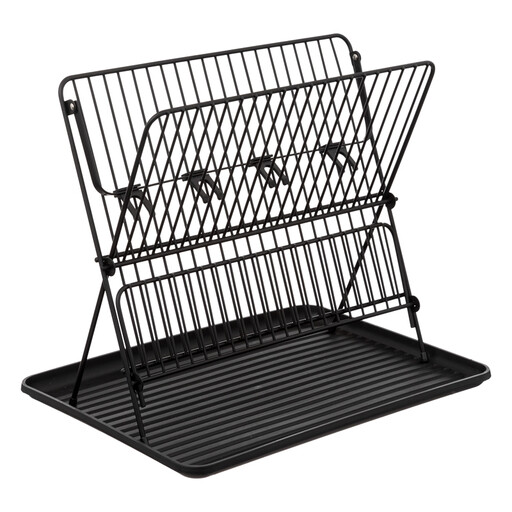
Why this product fits the profile: The foldable dish drying rack is ideal for kitchens where the worktop is used for different tasks and the rack needs to be stored away in between.
The drip tray is removable and the design folds flat. When loading, try not to overload the top tier.
Two tiers, steel and PP components, removable tray and flat storage when not in use.
We've put together a full, regularly updated list of products that fully meet these strict selection criteria and the safety regulations in force in the EU.
To keep your dish drying rack in good condition for longer, don't leave water sitting in the drip tray permanently. Remove food debris, rinse the tray and cutlery basket with mild washing-up liquid, and dry metal surfaces if needed.
For a model that sits over the sink, it's also important to:
That depends on your daily volume of washing up and the available worktop space. For a small kitchen, a compact single rack is often enough. For several people, a two-tier model can offer more sorting space without increasing the footprint proportionally. The key is to compare the external dimensions with where you plan to put it.
Stainless steel is easy to care for and is often used in damp environments. A specific material grade, such as 304 stainless steel, is far more meaningful than vague terms like "premium metal". Regardless of the material, you should avoid leaving water residue, limescale and harsh cleaning products on it.
Choose a dish drying rack with a suitable drip tray, slope or spout. The tray must be emptied regularly. With a sink model, water is channelled directly into the basin. An additional draining mat can be used for individual cups or glasses as a supplement.