
Lieferung heute & morgen

Qualitätsgarantie

Willkommens-Angebote freischalten: KOSTENLOSE Lieferung | Bis zu 80 % RABATT | Kostenlose 30-Tage-JoyPlus-Testphase
App herunterladen
A dish drying rack should hold plates, cups, glasses and cutlery neatly after washing without permanently taking over the kitchen worktop. In small and medium-sized kitchens, however, capacity is not the only deciding factor. Dimensions, water drainage, stability and cleaning requirements determine whether a dish drainer is genuinely practical for everyday use.
A two-tier dish drainer makes use of vertical space, but it usually requires more clearance above. Wall cabinets, windows or low shelves may get in the way. The upper tier should also not be overloaded. Before buying, add the product’s length, width and height to your checklist, along with the available space beside the sink.
With a dish rack featuring a drip tray, the key question is where the water goes. A shallow tray collects liquid but needs to be emptied regularly. Models with a spout or swivelling drainage outlet can direct water more effectively towards the sink. Without a sufficient incline, however, residual water may still collect beneath the rack.
A stainless steel dish drying rack may be well suited to damp environments, but stainless steel still requires care, particularly in areas with hard water. Coated steel racks should not be cleaned with harsh abrasive products. Plastic components are easy to wipe down, but may warp when exposed to direct heat. The specific care instructions therefore matter more than a general marketing claim about the material.
Measure the available footprint, including the space needed for the drip tray or drainage outlet. For a dish rack for the kitchen worktop, the following points are also important:
A slim space-saving dish drainer may be sufficient for singles or couples. Families often benefit from multiple tiers or a wider footprint.
A well-designed draining solution should allow air to circulate between items while collecting water in a controlled manner. Look for:
Limescale and standing water can be reduced by emptying the tray regularly and allowing the rack to dry completely. This is particularly important if the dish drainer remains on the worktop permanently.
Non-slip feet can help keep the rack stable on smooth worktops. A two-tier model should be loaded evenly. For camping or occasional use, a dismantlable or foldable model may be more practical than a permanently assembled dish rack.
When selecting materials, the product specifications are decisive:
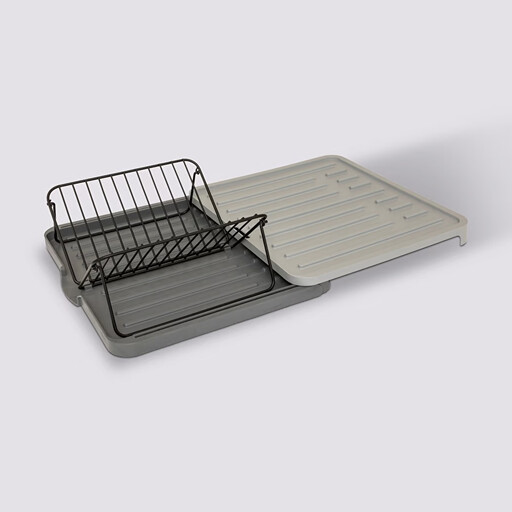
Why This Fits Their Persona: Measuring 58.2 × 36.2 × 10.3 cm, this model suits households looking for a low-profile rack for plates, glasses and cutlery.
The separate polypropylene drip tray collects water instead of allowing it to run directly onto the worktop. The product is explicitly listed as “not dishwasher-safe”.
Steel rack, drip tray and stated capacity for up to six glasses or twelve items.
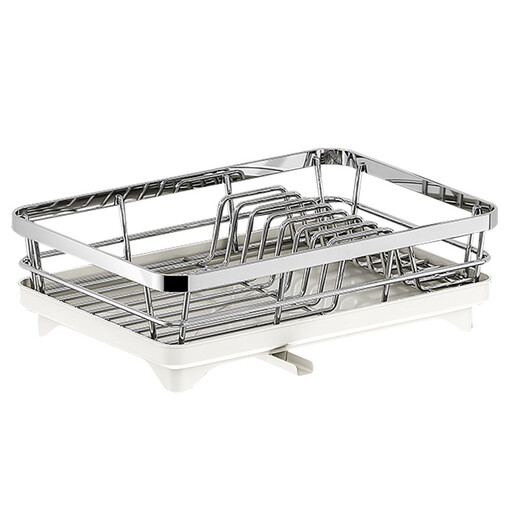
Why This Fits Their Persona: Measuring 42 × 29 × 12.7 cm, this one-piece model suits users who prefer a streamlined stainless steel rack with a drip tray.
The product description specifies stainless steel for the rack and a PP tray. A water deflector at the outlet is designed to direct drainage in the desired direction.
No assembly required; according to the product information, it features an integrated structure and an easy-to-clean tray.
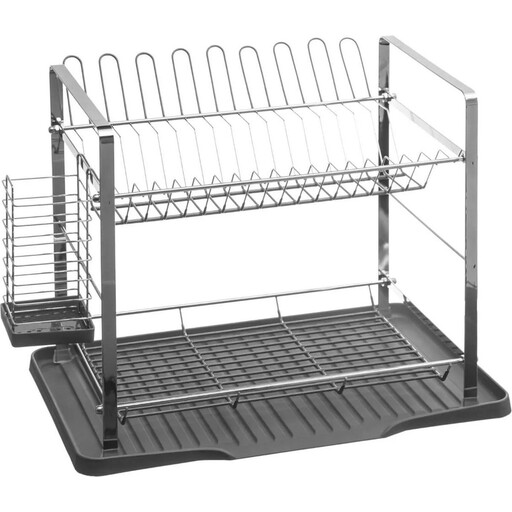
Why This Fits Their Persona: Measuring 50 × 30.5 × 34 cm and accommodating up to 17 plates, this two-tier drainer is aimed at families and users with larger washing-up loads.
The specifications mention a non-slip base, a removable cutlery basket and a drip tray. Check the height before ordering.
Two tiers, capacity for up to 17 plates, a removable cutlery basket and, according to the supplier, suitability for camping.
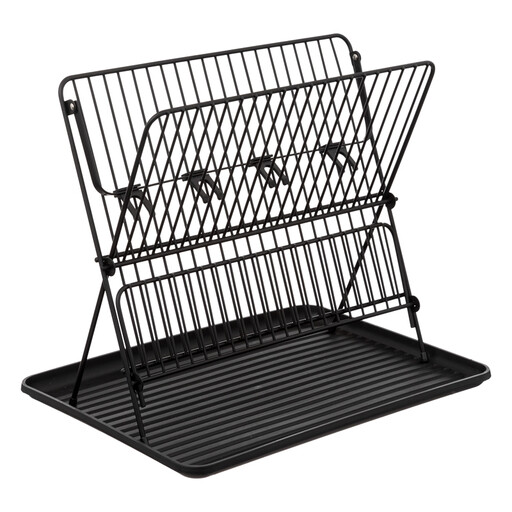
Why This Fits Their Persona: This foldable two-tier model is well suited to kitchens where the rack needs to be put away once the dishes have dried.
The product description highlights a removable drip tray and a compact folding design. For a secure footing, the upper tier should not be overloaded.
Materials listed: steel and polypropylene. The folding mechanism and two-tier design support flexible storage.
Place the dish drainer on a level, load-bearing surface close to the sink. Plates should be inserted into the designated slots, while cups and glasses should be positioned so that water can drain away. Cutlery belongs in the basket with sufficient space between individual items.
Empty the drip tray regularly and wipe the rack and tray with a mild cleaning product. On stainless steel, limescale deposits can be removed with a suitable non-abrasive cleaner. Wooden or bamboo components should be wiped dry after cleaning. Always follow the manufacturer’s instructions; several of the models mentioned are explicitly not dishwasher-safe.
The complete range of dish drying racks includes different sizes, materials, drip trays and tiered solutions for kitchens in Germany.
First, measure the available space beside the sink. A low-profile model around 35 to 45 cm wide may be sufficient for smaller households. If worktop space is limited, a two-tier or foldable dish drainer can be a practical choice. However, make sure its height does not interfere with wall cabinets.
Service life depends on the material, load, moisture exposure and care routine. Avoid overloading, standing water and abrasive cleaning products. On coated racks, keep an eye out for scratches. A statutory minimum warranty of two years is stated for several of the products listed; this does not, however, replace a specific indication of their individual service life.
Dish drying racks normally have no direct running costs because they operate without electricity. Possible follow-on expenses include cleaning products, replacement parts or replacing a damaged drip tray. A model that is easy to access and clean can reduce the maintenance effort involved in everyday use.