
Lieferung heute & morgen

Qualitätsgarantie

Willkommens-Angebote freischalten: KOSTENLOSE Lieferung | Bis zu 80 % RABATT | Kostenlose 30-Tage-JoyPlus-Testphase
App herunterladen
A dish drying rack should reliably hold plates, glasses, cutlery and pots, channel water away in a controlled manner and keep your worktop dry. In practice, however, dish racks vary considerably in terms of design, materials, footprint and cleaning requirements. Particularly in small kitchens, family households or while camping, an unsuitable design can quickly become a daily nuisance.
A dish rack may hold plenty of plates yet still be too wide or too tall for the intended space. Before buying, check not only the external dimensions but also the clearance from wall cabinets, taps and the sink. A 2-tier dish rack makes better use of vertical space but requires sufficient room above the worktop.
An integrated drip tray collects draining water but needs to be emptied and cleaned regularly. Without a slope or drainage outlet, water may remain standing for longer. This increases maintenance and, if cleaning is inadequate, can lead to limescale or dirt deposits.
“Metal” is not a precise statement about surface quality. Check whether the product is actually made from stainless steel, coated steel or plastic. A stainless steel dish drying rack is not automatically dishwasher-safe. Aggressive cleaning products can also damage coatings. The manufacturer’s specific care instructions are the deciding factor.
Measure the length, width and height of the available space. For a kitchen worktop with limited room, consider a compact dish rack with drip tray, a foldable model or a dish rack for the sink. For a model positioned over the sink, the adjustable length must match the sink’s internal or external width.
A freestanding rack offers greater flexibility but requires a sufficiently large, level surface. In camping kitchens or small holiday apartments, a foldable space-saving dish rack can be a smart choice because it can be stored compactly after use.
Check whether the layout suits your crockery:
Capacity claims such as “holds up to 17 plates” should be treated as a guide. Actual use depends on plate diameter, crockery shape and any additional cutlery or cookware.
A good drying solution should direct water either into a tray or straight into the sink. Models with a drainage outlet or adjustable drainage direction can keep the worktop drier. With a dish rack featuring a drip tray, it is also important to check whether the tray can be removed.
Check the care instructions carefully: some products are not dishwasher-safe and should be cleaned with a damp cloth and mild detergent. Statutory warranty protection in the EU is generally at least two years; it does not, however, cover improper use or inadequate care.
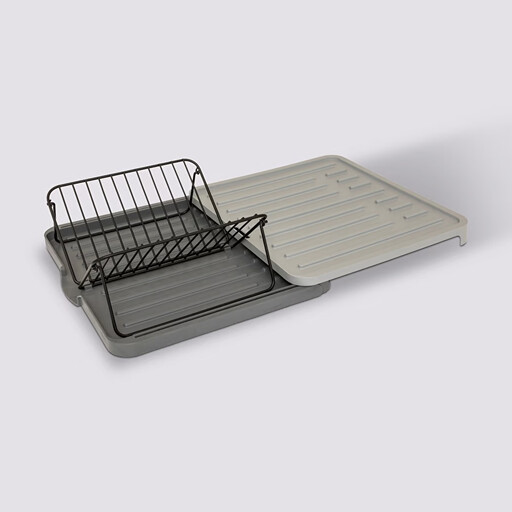
Why This Fits Their Persona: Measuring 58.2 × 36.2 × 10.3 cm, this single-tier dish drying rack is well suited to households looking for a straightforward solution with a separate drip tray.
The drip tray prevents water from running directly onto the worktop. According to the product specifications, however, the rack is not dishwasher-safe and should be cleaned by hand.
Steel rack, polypropylene tray, space for up to six glasses and twelve additional items according to the product data.

Why This Fits Their Persona: Measuring 42 × 29 × 12.7 cm, this model suits a compact to medium-sized worktop. It is aimed at users who prefer stainless steel and integrated water drainage.
The material specification lists stainless steel for the rack and polypropylene for the tray. A rotating outlet helps direct the water where it needs to go.
According to the product description, no assembly is required. The drip tray is removable, and the rack is designed to accommodate larger quantities of dishes.
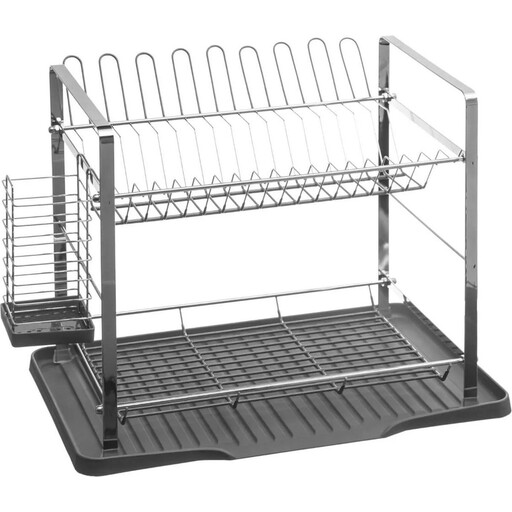
Why This Fits Their Persona: The vertical design, measuring 50 × 30.5 × 34 cm, makes efficient use of height and reportedly holds up to 17 plates. The removable cutlery basket adds further organisation.
The two tiers reduce the need for additional worktop space. An anti-slip base and the included drip tray address stability and water drainage.
Suitable for kitchens or camping according to the product description. Clean with a damp cloth; dishwasher use is not recommended.
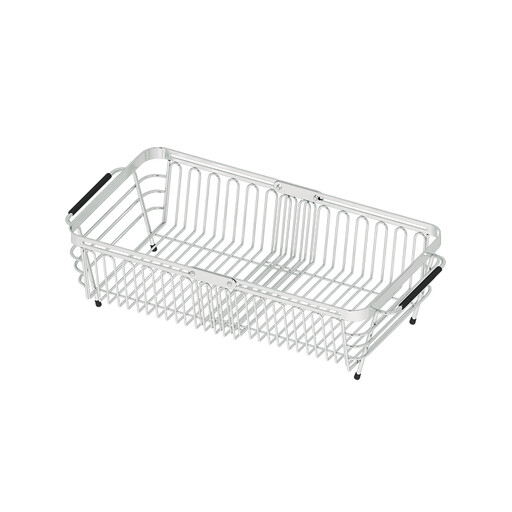
Why This Fits Their Persona: According to the product data, the model extends from 29 to 44 cm and sits directly over the sink. This keeps the worktop largely clear.
Water drains directly into the basin. Before loading it, check that both support surfaces rest securely on the sink rim and that the length is compatible with the sink.
304 stainless steel according to the product description, adjustable length from 29 to 44 cm, plus the option to use it as a colander for fruit and vegetables.
Our category features an ever-expanding selection of dish racks with drip trays for a wide range of kitchen layouts and available spaces.
Empty the drip tray regularly and remove residue with mild detergent. Allow the rack and tray to dry completely afterwards. With a kitchen dish drying rack, heavy pots should preferably be placed on the bottom. Evenly distributing the load is important with 2-tier designs to prevent the rack from tipping.
For an over-the-sink model, check the supports and the adjusted width before every use. Sharp metal edges, damaged coatings or loose components should never be ignored. For camping and mobile kitchens, a lightweight, easy-to-dismantle or foldable model with clear dimensions is recommended.
An extendable over-the-sink rack or a vertical 2-tier dish rack can free up valuable worktop space. The key considerations are exact dimensions, stability and the position of the drainage outlet. When space is extremely limited, a foldable model is practical if it needs to be stored away after the dishes have dried.
Empty standing water promptly and wipe the tray dry regularly. For limescale, use water and a mild cleaning product that is compatible with the material. Always check the care instructions, as not every material is suitable for aggressive descaling products.
Service life depends on the material, load, exposure to moisture and level of care. A rack should not be overloaded and must be allowed to dry fully on a regular basis. Statutory EU warranty protection lasts at least two years; for products with coatings or plastic components, regular checks for cracks, rust spots and deformation are advisable.