
Lieferung heute & morgen

Qualitätsgarantie

Willkommens-Angebote freischalten: KOSTENLOSE Lieferung | Bis zu 80 % RABATT | Kostenlose 30-Tage-JoyPlus-Testphase
App herunterladen
A good dish rack is an unsung hero in the kitchen, ensuring order and dry countertops. But the selection is vast, and not every model delivers on its promise. Many buyers are frustrated by products that rust quickly, are unstable, or leave behind unhygienic puddles of water. As your Joybuy Product Recommendation Officer, I'm here to help you spot these pitfalls and make an informed decision that fits your kitchen and your needs.
This guide focuses on the objective criteria that define a durable and functional dish rack, showing you what to look for before you buy.
Before we dive into recommended features, it's important to understand the typical shortcomings that often only become apparent after a few weeks of use.
To avoid a purchase you'll regret, you should focus on three core aspects: material, design, and drainage.
The material affects not only the look but, more importantly, the durability and maintenance required.
The size of your kitchen and the volume of your daily dishes will determine the right design.
A well-designed drainage system is crucial for hygiene. The drainboard should collect and channel water effectively. Ideally, it features a pivoting or extendable spout that directs water straight into the sink. This keeps your countertop and the rack itself dry and clean.
Here are some models that, based on their objective features, are suitable for different user profiles.
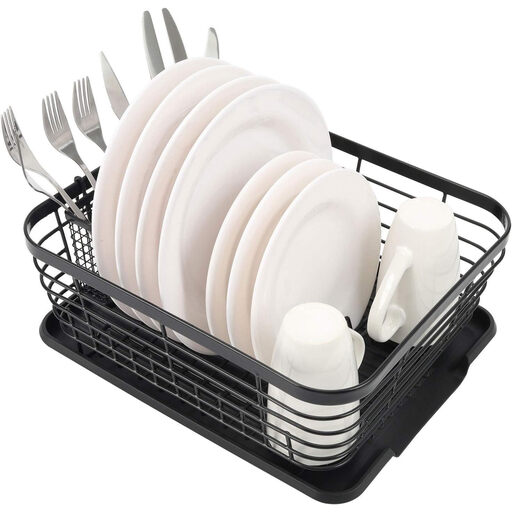
Why This Fits Their Persona: With its compact dimensions (approx. 36 x 31 cm), this model is ideal for small kitchens, single households, or as a supplementary rack. It can be placed directly in the sink, which keeps the countertop completely free.
By being placed in the sink, it completely avoids the problem of standing water on the countertop. The powder-coated metal construction offers protection against rust with proper care.
Versatile Placement: Works both in the sink and on the countertop thanks to the included drainboard. No Assembly: Ready to use out of the box.
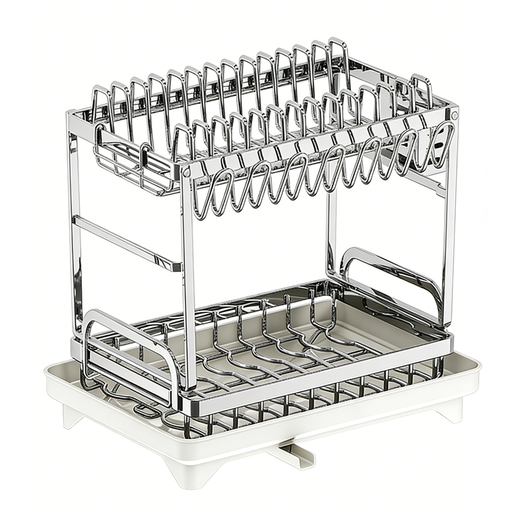
Why This Fits Their Persona: This 2-tier model offers maximum capacity on a minimal footprint. It's ideal for families who wash a large number of plates, bowls, and cutlery daily and need an organised drying solution.
The stainless steel and PP material construction is designed for stability and rust resistance. An integrated drainage spout channels water away directly, effectively preventing standing water and limescale buildup.
High Capacity: The two-tier design doubles the usable drying space. Active Drainage: The drainage spout ensures a dry countertop.
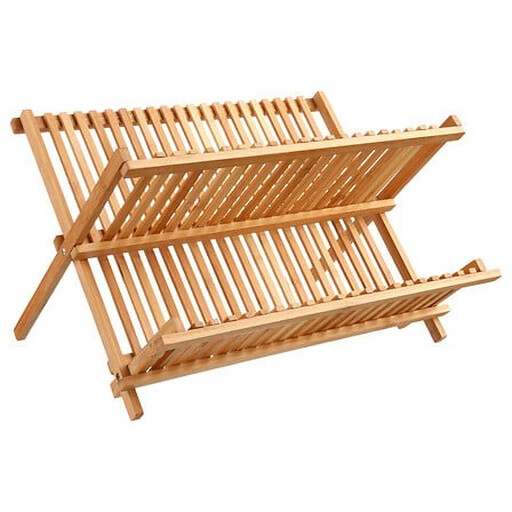
Why This Fits Their Persona: For anyone seeking an alternative to metal and plastic, this model made from natural bamboo offers a warm and appealing aesthetic. It blends harmoniously into kitchens with wooden elements.
As a natural material, bamboo is not susceptible to rust. The collapsible design allows the rack to be stored when not in use, which keeps the countertop clear and prevents prolonged moisture exposure to the material.
Natural Material: Made from bamboo, a renewable resource. Collapsible & Space-Saving: Folds flat for easy storage.
We have compiled a complete, up-to-date list of products that fully meet these strict selection criteria and safety standards.
Regular cleaning is crucial, regardless of the material. Wipe down the rack and drainboard at least once a week with a mild detergent and water. Afterwards, dry it thoroughly. For stainless steel models, avoid using abrasive sponges to prevent scratching the surface. Bamboo racks must be allowed to dry completely after any contact with water to prevent mold growth.
The term "space-saving" can refer to several features. It could be a dish stand with a very small footprint, designed for narrow countertops. It could also be a collapsible dish rack that is stored away after use. Likewise, in-sink models are considered space-saving because they don't occupy any countertop space.
Not necessarily. Rust resistance depends on the quality of the stainless steel alloy. Inexpensive products often use lower-grade steel that is susceptible to corrosion. Look for designations like "304 stainless steel" or "18/8 stainless steel," as these have a higher chromium and nickel content, thus offering better protection against rust.