
Lieferung heute & morgen

Qualitätsgarantie

Willkommens-Angebote freischalten: KOSTENLOSE Lieferung | Bis zu 80 % RABATT | Kostenlose 30-Tage-JoyPlus-Testphase
App herunterladen
A dish rack is a discreet yet essential helper in any kitchen. It keeps things tidy after washing up and allows for hygienic drying of your dishes. However, the selection is vast, and not every model delivers on its promises. Many buyers get frustrated with rust stains, puddles on the countertop, or an unstable construction that becomes useless after just a few months.
As your Joybuy Product Recommendation Officer, I'm here to help you identify the common pitfalls and make an informed decision. This guide will show you the crucial features to look for to find a durable, functional dish rack that perfectly suits your needs.
Before we get to the solutions, it's important to understand the problems. Many models on the market have design flaws that only become apparent with daily use.
To avoid the problems mentioned above, you should check three key aspects before buying: the material, the design, and the drainage system.
The material determines the durability, maintenance, and look of your dish rack.
The size of your kitchen and the amount of your daily dishes will determine the right design.
Good management of dripping water is crucial for a clean and dry kitchen.
Based on the criteria above, we have identified some products that offer a well-thought-out solution for specific user profiles.
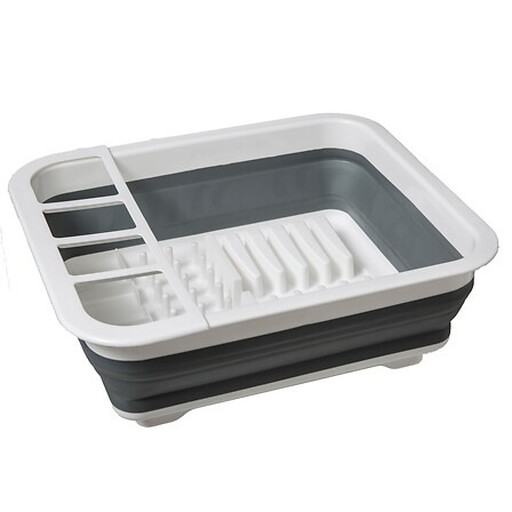
Why This Fits Their Persona: Perfect for small kitchens, apartments, or campers. The retractable design allows for flexible use and extremely compact storage when not in use.
Solves the space problem (Pitfall 3) with its smart, collapsible design. The PP/TPE material also prevents the rust pitfall (Pitfall 1).
Flexible Design: Adapts to the volume of dishes. Lightweight and Portable: Easy to store or take with you.
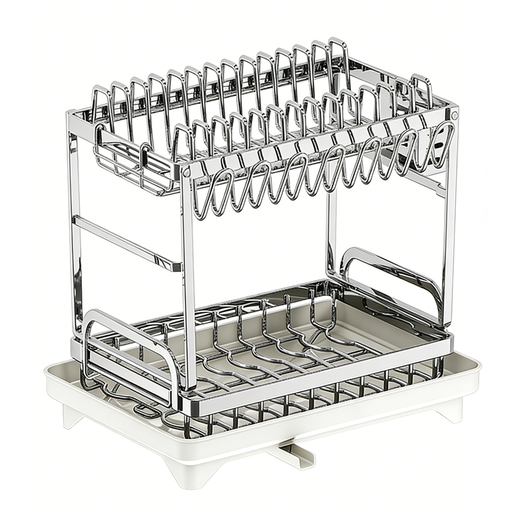
Why This Fits Their Persona: This 2-tier model maximises drying capacity without taking up much counter space. It's ideal for families who wash a large number of plates, bowls, and cutlery daily.
The stainless steel and PP construction prevents rust (Pitfall 1). The integrated bottom drain pipe solves the water trap (Pitfall 2) by draining directly into the sink.
Large Capacity: Two levels for maximum load. Direct Water Drain: Keeps the countertop dry and clean.

Why This Fits Their Persona: For users who value a durable, hygienic, and aesthetically pleasing solution. The clean design and high-quality materials blend seamlessly into modern kitchens.
The solid stainless steel construction prevents rust (Pitfall 1). The drip tray's rotating spout offers a superior solution for water drainage (Pitfall 2), keeping the countertop dry.
High-Quality Material: Durable and rust-proof stainless steel. Smart Drainage: The rotating spout adapts to any sink position.
We have compiled a complete, up-to-date list of products that fully meet these strict selection criteria and safety standards.
1. How do you properly clean a dish rack to prevent mould and limescale? Regardless of the material, regular cleaning is crucial. Empty the drip tray daily. Clean the entire rack at least once a week with warm water and dish soap. For limescale buildup, a solution of water and vinegar helps. Ensure the rack can dry completely, especially for wooden models.
2. Is a stainless steel dish rack always rust-proof? Not necessarily. Rust resistance depends on the quality of the stainless steel. 304-grade stainless steel is considered the standard for kitchen applications and is highly corrosion-resistant. Cheaper models may be made from lower-grade alloys that are more prone to rust, especially at weld points or if the surface is damaged.
3. How much space should I plan for a dish rack? Measure the available space on your countertop next to the sink before you buy. Consider not only the footprint (length x width) but also the height, especially if you plan to place a 2-tier dish rack under wall cabinets. Also, plan for some extra space around the rack to ensure good air circulation for faster drying.