
Lieferung heute & morgen

Qualitätsgarantie

Willkommens-Angebote freischalten: KOSTENLOSE Lieferung | Bis zu 80 % RABATT | Kostenlose 30-Tage-JoyPlus-Testphase
App herunterladen
A good dish rack is an unsung hero in the kitchen—it keeps things organised, speeds up dish drying, and keeps your countertop dry. But the selection is vast, and not every model lives up to its promise. Many buyers are frustrated by rust spots appearing after just a few months, unstable designs, or puddles of water on their countertop. As your Joybuy Product Recommendation Officer, I'll help you navigate these common pitfalls and find a dish rack that truly fits your needs and your kitchen.
Before we look at the important features, let's highlight the problems that often only surface after the purchase. Knowing these will help you make a more informed decision.
To avoid the problems mentioned above, you should check three key aspects before buying: material, design, and the water drainage system.
The material affects not only the look but, more importantly, the durability and maintenance of your dish rack.
The size and shape of the dish rack must suit your household and your kitchen.
A well-designed drainage system is crucial. There are two common variants:
Here are some models tailored to different needs and kitchen situations.
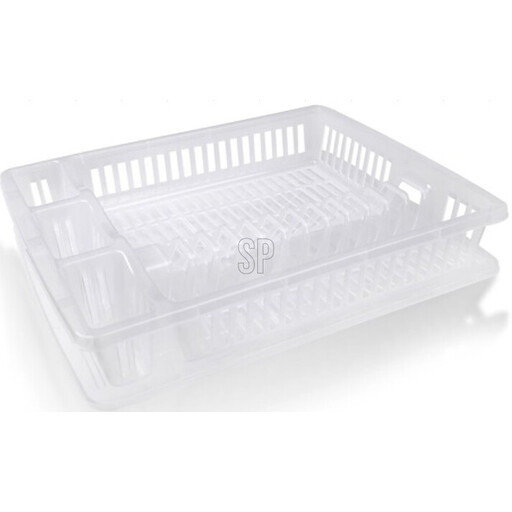
Why It's a Great Fit: A straightforward and functional solution for daily use. Ideal for a first apartment, students, or small households looking for a reliable, basic setup without the high cost. The simple design blends unobtrusively into any kitchen.
This model is made entirely of PP plastic, avoiding the rust trap from the outset. The simple, one-piece construction is stable and has no wobbly attachments.
Completely low-maintenance, rust-proof, and very cost-effective. It provides solid core functionality without unnecessary complexity.
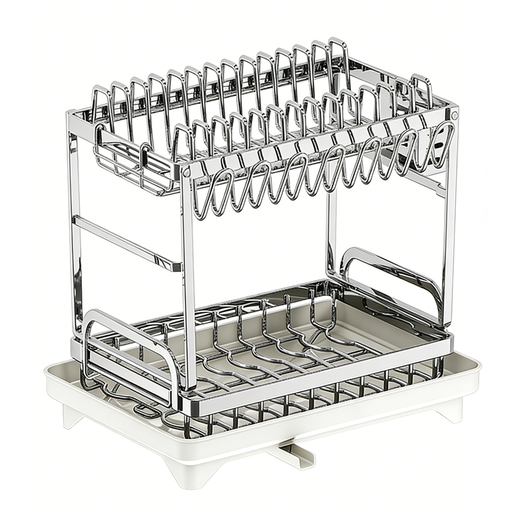
Why It's a Great Fit: Anyone needing to dry a lot of dishes in a small area will benefit from the 2-tier design. This model doubles the drying capacity without blocking valuable counter space. Ideal for families or shared living spaces with limited room.
It solves the water drainage problem with an integrated drainage spout that channels water directly into the sink, preventing puddles. The stainless steel and PP construction is designed for stability.
Maximum capacity on a minimal footprint. The direct water drainage keeps the countertop dry and clean.
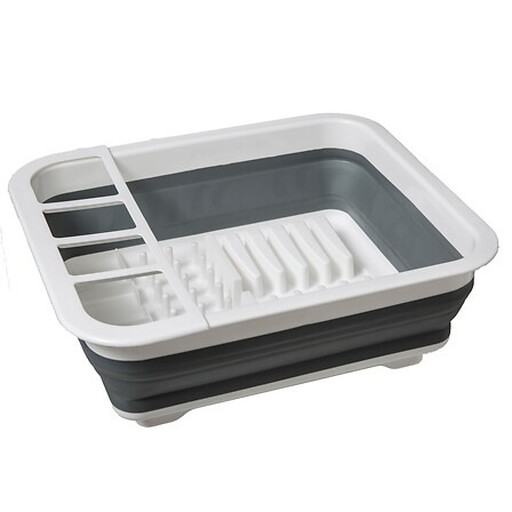
Why It's a Great Fit: This collapsible dish rack is the answer for anyone who values a clutter-free countertop. It provides space for plates and glasses when needed, then folds flat for easy storage. It's also a practical option for camping.
It solves the problem of permanent space usage. Instead of buying a rack that's too large, this model offers an on-demand solution. The material (PP/TPE) is robust, lightweight, and won't rust.
Extremely space-saving thanks to its collapsible design. Flexible to use and easy to store.
We have compiled a complete, up-to-date list of products that fully meet these strict selection criteria and German safety regulations.
1. How do you clean a dish rack properly to prevent mould and limescale? Regular cleaning is crucial, regardless of the material. Plastic and stainless steel racks can be cleaned with dish soap and a brush. The drip tray should be emptied daily and cleaned thoroughly at least once a week to remove limescale and soap residue. For stubborn limescale, a mixture of water and vinegar solution helps. Bamboo racks should only be wiped with a damp cloth and then dried well.
2. Which material for a dish rack is the most durable? High-quality, rust-proof stainless steel (like 304-grade steel) is considered very durable and resistant to moisture and mechanical stress. Solid, well-made plastic (PP) can also last for many years and has the advantage of not being able to rust. Ultimately, durability heavily depends on the quality of craftsmanship and proper care.
3. Can you put a dish rack in the dishwasher? That depends on the material. Many models made of pure plastic or stainless steel are dishwasher-safe. Always check the manufacturer's instructions for this. Models with wooden elements, bamboo racks, or coated metal racks should generally not be put in the dishwasher, as high temperatures and harsh detergents can damage the materials. Manual cleaning is the safer method here.