
Lieferung heute & morgen

Qualitätsgarantie

Willkommens-Angebote freischalten: KOSTENLOSE Lieferung | Bis zu 80 % RABATT | Kostenlose 30-Tage-JoyPlus-Testphase
App herunterladen
A good dish rack is an unsung hero in the kitchen. A bad one, however, quickly becomes a daily annoyance. Many models look practical at first glance but reveal themselves to be a bad buy after just a few weeks. Before you decide on a new dish rack, you should know the typical pitfalls that often only become apparent in everyday use.
These include three main problems:
This buying guide will show you the crucial features to look for to find a durable and functional solution for your kitchen.
To avoid a purchase you'll regret, don't let yourself be guided by design trends alone. The following three parameters are critical for the functionality and longevity of your new kitchen organiser.
The material is the primary factor in how long your dish rack will remain presentable and hygienic.
The size of the dish rack must suit your household and the available space.
A well-designed drainage system keeps your countertop dry and prevents the build-up of limescale and bacteria.
Here are some recommendations tailored to different needs and kitchen sizes.
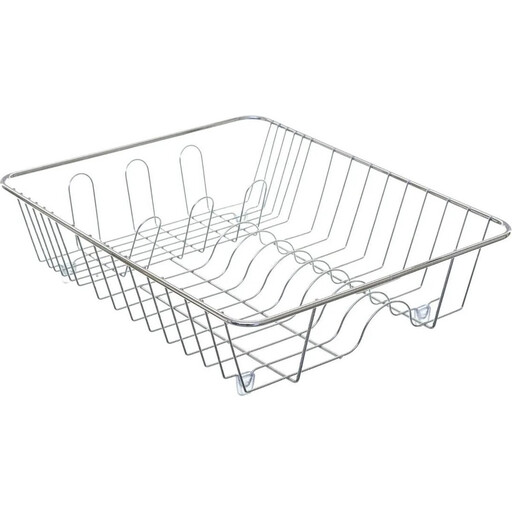
Why This Fits Their Persona: Ideal for individuals or small households looking for a straightforward and functional basic solution. The compact design takes up little space yet offers enough capacity for daily dishwashing.
The design features a raised edge that prevents water from overflowing onto the countertop, thus counteracting the problem of poor drainage.
Compact dimensions (39 x 33.5 cm) and an integrated cutlery basket ensure organised and space-saving drying.
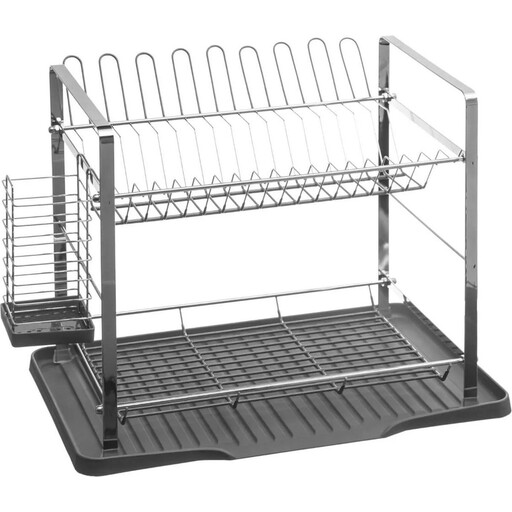
Why This Fits Their Persona: Perfect for families or shared apartments with a high volume of dishes. The two-tier design maximises drying capacity on a small footprint and creates order after washing up.
The non-slip base ensures a stable stand and prevents wobbling, even when fully loaded. A separate drip tray reliably catches water.
High capacity for up to 17 plates, a removable cutlery basket, and the space-saving 2-tier design make it an efficient kitchen organiser.
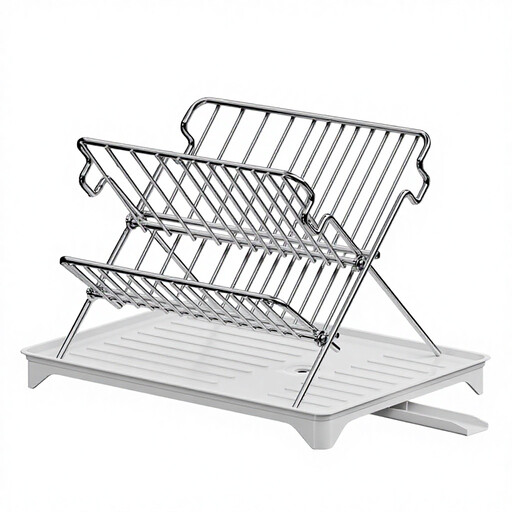
Why This Fits Their Persona: The solution for anyone who wants maximum flexibility on their countertop. This rack offers plenty of space on two levels when needed and folds flat for storage when not in use.
The material, made of stainless steel and PP, is moisture and rust-resistant. The integrated drain pipe directs water away and prevents standing water in the drip tray.
The collapsible design saves valuable space. No assembly is required, and the compartmentalised layout ensures good organisation of the dishes.
We have compiled a complete, up-to-date list of products that fully meet these strict selection criteria and applicable regulations.
1. How do I clean my dish rack to prevent rust and limescale? For regular cleaning, warm water with a little washing-up liquid is usually sufficient. Empty and wipe the drip tray dry daily to prevent limescale build-up. For stubborn limescale stains, a diluted vinegar solution can help. Avoid aggressive scouring agents, as they can damage the surface coating and promote rust formation.
2. What is the best material for a durable dish rack? High-quality stainless steel (often marked as 18/8 or 304) offers excellent durability and rust resistance. Models made of solid, thick-walled plastic (like PP) or silicone are also extremely durable as they cannot rust. With coated steel, the lifespan depends heavily on the quality and integrity of the coating.
3. What is the difference between a dish rack and a dish basket? The terms are often used interchangeably. Traditionally, a dish basket often refers to a simpler, one-piece design, frequently made of plastic or wire, which is placed directly in the sink or next to it. A dish rack or dish stand is often a more complex structure, possibly with multiple tiers, separate holders for plates and glasses, and its own drainage system like a drip tray.