
Lieferung heute & morgen

Qualitätsgarantie

Willkommens-Angebote freischalten: KOSTENLOSE Lieferung | Bis zu 80 % RABATT | Kostenlose 30-Tage-JoyPlus-Testphase
App herunterladen
A good dish towel is an unsung but essential hero in any kitchen. Yet, the search for the right one can be frustrating: some leave unsightly lint on glasses, others barely dry anything, and many feel thin after just a few washes. This article serves as your practical guide. It explains the key objective criteria to consider when buying and presents a selection of models that impress with their material properties and functionality. Our goal is to give you a solid foundation for choosing durable and practical dish towels.
Choosing the right kitchen drying towel depends on a few crucial criteria. Once you know what they are, you can zero in on products that meet your specific needs.
The material is the most important factor in a dish towel's performance. Each fiber type has specific properties:
The way the threads are woven affects the surface texture and, consequently, the absorbency.
To ensure your dish towels reach their full absorbency potential, proper initial treatment is key. New towels should be washed several times before their first use without any fabric softener. Fabric softener leaves a film on the fibers, significantly reducing their ability to absorb water.
Based on material, construction, and functionality, we have curated a selection of recommended products for various needs.
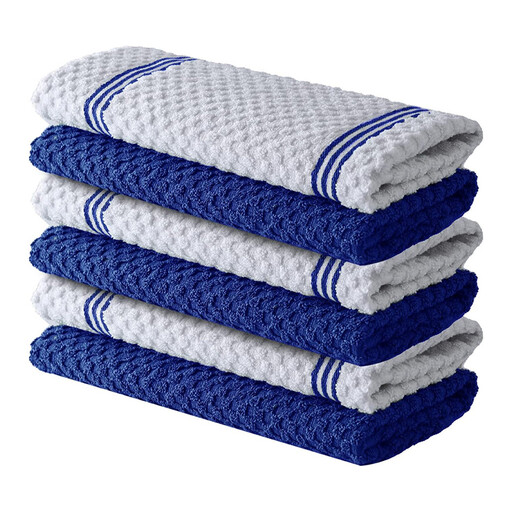
Why It Stands Out: This kitchen towel set from JORDAN&JUDY is designed for efficiency. According to the manufacturer, the towels are quick-drying and lint-free, making them ideal for streak-free drying of glassware and dishes. Measuring 40 x 66 cm, they offer a manageable size for everyday tasks.
Advantages:
Best For: Households looking for a practical, bulk supply of reliable, all-purpose kitchen towels for daily use who value lint-free results.
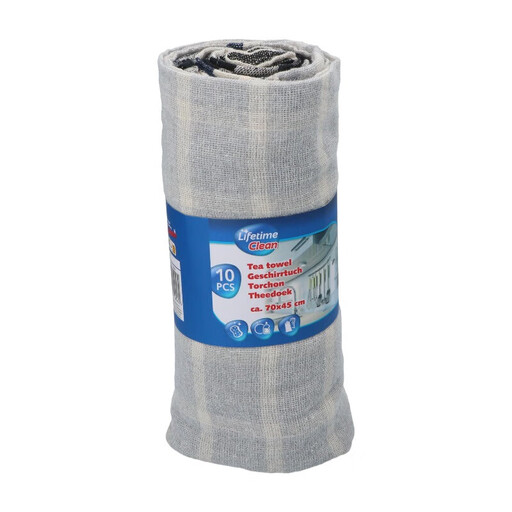
Why It Stands Out: This set is distinguished by its material composition and high fabric weight. The blend of polyester (PES) and viscose ensures high absorbency and a soft feel. With a weight of 130 GSM, these towels are densely and robustly constructed. The generous 70 x 45 cm dimensions make them highly versatile.
Advantages:
Best For: Families and heavy users who need a large stock of durable and very highly absorbent dish towels for a wide range of kitchen tasks.
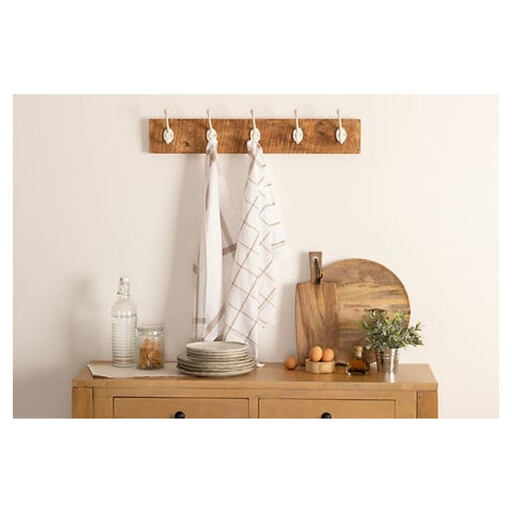
Why It Stands Out: This set of 2 combines functionality with an appealing design. Made from 100% cotton, these towels offer the proven absorbency and softness of the natural material. The set includes two different, coordinated patterns (checkered and striped) in a subtle grey tone. A grey dish towel blends seamlessly into modern kitchen décor.
Advantages:
Best For: Those who are looking for kitchen textiles that are not only functional but also decorative, and who appreciate the qualities of cotton dish towels. Ideal for smaller households or as a supplement to an existing collection.
If you haven't found the perfect product for your kitchen in this selection, there are many more alternatives to explore. From different materials to a wide variety of designs, the choice is vast.
Browse the best kitchen essentials collection of 2022 to find more functional and stylish textiles for your kitchen.
1. How should I wash new dish towels? New dish towels should be washed before the first use at the highest temperature recommended by the manufacturer—ideally two or three times. It is crucial to avoid fabric softener, as it coats the fibers and severely reduces water absorption. A splash of vinegar in the final rinse cycle can help remove manufacturing residues and improve absorbency.
2. What is the most absorbent material for dish towels? Absorbency depends on both the material and the weave. Cotton with a waffle weave is generally very absorbent. Linen also absorbs a lot of moisture and releases it quickly. High-quality microfiber blends are specifically designed to hold multiple times their own weight in water, making them another excellent choice for highly absorbent dish towels.
3. Why do some kitchen towels produce lint? Lint is often caused by short or loose fibers in the fabric. New cotton towels, in particular, are prone to linting at first. This typically subsides after several washes. Higher-quality towels with longer fibers (like those found in linen or certain types of cotton) and a tighter weave tend to be lint-free kitchen towels.