
Lieferung heute & morgen

Qualitätsgarantie

Willkommens-Angebote freischalten: KOSTENLOSE Lieferung | Bis zu 80 % RABATT | Kostenlose 30-Tage-JoyPlus-Testphase
App herunterladen
A dish drainer should hold plates, cups and cutlery neatly after washing up while keeping your worktop dry. In small German kitchens, every centimetre counts. However, not every dish drainer will automatically fit the available space beside your sink. The key factors are its dimensions, water drainage, material and how it will actually be used in your household.
Claims such as “large capacity” mean little if the footprint does not suit your kitchen. A 2-tier dish drainer makes good use of vertical space, but it may get in the way beneath wall cupboards. Before buying, measure the available length, depth and height. Also consider the distance from the tap and the space needed to load and unload the drainer.
A simple tray catches dripping water, but it needs to be emptied and cleaned regularly. With a dish drainer featuring a drainage system, it is therefore important to check whether the water is directed towards the sink or simply emerges through an opening. A rotating spout can make positioning easier, but it does not replace checking whether the design can actually be positioned over the sink.
“Metal” or “rust-free” are not sufficient descriptions of the entire construction. For example, on a stainless-steel dish drainer, the draining tray or plastic parts may be made from a different material. Coated steel frames also require suitable care. Check the material details for the frame, tray and cutlery holder, as well as whether the product is dishwasher-safe.
For a small household or a narrow worktop, a space-saving dish drainer with one tier is often suitable. Two-tier models provide more sorting space while taking up less floor space, but they require sufficient vertical clearance.
As a practical guide:
A dish drainer with a draining tray protects the worktop from standing water. Look for a removable tray, easily accessible corners and a surface that can be cleaned with a damp cloth. With a dish drainer featuring a drainage system, the spout should ideally point towards the sink or a suitable collection area.
A dish drainer for plates and cups should hold plates securely in an upright position. Wide slots may provide too little support for small plates, while very narrow gaps can restrict air circulation. A separate cutlery drainer prevents knives, forks and cooking utensils from being placed between the plates.
When choosing the material:
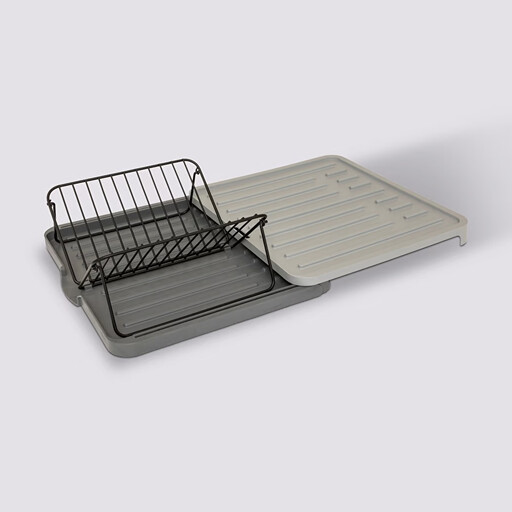
Why this product suits this profile: Measuring 58.2 × 36.2 × 10.3 cm, this single-tier rack offers a manageable solution for everyday washing up. It is designed for indoor use and has space for six glasses.
The stated external dimensions and the polypropylene tray material make it easier to assess the product before buying. The tray collects dripping water instead of releasing it directly onto the worktop.
Steel frame, separate draining tray and compact height. According to the product details, it weighs 1.01 kg.
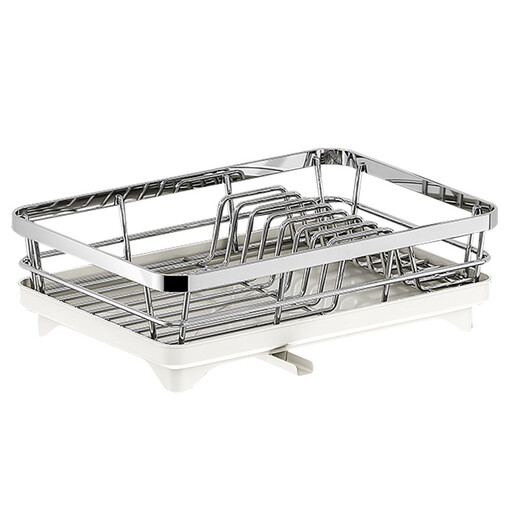
Why this product suits this profile: Measuring 42 × 29 × 12.7 cm, this model combines a stainless-steel frame with a PP tray. The rotating spout can be directed towards the position of the sink.
The materials used for each component are clearly specified. The drainage system is described as a product feature, reducing the risk of a permanently wet worktop.
Stainless-steel construction, integrated tray and rotating spout. The product is described as a pre-assembled unit.
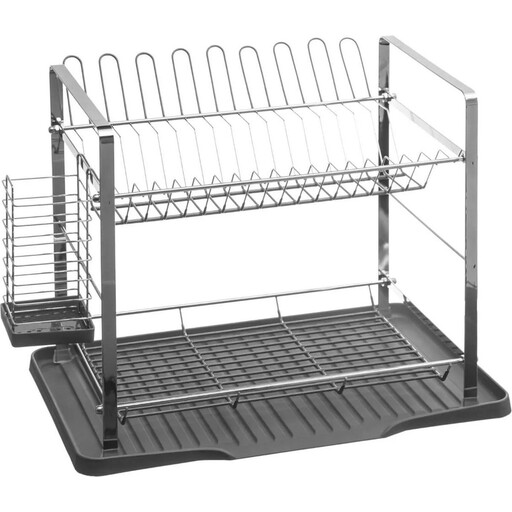
Why this product suits this profile: Two tiers measuring 50 × 30.5 × 34 cm create separate areas for dishes. According to the product description, the model can hold up to 17 plates and is also suitable for camping.
The maximum number of plates, external dimensions and non-slip base are all clearly specified. This makes it easier to compare the capacity with your own requirements.
2-tier design, removable cutlery basket and draining tray. Assembly requires no special tools.
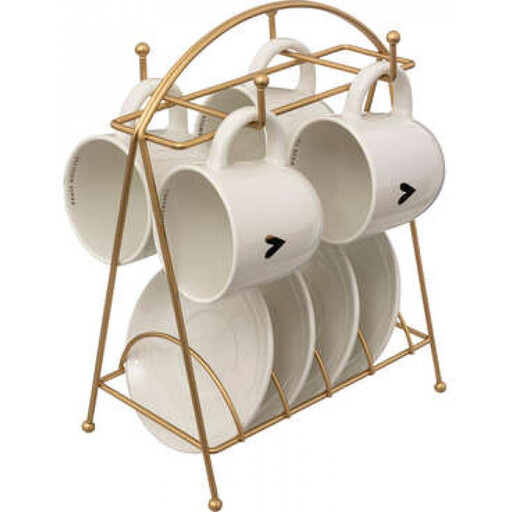
Why this product suits this profile: The set is designed for four cups and saucers and measures 15 × 19.7 × 26 cm. The handle makes it easier to move around the kitchen or dining area.
Its use is clearly limited to cups and saucers. If you do not need a universal plate rack, this helps you avoid an oversized solution.
Stainless-steel frame, four cups and saucers, plus a comparatively narrow footprint.
We have put together a complete, regularly updated list of products that fully meet these strict selection criteria and the safety regulations applicable in the EU.
Place the dish drainer on a level, sturdy surface. Position plates so that water can drain away, and make sure delicate glasses are not placed beneath heavy items. Empty and clean the draining tray regularly. For steel and stainless-steel parts, drying them after cleaning is recommended, particularly around joints and connection points.
Also follow the manufacturer’s instructions: several of the models mentioned are not dishwasher-safe and should be cleaned with a damp cloth or mild detergent. Avoid aggressive cleaners and prolonged soaking when caring for coated or wooden components.
First measure the available space beside the sink. Add a few centimetres of clearance for the tap and cupboard doors. For small kitchens, models measuring around 40 to 50 cm in length with limited depth are often easier to accommodate. However, the right size depends on the amount of crockery you own and how much washing up you do each day.
Yes, provided there is enough clearance beneath wall cupboards and shelves. The additional tier can make efficient use of the available footprint. Check the model’s height and its stability when fully loaded beforehand.
Its lifespan depends on the material, load, moisture and care. Dry metal parts regularly, remove deposits and do not exceed any stated maximum load. A suitable model can remain functional for longer as a result, but it is not possible to give a reliable general lifespan.