
Lieferung heute & morgen

Qualitätsgarantie

Willkommens-Angebote freischalten: KOSTENLOSE Lieferung | Bis zu 80 % RABATT | Kostenlose 30-Tage-JoyPlus-Testphase
App herunterladen
A dish drying rack should hold wet crockery securely, direct water away in a controlled manner and keep your worktop tidy. However, not every model is practical, especially in small kitchens, single-person households or when camping. A large footprint, wobbly tiers or a drip tray that is difficult to empty can make everyday use more awkward.
That is why it is worth taking a close look at the actual product specifications before buying, rather than relying on general marketing claims.
A 2-tier dish rack makes use of vertical space, but it often still requires a width of 40 to 50 centimetres on the worktop. A foldable dish rack can also take up a lot of room when unfolded. The key measurements are therefore the assembled external dimensions, not just the packed size.
The claim “for 17 plates” is only useful if the plate diameters and compartment spacing are suitable. Deep plates, cereal bowls and large mugs need more room than standard flat plates. Check whether the design is actually suitable for your crockery and whether the items can be removed easily.
“Metal” does not automatically mean stainless steel. For a stainless steel dish rack, the product specifications should explicitly state stainless steel or name a specific alloy. Coated steel can also be functional, but its surface must remain undamaged. With bamboo, regular drying and protection from prolonged moisture are particularly important.
Measure the area beside the sink, including the tap, wall units and distance from the wall. A small kitchen dish drainer measuring 30 centimetres wide may be sufficient for one person, while families may need a taller or 2-tier model.
Pay attention to:
A space-saving dish rack is only useful if plates, bowls and mugs do not have to be stacked on top of one another.
A dish rack with a drip tray protects the worktop from running water. It is important to check whether the tray can be removed and cleaned thoroughly. On models with a drainage pipe, the outlet must point securely towards the sink. Otherwise, standing water may overflow or leave limescale deposits.
A practical design includes:
A dish drainer is not automatically dishwasher-safe. This feature should only be assumed when it is explicitly stated.
Materials suitable for damp kitchen areas include stainless steel, coated steel, plastic and bamboo. Stainless steel and rust-resistant steel designs are resistant to moisture when cared for correctly. With coated models, check that the edges and connection points are neatly finished.
Bamboo looks lightweight and compact. For example, the 6-Plate Bamboo Rack measures 11.5 × 30 × 9.5 centimetres, weighs 0.185 kilograms and is designed to hold up to six plates or similar crockery. It should not be soaked, should be dried immediately after cleaning and should not be placed near a hob or naked flame.
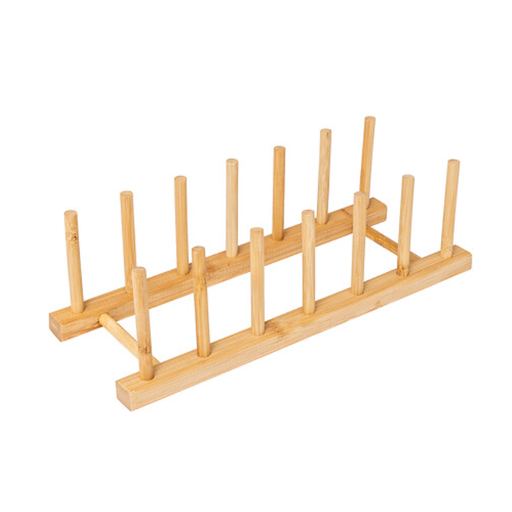
Why this product is a good match: The compact bamboo rack is suitable for small households, individual cupboards or limited worktop space, and holds up to six plates.
The dimensions and intended capacity are clearly specified. This lets you check before buying whether six plates will be enough and whether the footprint is suitable.
Low weight of 0.185 kilograms and compact dimensions; assembly without special tools.
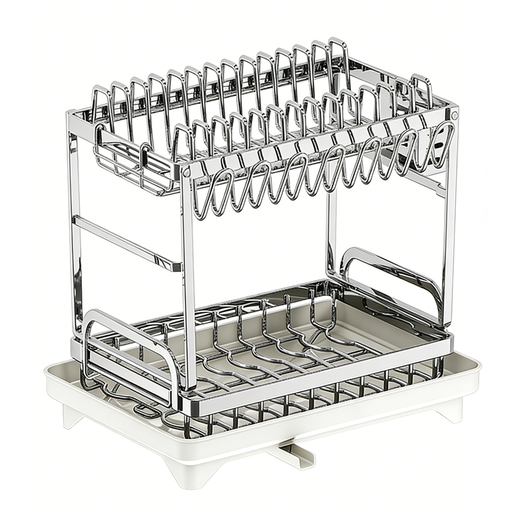
Why this product is a good match: The two-tier stainless steel and PP design provides separate areas for plates, bowls and other crockery.
The materials are clearly listed as stainless steel and PP; the design also includes a drainage pipe for controlled water flow.
Dimensions of 42 × 32 × 30 centimetres and a removable or adjustable drain leading to the sink.
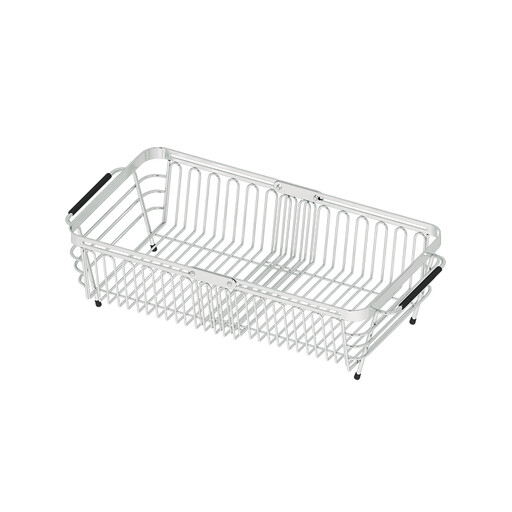
Why this product is a good match: The extendable model sits directly over the sink, making it suitable for small worktops, campers or households that wash up frequently.
The length can be adjusted from 29 to 44 centimetres. Before use, make sure the rack fits the width of your sink and rests securely in place.
304 stainless steel, an adjustable length of 29–44 centimetres and water draining directly into the sink.
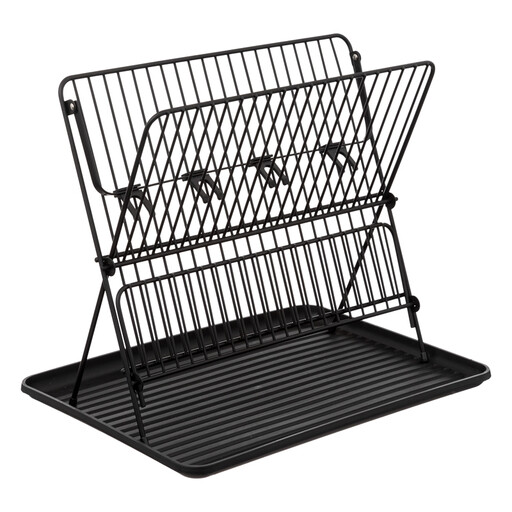
Why this product is a good match: The two-tier dish rack folds flat, making it a practical choice for small kitchens, occasional use or camping.
The removable drip tray collects the water. Emptying and cleaning it regularly reduces the risk of deposits and overflow.
Foldable design with two steel and PP tiers and a separate drip tray.
We have put together a complete, regularly updated list of products that fully meet these strict selection criteria and the safety regulations applicable in the EU.
Even a sturdy dish drying rack stays more hygienic and stable when it is cared for regularly:
For limited worktop space, consider a compact rack, a foldable model or a plate drainer that sits over the sink. Measure the available width beforehand. A two-tier model makes use of vertical space, while an extendable sink rack leaves most of the worktop free.
Choose a dish rack with a drip tray or drainage towards the sink. The tray should be removable and emptied regularly. With an over-sink model, make sure it sits securely so that all the water drains into the basin.
Its service life depends on the material, load, moisture and care. Stainless steel and rust-resistant steel should be kept dry and cleaned with mild products. Overloading, permanently standing water and damaged coatings can reduce the rack’s stability and durability.