Need your bowls clean again quickly
If you’ll need the same bowls or cups again soon, compare the duration of a suitable programme with the load capacity and consumption.


Choose the type of appliance based first on the space available, then on how much washing-up you have before you need a clean bowl again. A countertop model suits smaller loads, while a slimline or 60 cm-wide dishwasher can hold more. The European Commission bases energy and water figures, as well as programme duration, on the Eco programme. If you need your bowls clean again quickly, check the selected model’s quick programme details separately.
If you’ll need the same bowls or cups again soon, compare the duration of a suitable programme with the load capacity and consumption.
If you only have room on the worktop or for a slimline freestanding model, check whether the smaller design can fit your bowls.
If you have lunch-prep dishes as well as bowls to wash, check whether you can fit everything into a load that’s regularly full.
A good fit if: there’s no room for a freestanding appliance and you usually only have a few bowls, cups and pieces of cutlery to wash.
The trade-off: The compact interior holds less washing-up from throughout the day.
A good fit if: you have a narrow space available and want to wash bowls with other dishes in a freestanding machine.
The trade-off: The slimmer design takes up less space than a 60 cm model, but offers less room for dishes.
A good fit if: you regularly have breakfast dishes and cookware to wash together, and have enough space for the appliance.
The trade-off: The larger design takes up more space. You can’t assume a full machine will be practical for small, frequent loads.
| Priority | What to check before buying | Who is this especially important for? |
|---|---|---|
| Have bowls ready to use again in time | Duration and permitted load for the quick programme; consider the Eco programme duration separately. | If I need my bowls again by the next meal, the duration of a suitable programme matters to me. Around 36% of consumers put having them ready in time first. |
| Find the right spot for the appliance | Check the available space, height, door clearance, water inlet and drainage requirements for the model you’ve chosen. | If my kitchen only has room on the worktop or for a slimline appliance, it needs to fit the available space. Around 29% of consumers prioritise limited space for installation. |
| Fit all the dishes in together | Check bowl height and rack layout; don’t rely on place-setting capacity instead of checking whether your own dishes will fit. | If I have lunch-prep dishes as well as breakfast bowls to wash, I’d like to load them together if possible. Around 21% of consumers put washing a full day’s dishes in one load first. |
| Consumption and noise | Compare kWh per 100 Eco cycles, litres per Eco cycle, Eco programme duration and dB(A) on a like-for-like basis. | If running costs or noise in an open-plan kitchen matter to me, I compare these figures separately. Around 14% of consumers prioritise running costs and quiet operation. |
The programme you use day to day also affects actual consumption. The European Commission explains that EU energy label figures are based on the Eco programme; they don’t replace checking the details for the quick programme separately.
The EU energy label refers to the Eco programme. If you use a different programme day to day, its duration and consumption are the figures that matter for your decision.
Compare the Eco figures and details for your chosen quick programme separately.
The stated capacity alone doesn’t tell you whether tall or wide bowls will fit the racks comfortably.
Check your bowls’ height and shape against the rack system on the specific model. An adjustable rack can help when loading items of different heights.
The German Environment Agency’s advice on washing efficiently in the Eco programme is based on a fully loaded machine.
Plan to wash the bowls you need before using them again with the rest of the day’s dishes, and consider whether you can wait until you have a full load.
The G 5540 SC SL Active is a 45 cm freestanding model with a cutlery drawer and QuickPowerWash.
The BDFN26430W is a freestanding 60 cm model with capacity for 14 place settings and a height-adjustable upper basket.
Midea offers countertop models such as the MDWMT201DW, which has a 5-litre water tank according to the manufacturer, as well as the separate ST 3.6F wi model with capacity for six place settings.
The SN23EW03ME is a 60 cm-wide freestanding dishwasher with an adjustable rack system.
Bosch’s buying guide covers a range of designs, including freestanding, built-in, slimline and compact models.
The selection includes countertop, slimline and 60 cm-wide dishwashers, including freestanding and integrated models. Before buying, check that the design, rack and connections are suitable for your kitchen and bowls.
 No image available
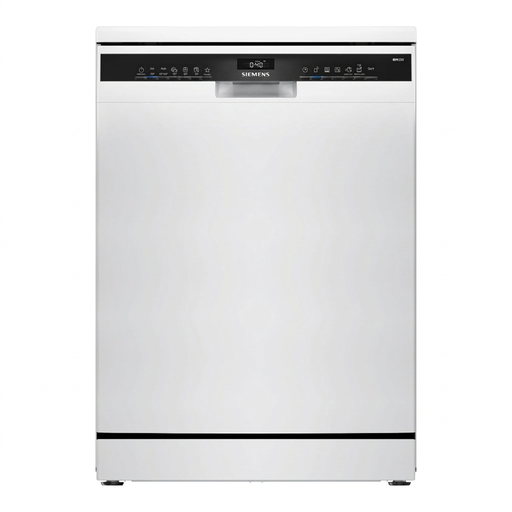
This 45 cm model could suit a narrow space and bowls you’ll need again before your next meal.
The product details list capacity for 10 place settings, a Quick+ function and a height-adjustable upper basket. When fully loaded, items up to 31 cm can fit in the lower basket; the product name lists energy class C.
 No image available
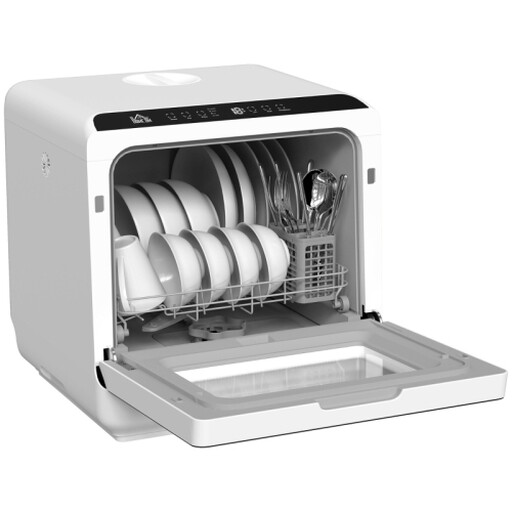
A countertop model could suit smaller loads and kitchens without space for a freestanding appliance.
The product description lists a 6-litre tank, five programmes including Quick and Eco, and a drying function. The Quick programme is listed as taking 29 minutes; capacity is up to four place settings.
 No image available
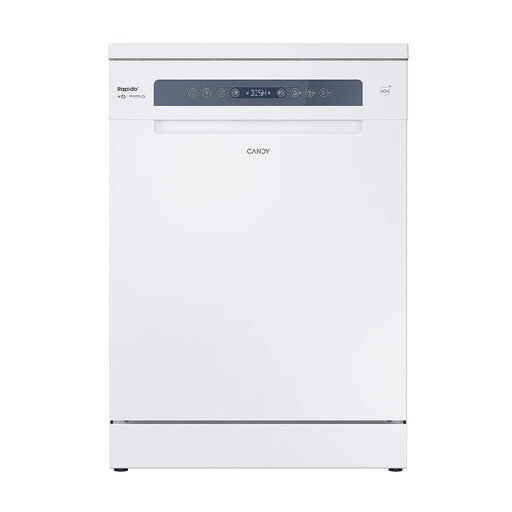
If you regularly have bowls and other dishes to wash together and have 60 cm of space, this freestanding model offers a larger design.
The product details list capacity for 14 place settings, a varioFlex rack system, varioDrawer and Wi-Fi.
 No image available
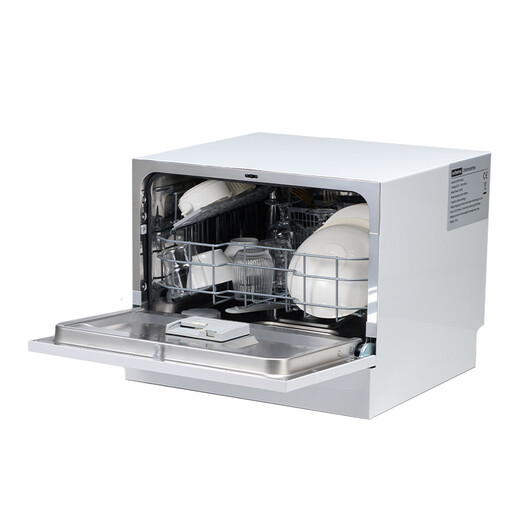
A countertop model could suit small loads and limited space, provided your bowls fit inside.
The product name lists capacity for six place settings, a 30-minute quick wash and a delay start of up to 24 hours. The description lists eight programmes.
 No image available
This model could suit a suitable built-in space if you want to wash breakfast dishes and other items together.
The product details list capacity for 14 place settings, eight programmes and a 35-minute Wash and Dry programme. It’s a fully integrated built-in appliance.
No. The EU energy label shows figures for the Eco programme. If you need your bowls clean again quickly, check the duration and consumption of the quick programme on the specific appliance separately.
Measure the space available and allow room for the door to open. Also check the water inlet and drainage requirements for your chosen model. Even an appliance with a tank needs to drain its wastewater.
No. Place-setting capacity doesn’t replace checking how your bowls fit in the rack. Consider their height and shape, and whether the upper basket can be adjusted.
Compare the same Eco figures for each appliance, including electricity use per 100 cycles, water per cycle, programme duration and noise level. Your running costs also depend on how often you use the machine and which programme you actually choose.
The German Environment Agency recommends loading the dishwasher as fully as possible and not rinsing dishes with hot water first. Follow the appliance instructions for detergent, salt and rinse aid, and take your local water hardness into account.