What matters for different households

Households with lots of food-prep dishes

If breakfast regularly leaves you with bowls, containers and utensils to wash as well, rack space and clear spray paths matter more than the number of place settings alone. The German Environment Agency recommends loading dishes so that the water jets can reach their surfaces.

Breakfast kitchens with limited space

If you only have a narrow space for a dishwasher or room on the worktop, weigh up the type of appliance, its full dimensions, the connections it needs and the size of the load together. For a table-top model, you’ll also need to plan where to put it and how to drain it.

Households that run the dishwasher frequently

If you use your dishwasher regularly, it’s worth comparing electricity and water consumption, as well as programme duration, on the same energy label basis rather than looking at the efficiency class alone.

What to look for when buying

60 cm dishwasher

A good fit if: You regularly wash breakfast bowls alongside other bowls, plates and food-prep dishes, and have a suitable space for a freestanding or integrated model.

The trade-off: The appliance takes up more width. The efficiency advantage of larger appliances, as described by the German Environment Agency, depends on running a full load.

45 cm dishwasher

A good fit if: You have less width available or usually wash smaller loads, but have space for a freestanding appliance with the right connections.

The trade-off: A narrower design doesn’t tell you whether larger bowls and containers will fit at the same time. Check the rack layout, height and depth of the specific model.

Table-top dishwasher

A good fit if: There’s no suitable space for a freestanding appliance and you usually wash a small load.

The trade-off: The interior may not have room for several food-prep bowls. Even with a model that has a water tank, you’ll still need to plan how to fill it and drain the water.

Priority What to check when buying Who it matters most to
Usable rack space Check rack heights and adjustable levels, making sure the spray arms can move freely and there’s enough space between bowls. If I load bowls and food-prep dishes together, there needs to be room for everything without blocking the water paths. Around 36% of consumers put usable rack space first.
Width and design Measure the full appliance or installation space; check whether the freestanding, under-counter or integrated design is right for you. With a narrow space in the kitchen, I want an appliance that will genuinely fit, including the door clearance and connections. For around 29% of consumers, finding a suitable spot is their main buying priority.
Electricity and water consumption Compare kWh per 100 Eco cycles, litres per Eco cycle and Eco programme duration on the same label basis. If I wash dishes frequently, I want to consider consumption figures and the duration of the right programme together. Around 21% of consumers prioritise running costs.
Dishwashing without a dedicated space Check the interior against your own bowls; confirm the water supply, tank filling and safe drainage arrangements. If there’s no suitable space for a freestanding appliance, I need a solution that can be set up easily and holds my usual load. For around 14% of consumers, space is the main concern.

Common buying mistakes with bowls and connections

  • Assuming place settings mean there’s room for any number of bowls

    Unlike standard dishes, bowls and containers can take up space or block the water paths. A high place-setting capacity alone doesn’t tell you whether your own load will fit.

    Compare the bowls you usually wash with the rack layout and adjustable levels. Also check that the spray arms can rotate freely.

  • Measuring only the appliance width

    Height, depth, design, door clearance and connections also determine whether the appliance can be installed or positioned properly.

    Measure the available space in full and check it against the dimensions and water inlet and drain connections of the specific model.

  • Assuming a table-top model with a tank needs no connections at all

    An integrated water tank doesn’t automatically take care of drainage. For the Bomann TSG 5702, the manufacturer lists a 5-litre tank and three place settings; the appliance also comes with a drain hose.

    Plan for suitable drainage and check that the interior can hold the bowls you typically wash.

    A table-top model needs worktop space. With a tank model, you’ll also need to fill the tank and set up the drain.

  • Comparing efficiency classes and figures from different label scales as if they were the same

    The old plus-rated classes and the current scale aren’t directly comparable. Current consumption figures on the EU energy label refer to the Eco programme.

    Compare current models using label figures defined on the same basis, and also consider the duration of the programme you plan to use.

Key brands at a glance

Bosch

The documented model examples include freestanding appliances in widths of 45 cm and 60 cm.

  • For the SMS4EVW08E, Bosch lists a Vario-Flex rack, energy efficiency class B and 9,0 l of water per Eco cycle. For the SPS4EMW02D, the manufacturer also lists class B and 8,7 l per Eco cycle.
  • These details apply to the individual models. They don’t establish a general feature of all Bosch appliances or guarantee cleaning results in your own home.

Beko

The BDFS26020WQ is a documented freestanding 45 cm model.

  • Beko lists ten place settings and a height-adjustable upper rack for this model.
  • Its stated energy efficiency class is E. The place-setting capacity alone doesn’t tell you whether your own bowls will fit.

Midea

The MDWEF1034DW-WE is a documented freestanding 45 cm appliance.

  • Midea lists a noise level of 44 dB and dimensions of 850 × 450 × 600 mm for this model.
  • The same width doesn’t tell you how well your own bowls will fit in the rack. Check the interior and dimensions of the specific model.

Bomann

The TSG 5702 is a documented table-top model with an integrated water tank.

  • Bomann lists a 5-litre tank and three place settings for this model.
  • The tank doesn’t replace proper drainage, and the limited interior may restrict how many bowls you can wash together.

Miele

The G 5811 SCU Active Plus is a documented under-counter model.

  • Miele lists energy efficiency class A, 43 dB, a cutlery drawer and AutoOpen for this model.
  • These details apply to this model. Check the dimensions and installation requirements separately; don’t assume they apply to other appliances from the brand.

Joybuy products for larger loads

These Joybuy products are 60 cm dishwashers for households that want to wash breakfast bowls together with other food-prep dishes.
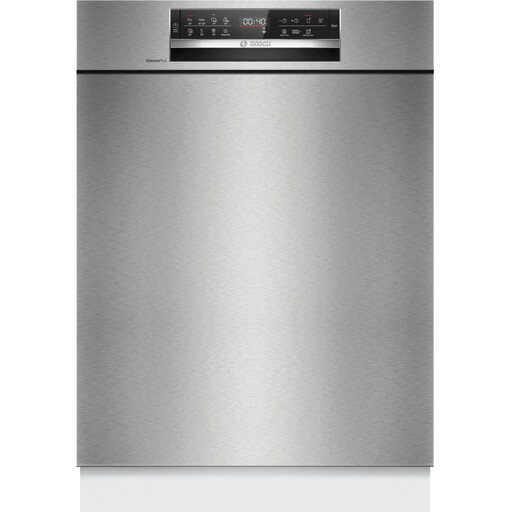
Bosch SMU6ECS12E Series 6 built-in dishwasher, 60 cm, stainless steel

Bosch SMU6ECS12E Series 6 built-in dishwasher, 60 cm

For loads that combine bowls with other dishes, the stated capacity and rack features are worth checking.

14 place settings; Max-Flex racks, foldable rack elements, height-adjustable upper rack and VarioDrawer. Home Connect; 42 dB. Described as suitable for under-counter installation with a maximum recess height of 87,5 cm; water and electricity connections are required.

View at Joybuy
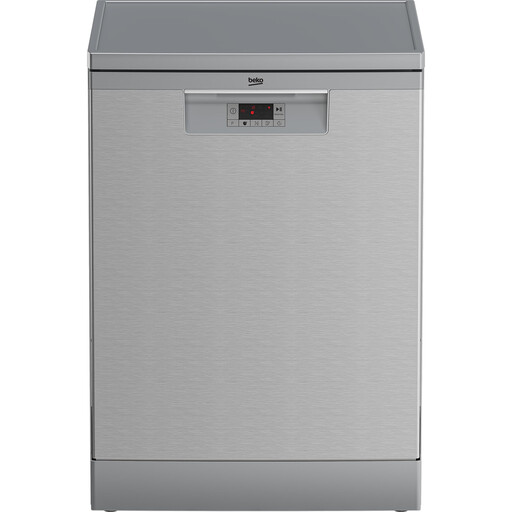
Beko BDFN16O44XW freestanding dishwasher, 60 cm

Beko BDFN16O44XW freestanding dishwasher, 60 cm

The stated capacity and height-adjustable upper rack are useful points to consider if you want to wash bowls alongside other dishes.

14 place settings; dimensions: 60 × 59,8 × 85 cm. According to the description, with the upper rack adjusted, items up to 30 cm tall fit in the lower rack. Make sure you have space for the appliance and plan for water and drain connections.

View at Joybuy
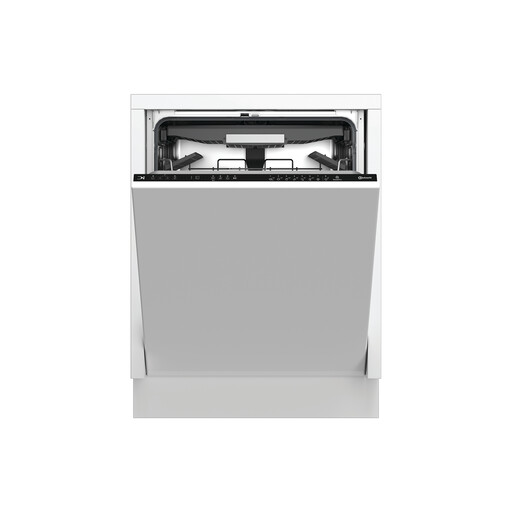
Bauknecht BKSV2IAN3C fully integrated dishwasher, 60 cm

Bauknecht BKSV2IAN3C fully integrated dishwasher, 60 cm

For bowls in different shapes and sizes, plus extra dishes, the rack layout and stated capacity are important considerations.

14 place settings; energy efficiency class A; 41 dB. VarioFlex racks, cutlery drawer and Rackmatic height adjustment. Described as suitable for a recess 815–875 mm high, 600–608 mm wide and at least 550 mm deep; a furniture door panel is required.

View at Joybuy
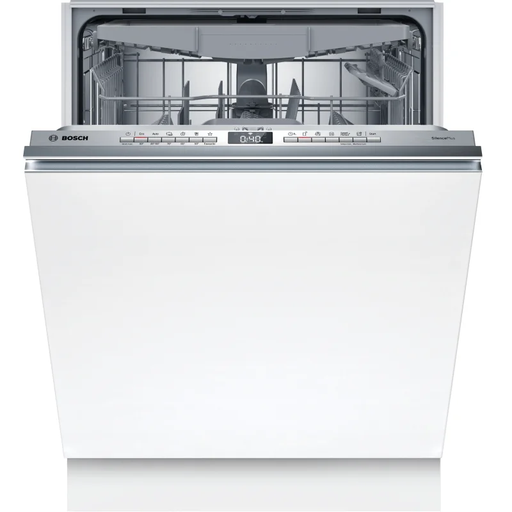
Bosch SMV4EVX08E Series 4 fully integrated dishwasher, 60 cm

Bosch SMV4EVX08E Series 4 fully integrated dishwasher, 60 cm

The capacity and adjustable rack elements are useful to consider if you plan to wash bowls with other food-prep dishes.

14 place settings; energy efficiency class B; 44 dB. Height-adjustable upper rack, foldable rack elements and cutlery drawer. The stated recess dimensions are 820–900 × 600–608 × 555 mm; professional installation is required.

View at Joybuy
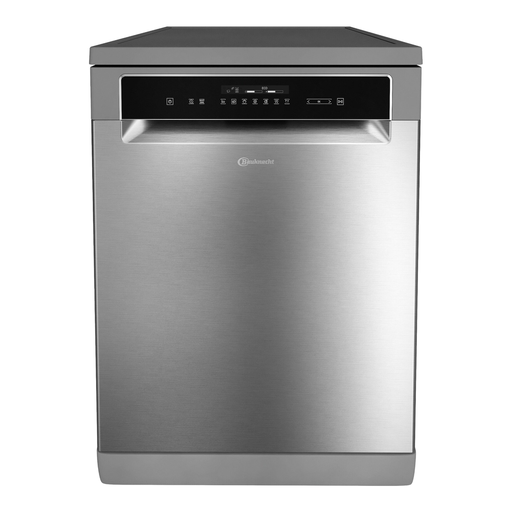
Bauknecht BFP 5041 PLT X freestanding dishwasher, 60 cm

Bauknecht BFP 5041 PLT X freestanding dishwasher, 60 cm

When planning a load of bowls and other dishes, take the stated capacity and rack height into account.

14 place settings; energy efficiency class C; dimensions: 850 × 590 × 600 mm. Height-adjustable upper rack; allow for water and drain connections when positioning the appliance.

View at Joybuy

Frequently asked questions

Do I need to rinse breakfast bowls before loading them?

No. The German Environment Agency recommends removing any large food scraps, but not rinsing dishes by hand first. Position the bowls so that the water jets can reach the soiled surfaces. Results with dried-on food also depend on the dishes, detergent, programme and how you load the machine.

Can plastic containers for prepped ingredients go in the dishwasher?

Check the label or instructions for the individual container. According to the German consumer advice centre, the glass-and-fork symbol indicates that an item is suitable for contact with food; it doesn’t automatically mean it’s dishwasher-safe.

How can I compare consumption without mixing up different programmes?

On the EU energy label, compare electricity consumption per 100 Eco cycles, water consumption per Eco cycle and the Eco programme duration. To estimate your own costs, you’ll also need your electricity and water rates, how often you actually use the dishwasher and which programmes you choose.

Which label applies when buying a new dishwasher online in Germany?

Household dishwashers carry the EU energy label, with classes from A to G and information about the Eco programme. Under EU rules, the label must be clearly displayed near the price when a product is sold online. Where applicable, it can appear as an efficiency arrow linking to the label and product information sheet. The old plus-rated classes aren’t directly comparable with current models.

What happens if the appliance breaks, and how can I return an old one?

Your statutory rights against the retailer are separate from a voluntary manufacturer’s guarantee. The German consumer advice centre outlines additional repair rights for dishwashers from 31 July 2026; whether a particular claim applies depends on the individual case. The German Environment Agency also explains that large, comparable old appliances can be returned free of charge when you buy a new one, including with online purchases delivered to your home.