First, choose a dishwasher that suits the space available, whether it’s a freestanding model or one that fits into a kitchen unit. Then check that the racks and spray arms leave enough room for the bowls and pans you use most often. If you run your dishwasher regularly, compare the specific figures on the energy label. For stubborn residue, it’s the programmes and loading options on the model itself that matter, not a general brand claim.
Who are the different types of dishwasher suited to?
Households with lots of cookware
If you prepare meals, you’ll often need to fit bowls, pans and everyday dishes into the machine together. Check the rack layout and the programmes available on the specific model. The Verbraucherzentrale recommends considering both how you load it and what you actually need.
Kitchens short on space
If space is limited, consider whether a narrow alcove, a larger built-in appliance or a freestanding model is the best fit. The Umweltbundesamt distinguishes between appliances that are 45 and 60 cm wide. Be sure to measure the available space and take your usual dishes into account.
Regular Eco programme users
If you use the Eco programme regularly, you can compare the figures for electricity, water, programme duration and noise. The Verbraucherzentrale explains the electricity figure per 100 Eco cycles. Make sure you only compare figures based on the same labelling system.
What should you look for when buying?
60 cm built-in dishwasher
A good fit if: you have a suitable built-in space and furniture door, and regularly have enough dishes for a full load.
Things to consider: Check the alcove measurements, door fitting and usable rack space. A larger machine makes most sense if you can load it appropriately.
60 cm freestanding dishwasher
A good fit if: you don’t want a furniture door fitted and have a suitable space with the necessary connections.
Things to consider: Check the appliance depth and clearance for the door. Extra features for tackling stubborn residue are claims made by the manufacturer about a specific model, not independent proof of cleaning performance.
45 cm built-in dishwasher
A good fit if: you have a narrow alcove or are unlikely to fill a larger appliance regularly.
Things to consider: The narrower design gives you less flexibility when loading. Check in particular whether your larger bowls and cookware will fit.
The European Commission explains the information shown on the EU energy label, including energy consumption for 100 Eco cycles. The Verbraucherzentrale recommends checking water consumption and Eco programme duration as well when comparing appliances.
| Buying priority |
What to check |
Who it matters most to |
| Cookware and residue |
Check the rack adjustment options, room for pans and bowls, and the programmes available on the specific model. |
If I often wash cookware, I want to know whether it will fit without blocking the spray arms. Around 33% of consumers prioritise cleaning performance and cookware. |
| Fit and loading |
Check the alcove or space measurements, door clearance, appliance type and rack design against the dishes you own. |
In a small kitchen, the appliance needs to fit the available space and still hold the dishes I use regularly. Around 27% of consumers prioritise fit and loading. |
| Electricity and water consumption |
Compare kWh per 100 Eco cycles, litres per Eco cycle, programme duration and your own usage habits. |
If I run the dishwasher often, I want to compare Eco consumption figures on a like-for-like basis. Around 20% of consumers focus mainly on running costs. |
| Programme time and noise |
Check the Eco duration and noise level on the label, as well as the quick programmes and delay-start options on the specific model. |
With a busy daily routine or an open-plan kitchen, it matters to me when the machine runs and how loud it is. Around 20% of consumers prioritise programme time or noise. |
Which misconceptions should you avoid?
-
The energy efficiency class reflects consumption on every programme
The label figures relate to the Eco programme and can’t be applied to other programmes across the board.
Compare the specific Eco figures and consider which programmes you’re likely to use. The European Commission explains the energy label information for dishwashers.
-
Appliance width or place-setting capacity alone is enough to choose
The alcove measurements and rack design also determine whether your everyday dishes and cookware will fit.
Measure the space available and check the racks against the largest items you use regularly.
-
Manufacturers’ claims about intensive cleaning features are independent comparisons
Claims about PowerClean Pro refer to the Bauknecht BKSV1 FAM model and the comparison basis used by the manufacturer.
Check the programme and loading conditions for the specific appliance. Don’t treat manufacturers’ claims as an independent comparison of cleaning performance.
-
Delivery, installation and removal of your old appliance are always included
Bauknecht lists kerbside delivery and installation as separate services on the product page.
Before buying, check which services are included in the specific offer and how the return of your old appliance is handled.
Which brands are worth considering?
Bosch
Worth considering for fully integrated 60 cm kitchen units with racks that offer flexible loading.
- For the SMV6ZCX16E model, Bosch lists dimensions of 815 × 598 × 550 mm, energy efficiency class B, 9.0 l per Eco cycle and Max-Flex racks.
- These details apply to this specific model. Check the alcove measurements and furniture door; connected features should suit your needs.
Bauknecht
The BKSV1 FAM model was considered as a freestanding 60 cm option.
- Bauknecht promotes MaxiSpace and PowerClean Pro on this model for loading flexibility and tackling stubborn residue.
- These are manufacturer claims about one model, not independent evidence of better cleaning or an advantage across the brand. Kerbside delivery and installation are listed separately.
Miele
The models considered illustrate the differences between fully integrated appliances that are 60 cm and 45 cm wide.
- Miele lists energy efficiency class A, 45 dB and AutoOpen for the G 5651 SCVi Active; the G 5590 SCVi SL Active is listed at 45 dB and has a delay-start option.
- The 45 cm G 5590 SCVi SL Active model has energy efficiency class E. Efficiency and features vary by model and can’t be determined from the brand name alone.
Dishwashers for everyday dishes and cookware
This selection includes dishwashers for everyday dishes and cookware, including 60 cm built-in appliances and freestanding models. Compare the design, loading options and stated programme details with your kitchen and your needs.
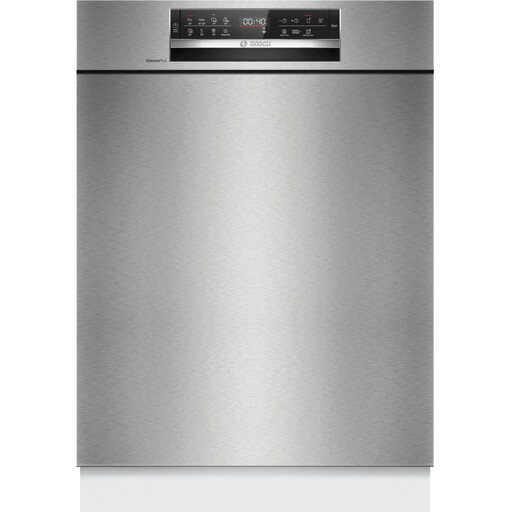 No image available
Bosch SMU6ECS12E Series 6, 60 cm
For a fitted kitchen where flexible racks are useful for loading dishes of different sizes.
14 place settings, Max-Flex racks, foldable tines and a height-adjustable Rackmatic upper rack. Extra Clean Zone and an intensive programme are listed; the product details give a noise level of 42 dB.
Designed to fit under a worktop; the stated maximum niche height is 87.5 cm. Home Connect is included in the product name.
View at Joybuy
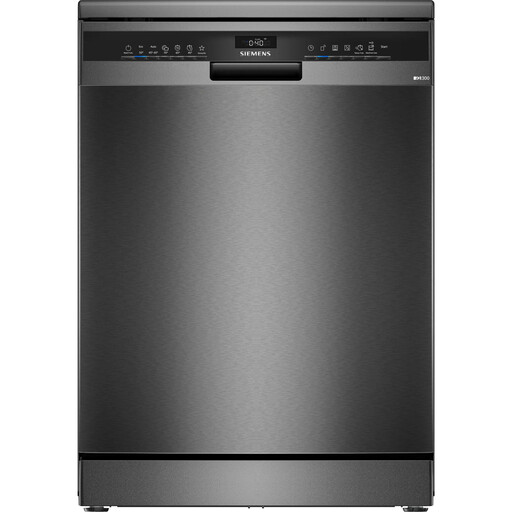 No image available
Siemens SN23EC03ME, freestanding
For a space without a furniture door and for loading with everyday dishes and cookware.
14 place settings, a height-adjustable varioFlex upper rack and a varioDrawer cutlery drawer. IntensiveZone and an intensive programme are listed; the product details state energy efficiency class B.
The stated appliance dimensions are 84.5 × 60 × 60 cm. autoOpenDry and Home Connect are included in the product name.
View at Joybuy
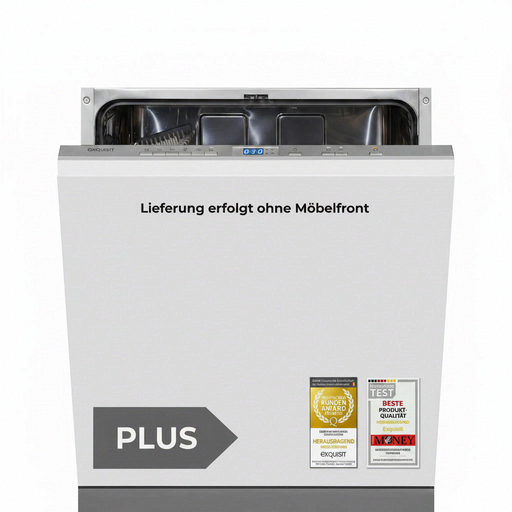 No image available
Exquisit EGSP52113-E-030E, fully integrated, 60 cm
For a fitted kitchen where a height-adjustable upper rack and several programmes suit the way you load the machine.
13 place settings, a cutlery tray and six programmes are listed, including ECO, intensive and Power+. A delay-start option is included in the product name.
Specified for a 82.0 × 60.0 × 56.0 cm niche.
View at Joybuy
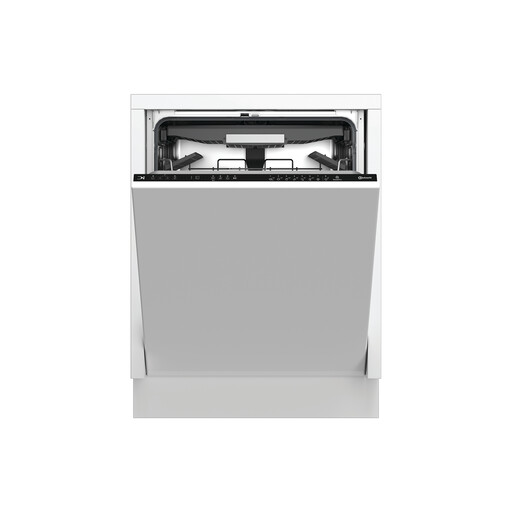 No image available
Bauknecht BKSV2IAN3C, fully integrated, 60 cm
For a built-in space and a load of everyday dishes and cookware.
14 place settings, energy efficiency class A, ActiveDry, MultiZone and a sensor programme are listed; the product details state 41 dB.
Designed for a 820–900 × 600–608 × 555 mm niche. The description mentions professional installation.
View at Joybuy
 No image available
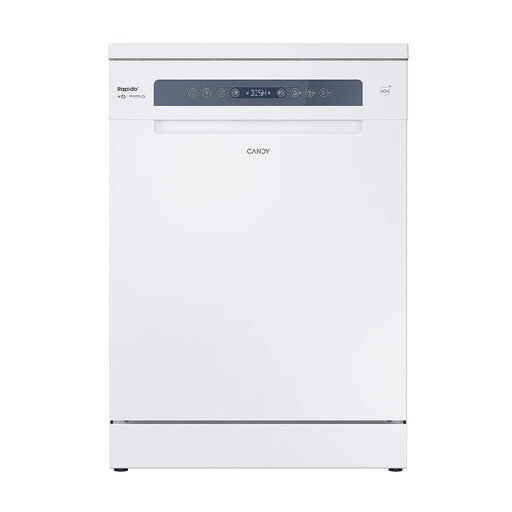
Candy CF 4C0F1W, built-in dishwasher
For everyday dishes and larger meals, if a quick programme suits your routine.
14 place settings and a MAXI-TUB interior are listed. A 35-minute Wash&Dry programme and an intensive programme are included; the product details state 40 dB.
View at Joybuy
Frequently asked questions
Do I need to rinse dishes before loading them?
No. The Umweltbundesamt advises against pre-rinsing, especially with warm water. Choose how you load the machine and which programme you use based on the residue and the instructions for your specific appliance.
What should I set before using the dishwasher for the first time?
Find out the water hardness in your area and set the water softener according to your model’s instructions. Bosch recommends this for its appliances; add salt and rinse aid to the compartments provided.
What do the Eco consumption figures tell me about electricity use?
The EU label shows electricity consumption for 100 Eco cycles, water consumption per Eco cycle and the Eco programme duration. To estimate your own usage, take into account how many cycles you’re likely to run. The label figures don’t apply across the board to other programmes.
Can I store prepared ingredients in the dishwasher until it’s time to cook?
No, a dishwasher isn’t a fridge. The Bundesinstitut für Risikobewertung recommends keeping perishable food in the fridge until it’s ready to be eaten or prepared.
What should I check when returning my old dishwasher?
Before buying, check whether and how the old appliance will be taken back as part of the specific offer. The Umweltbundesamt lists local collection points and take-back when buying a new appliance as options. If you order online, check the agreed collection arrangements before entering into the contract.


