Start by choosing a design that fits the available space, then check whether the racks can hold the dishes from a meal shared with your household. A 60 cm model can offer more room if you regularly run full loads; a 45 cm model may be a better fit for a narrow kitchen or smaller loads. Then compare Eco programme consumption, cycle duration and noise levels. A quick programme isn’t automatically the most economical.
Which dishwasher suits your household?
Households that eat together every day
If several people eat together, it’s useful to be able to fit plates, glasses, cutlery and serving dishes into the machine in one go. The German Environment Agency recommends running the dishwasher when it’s full.
Households with a narrow kitchen
If you wash up regularly but have limited space, the appliance width and the usable layout inside are key. Check whether large plates and bowls will fit in the racks, too.
Households with an open-plan kitchen
If the dishwasher runs while you’re spending time together, or afterwards, its noise level and cycle duration may be as important as its capacity. The European Commission’s EU energy label provides model-specific information to help you compare.
What to look for when buying
First, work out which design will fit your kitchen. Then check the interior, consumption and noise levels against your household’s needs.
| What matters |
What to check when buying |
Who is it most important to? |
| Load size and interior |
Check the number of place settings on the label, as well as the rack height, adjustable parts and cutlery arrangement for the specific model. |
If you want plates, glasses and serving bowls to fit in together after a meal, the rack layout and place-setting capacity matter. This is the main priority for around 33% of consumers. |
| Available space and installation type |
Check the available space or niche, height and depth, door clearance, furniture front and connections. |
If your kitchen can only accommodate a slim appliance or a particular installation type, the whole installation needs to be suitable. Available space is the main concern for around 27% of consumers. |
| Electricity and water consumption |
Compare electricity consumption per 100 Eco cycles and water consumption per Eco cycle on a like-for-like basis. |
If you often run the dishwasher after eating together, you’ll want to understand how much electricity and water it will use for your needs. Consumption is the top priority for around 20% of consumers. |
| Evening noise levels |
Compare the airborne noise emissions in dB(A) and the noise class shown on the label for the specific model. |
If the dishwasher runs in an open-plan kitchen, you’ll want it to disturb your time together as little as possible. Keeping things quiet in the evening is the main concern for around 13% of consumers. |
| Cycle duration |
Check the Eco programme duration separately from the running time and conditions for any quick or automatic programmes you want to use. |
If you need your dishes again soon, the cycle time can make a difference to your daily routine. Getting dishes ready to use again quickly is the top priority for around 7% of consumers. |
Common buying misconceptions
-
Place settings don’t guarantee that pots and serving bowls will fit
The capacity shown on the label is based on a standardised load. Larger items may need to go in different parts of the racks.
Check the rack heights, folding supports and cutlery arrangement against the dishes you actually wash.
-
Eco consumption figures don’t automatically apply to every programme
Electricity, water and duration figures apply to the Eco programme and can’t necessarily be applied to quick or automatic programmes.
Compare label figures on a like-for-like basis and check the programme details for the specific model separately.
-
Appliance width alone won’t tell you whether it will fit
The height, depth, niche, furniture front and connection options also need to suit your kitchen.
Measure the entire space and check what’s included for delivery, connection or installation before placing your order.
Brands and example models to help you choose
Bosch
The SMS4EVI08E is a freestanding 60 cm Series 4 model for a suitable space.
- The manufacturer lists dimensions of 845 × 600 × 600 mm, energy class B, 9.0 l per Eco cycle and a Vario-Flex rack for this model.
- The 600 mm width needs to fit your kitchen; these specifications don’t apply to every appliance in the range.
Bauknecht
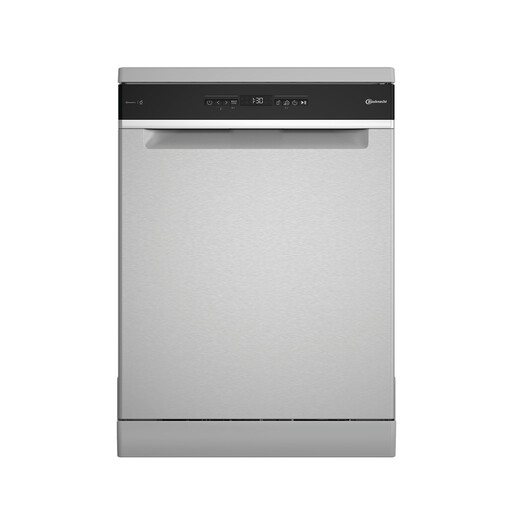
The BK6FC11BS7A0X is a freestanding 45 cm model for a narrower space.
- The manufacturer lists a cutlery drawer and an automatically opening door for this model.
- The drying information comes from the manufacturer and isn’t an independent comparison. If you have large serving dishes, check the rack layout for the specific model.
Siemens
The SN57TS00CE is a semi-integrated 60 cm model for a suitable installation niche.
- Siemens lists dimensions of 815 × 598 × 573 mm, energy class A and 9.5 l per Eco cycle for this model.
- The niche and furniture front need to suit a semi-integrated installation; these specifications apply to this model only.
Electrolux
The KESC7325L is a fully integrated model with published Eco programme figures.
- Electrolux lists 13 place settings, energy class D, 84 kWh per 100 Eco cycles, 10.5 l per Eco cycle and an Eco programme duration of four hours.
- These standardised figures apply to the named model and its Eco programme, not every wash cycle or the brand as a whole.
Miele
The G 5590 SCVi SL Active is a fully integrated 45 cm dishwasher for a suitable narrow niche.
- Miele lists energy class E, 45 dB, a cutlery drawer and a delay-start function for this model.
- The installation type and specifications listed apply to this model only and shouldn’t be assumed to apply to other appliances.
Joybuy products for larger everyday loads
This selection from Joybuy includes integrated and under-counter appliances, as well as freestanding models for larger everyday loads. Before buying, check that the dimensions, niche and furniture front suit the design you’ve chosen.
 No image available
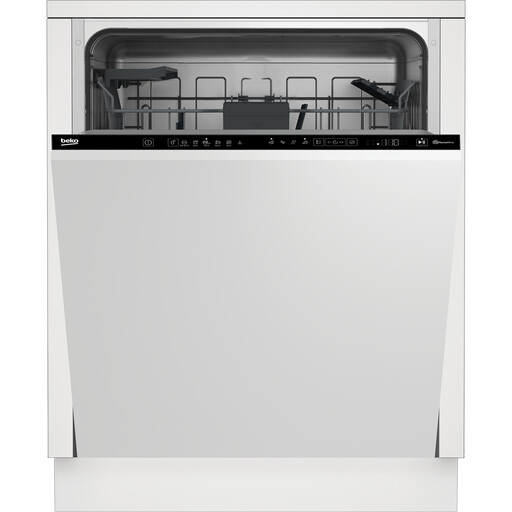
Beko BDIN16O46W, fully integrated, 14 place settings
For a larger load after a meal together; the fully integrated design requires a suitable niche and furniture front.
14 place settings; energy class A; 54 kWh per 100 cycles; 9.5 l per Eco cycle; 42 dB(A).
Height-adjustable upper rack and cutlery basket.
View at Joybuy
 No image available
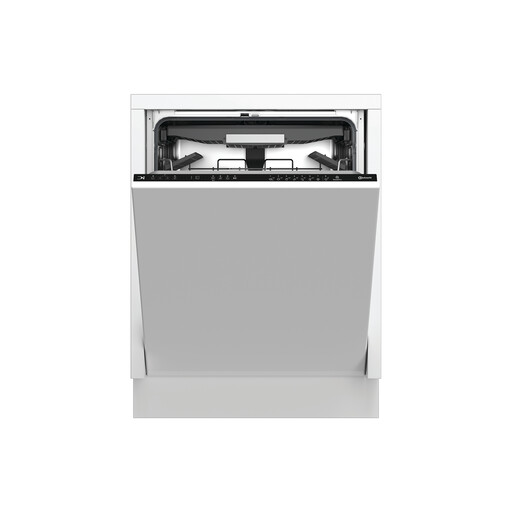
Bauknecht BKSV2IAN3C, fully integrated, 60 cm, 14 place settings
For a larger load if you have a suitable 60 cm installation niche.
14 place settings; energy class A; 54 kWh per 100 Eco cycles; 9.5 l per Eco cycle; 41 dB(A).
Cutlery drawer, height-adjustable upper rack and folding supports.
View at Joybuy
 No image available
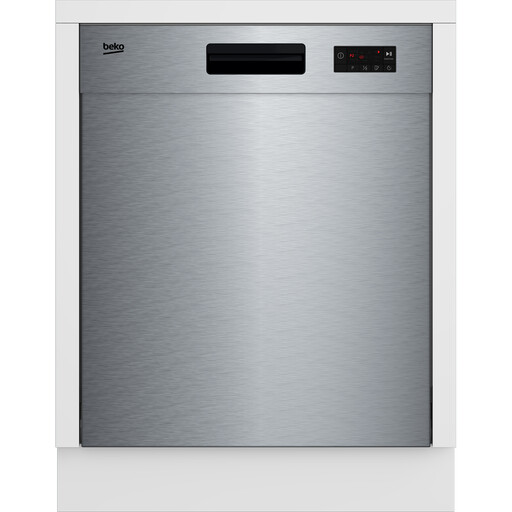
Beko BDUN15430X, under-counter, 14 place settings
For a larger load in a kitchen designed for an appliance to be fitted beneath the worktop.
14 place settings; energy class A; 54 kWh per 100 cycles; 10.9 l per Eco cycle.
Height-adjustable racks and delay-start function; your kitchen layout needs to suit the under-counter design.
View at Joybuy
 No image available
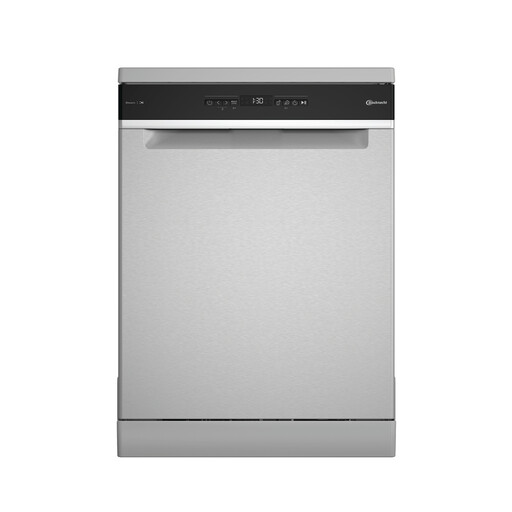
Bauknecht BKSV2FAN3CX, freestanding, 14 place settings
For a larger everyday load, provided you have space for a freestanding appliance.
14 place settings; energy class A; 54 kWh per 100 Eco cycles; 9.5 l per Eco cycle; 41 dB(A).
Height-adjustable upper rack, folding supports and cutlery drawer.
View at Joybuy
 No image available
Bauknecht BKSV2FBN3CX, freestanding, 14 place settings
For a larger everyday load, if you have a suitable space for a freestanding appliance.
14 place settings; energy class B; 64 kWh per 100 Eco cycles; 8.9 l per Eco cycle; 41 dB(A).
Cutlery drawer and height-adjustable upper rack.
View at Joybuy
Frequently asked questions
Should I always choose a 60 cm model for daily meals?
No, the deciding factors are the available space and the size of your loads. The German Environment Agency lists dishwashers with widths of 45 cm and 60 cm. More interior space can be useful for regularly washing larger full loads, while a narrower model may be a better fit when space is limited. In either case, check that the racks suit your dishes.
How can I use my dishwasher economically day to day?
The German Environment Agency recommends running your dishwasher when it’s full and using the Eco programme. Also follow the manufacturer’s guidance on water hardness and regeneration salt; the care required depends on the appliance and local conditions.
What does the EU label show, and what happens when returning an old appliance?
The EU energy label for dishwashers shows, among other things, the efficiency class and energy consumption per 100 cycles. Under section 17 of the German Electrical and Electronic Equipment Act (ElektroG), retailers required to accept returns must take back an equivalent old appliance free of charge when you buy a new one, subject to the legal conditions. If the new appliance is delivered to a private household, the rules also cover collection from that address. Check the return arrangements when you place your order.


