If several batches of plates need to be ready again quickly during a day of classes, a commercial dishwasher is more likely to be suitable. The key factors are the actual number of racks you need, the connections and your workflow. A domestic dishwasher may work if the plates can wait until a break or the end of the class. Before choosing, check the available space, the largest plates and the cycle time of the programme you plan to use. If you’re running a food business, you’ll also need to assess hygiene requirements in light of your specific operating conditions.
Which option is right for you?
Class organisers who regularly need clean plates
If you need clean plates between several cooking or meal sessions, the size of each load and the time available both matter. The theoretical throughput alone won’t tell you whether a machine suits the way your class runs.
Class organisers with a planned washing-up break
If you can collect the plates until a break or the end of the class, you can compare domestic machines based on the load you need and their Eco programme consumption figures. These figures don’t automatically reflect the consumption of a quick programme.
Class organisers with limited kitchen space
When floor space is limited, first establish which machine type will fit, including the door opening and connections. Then check whether the largest plates and the load you need will fit in the racks.
What should you look for when buying?
Commercial dishwasher
A good fit if: lots of plates come back throughout the class and need to be ready again quickly.
Things to weigh up: check the rack format, connections, available space and your actual workflow. Theoretical throughput isn’t a guarantee of performance in your class.
60 cm-wide domestic dishwasher
A good fit if: you have enough space and can wash a larger load of plates during a break or after the class.
Things to weigh up: place settings don’t necessarily correspond to the number of large dinner plates you can fit. Eco figures apply to the Eco programme, not a quick cycle.
Narrow 45 cm-wide domestic dishwasher
A good fit if: there isn’t room for a 60 cm machine and the smaller load works with your class schedule.
Things to weigh up: a narrow design won’t necessarily solve the space problem if you need to wash lots of plates again soon after the last load.
| What you need |
What to check before buying |
Who is this important to? |
| Getting plates back in time |
Compare the number of plates per session, your spare supply, the time before they’re needed again and the rack or programme duration. |
If I need the plates again between several class sessions, the time from starting the dishwasher to using them next matters. Around 34% of consumers put getting plates back in time first. |
| Fitting enough plates in each load |
Check your largest plate against the rack spacing and compare it with the load you need to wash. |
If a larger group is eating together, I want to know whether my own dinner plates will actually fit in one load. Around 33% of consumers put usable capacity first. |
| Finding space for the machine in the kitchen |
Check the appliance dimensions, the recess or available space, door opening and the connections required for that specific model. |
If the kitchen is short on space, I need to find a machine that fits while still holding the number of plates I need. Around 25% of consumers prioritise available space. |
| Running and maintaining the machine |
For domestic machines, compare Eco consumption and programme duration. Check the model’s water-hardness and care instructions. |
If I only run the dishwasher for planned class loads, I want to weigh up its consumption and upkeep in relation to how I use it. Around 8% of consumers focus on running and maintenance costs. |
Avoid common misconceptions
-
Assuming Eco consumption figures apply to a quick programme
If there’s only a short gap between classes, you may need a programme other than Eco. The consumption figures on the EU energy label for domestic dishwashers refer to the Eco programme.
Compare the cycle time and available consumption figures for the specific programme you plan to use during your class.
-
Assuming place settings equal the number of your large plates
The stated number of place settings doesn’t automatically tell you whether large dinner plates will fit in the racks alongside other items.
Measure your largest plates and check how they fit in the specific machine, including alongside your other dishes.
-
Relying on theoretical commercial throughput without checking the installation site
Theoretical rack throughput doesn’t describe the complete washing-up process in a particular teaching kitchen.
Before choosing, check that the rack format, connections, available space and planned plate turnaround all work with the machine.
Brands to consider
Hobart
The commercial PROFI FX front-loading dishwasher is designed for plates, cutlery and glasses, and may be worth considering if you need to turn plates around repeatedly.
- HOBART states that the PROFI FX has a theoretical capacity of up to 40 racks per hour and several automatic programmes.
- Theoretical throughput isn’t a measured rate for your class, nor does it confirm that the connections and racks will suit your premises.
Winterhalter
According to Winterhalter, its commercial UC series comes in different sizes and versions for different types of washware. For plates, check the dishware or suitable bistro version.
- Winterhalter lists sizes from S to XL, as well as versions for different types of washware.
- You can’t determine the features or suitability from the series name alone.
Bosch
The freestanding domestic SMS4HVW14E illustrates the 60 cm format for accumulated loads, when plates don’t need to be ready again continuously at a commercial pace.
- Bosch Hausgeräte Deutschland lists the model’s dimensions as 845 × 600 × 600 mm, energy efficiency class C and Eco programme water consumption of 9.0 l.
- The Eco programme’s water consumption figure doesn’t describe a quick cycle or confirm that the machine is suitable for commercial use.
Beko
The built-in BDIN28O40 is a domestic option for a suitable recess and planned washing-up breaks.
- Beko Deutschland lists 14 place settings, an adjustable upper rack and a 30-minute quick programme.
- The quick programme specification doesn’t guarantee the same cleaning or drying results for every level of soiling.
Bauknecht
The freestanding 45 cm BK6FB10BS7A0X represents a narrow domestic option for kitchens with limited space.
- Bauknecht lists a half-load function and the option to target one rack for cleaning.
- Whether your plates fit and how many cycles you’ll need depends on the model and your class schedule.
Joybuy products for planned washing-up breaks
The following 60 cm-wide domestic dishwashers are suited to class schedules where you can collect plates and wash them during a break or after the class.
 No image available
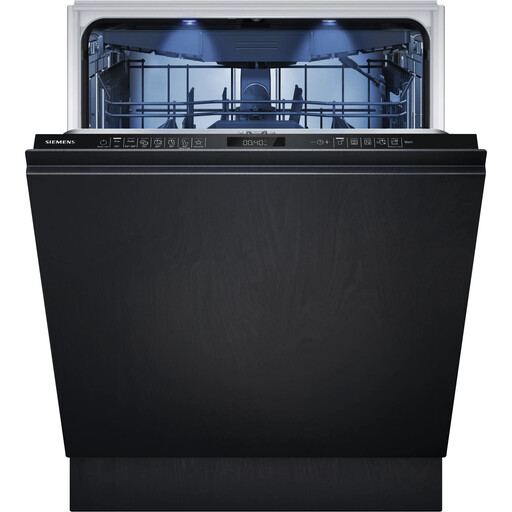
Siemens SX95EX22CE, fully integrated XXL dishwasher, 60 cm
For a collected load of plates during a break in the class; the built-in recess must suit the fully integrated design.
The product details list 14 place settings and a recess height of 820–900 mm, with a width of 600–608 mm and a depth of 555 mm.
View at Joybuy
 No image available
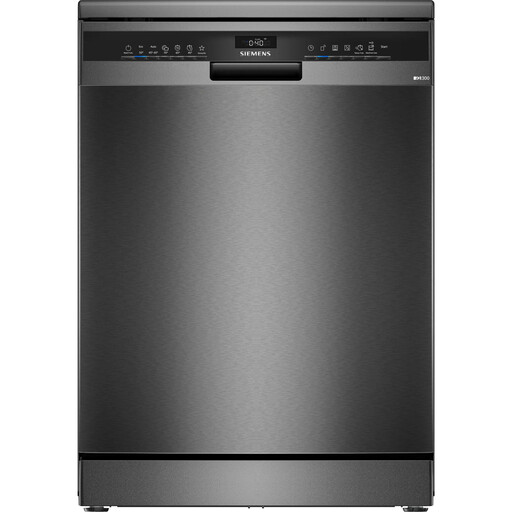
Siemens SN23EC03ME, freestanding dishwasher, 60 cm, BlackInox
The freestanding design may be suitable if you can collect the plates and have enough space at the installation site.
The product name specifies a width of 60 cm and the BlackInox finish.
View at Joybuy
 No image available
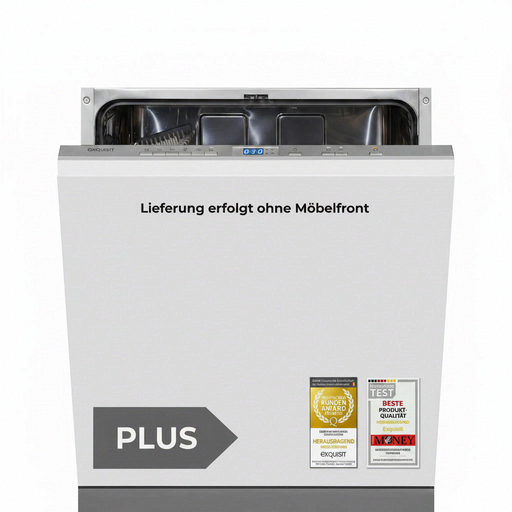
Exquisit EGSP52113-E-030E, fully integrated dishwasher, 60 cm
For a collected load during a washing-up break, provided you have a suitable built-in recess.
The product name lists 13 place settings and six programmes.
View at Joybuy
 No image available
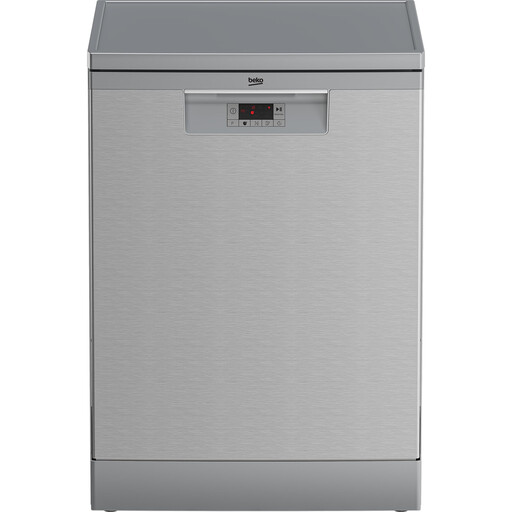
Beko BDFN16O44XW, freestanding dishwasher, 60 cm, 14 place settings
The freestanding design suits a planned full load if you have room for a 60 cm machine.
The product name lists five programmes, a half-load function and Quick & Clean.
View at Joybuy
 No image available
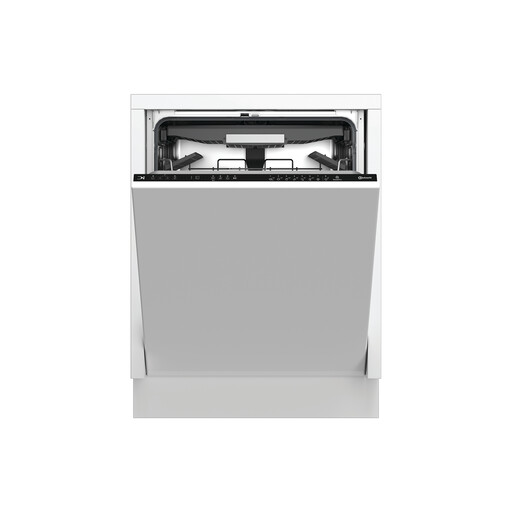
Bauknecht BKSV2IAN3C, fully integrated dishwasher, 60 cm
For a collected load of plates during a break, if your kitchen has a suitable built-in space.
The product name lists 14 place settings, energy efficiency class A and 41 dB.
View at Joybuy
Frequently asked questions
Can I use Eco label figures to estimate the consumption of a short programme for my class?
No. The figures for kWh per 100 cycles, litres per cycle and programme duration refer to the Eco programme on a domestic dishwasher. For other programmes, check the figures for the specific model.
What should I check when it comes to dishwasher connections and care?
Check the appliance dimensions and connections against the documentation for the specific model. Set the water softener to suit your local water hardness and use dishwasher salt as instructed in the manual. The German Environment Agency points out that limescale can affect efficiency and service life.
Who should I contact if my dishwasher breaks down?
For a consumer purchase in Germany, you have statutory warranty rights against the seller; a voluntary manufacturer’s guarantee is separate. For sales contracts from 31 July 2026, the Verbraucherzentrale describes a one-off 12-month extension to the warranty period if you choose a repair when a fault occurs. Check separately whether these consumer rules apply to a particular business purchase.


