The right dishwasher depends on how many cups you actually wash at once, how much space you have and whether a water inlet and drain are available where you plan to install it. A tank-fed countertop model could work for a few cups, while a suitable built-in space and regularly larger loads point towards a 45 or 60 cm model. If you’ll be running it late, check the noise level on the EU label and look at the specific programme: Eco figures don’t automatically apply to quick programmes.
Which type might suit you?
Shift workers with limited space
If you only have a few cups to wash after work, a countertop model could be an option, provided you have enough worktop space and can route the drain hose safely. An integrated tank can replace a fixed water inlet, but it doesn’t remove the need for a drain.
Households with an open-plan kitchen
If you run the dishwasher late, take the noise emissions shown on the EU label and the time you plan to use it into account when choosing a model. The European Commission lists noise emissions as information on the label.
Households with a daily load of washing-up
If you wash cups along with other dishes, you may be able to run the machine regularly with a full load. The UK Environment Agency recommends only running dishwashers when they’re full; the space available will also help determine whether a 45 or 60 cm model is right for you.
What to consider when choosing
| Priority |
What to check before buying |
Who it matters most to |
| Fit and capacity |
Type, appliance dimensions, door clearance and connections; also check that your cups fit in the rack. |
If you wash just a few cups after your shift, available space and a suitable small load matter most. Around 33% of consumers put fit and capacity first. |
| Noise when washing late |
Compare the noise emissions on the EU label and check whether the model has a delay-start function; a dB figure alone doesn’t guarantee an undisturbed night. |
If the wash cycle runs during your household’s quiet hours, you’ll want to be able to assess the noise and start time in advance. Around 25% of consumers prioritise being able to run a suitable cycle late in the evening. |
| Having your cups ready to use again in time |
Check the programme duration and whether it’s suitable for your load; consider the Eco cycle and quick programme separately. |
If you’ll need the same cups again soon, the duration of a suitable programme is important. Around 25% of consumers prioritise having clean cups ready to use again quickly. |
| Consumption for your load |
Compare electricity use per 100 Eco cycles and water use per Eco cycle on the same basis, and factor in how often you use the machine. |
If you’re prioritising electricity and water use, consider whether you can save cups up and wash them with a full load of other dishes. Around 17% of consumers focus mainly on running costs. |
The percentages offer a broad indication of priorities for this usage scenario; they are not measured proportions of buyers. The consumption figures on the EU label relate to Eco cycles and can’t automatically be applied to other programmes. The UK Environment Agency recommends running the dishwasher when it’s full.
Avoiding common mistakes
-
Assuming Eco figures apply to every programme
The consumption and duration figures on the EU label relate to the Eco programme. They don’t automatically tell you how long a quick programme takes or how much it uses.
Compare Eco figures on a like-for-like basis, and check the programme duration and details in the manual for the specific model you’re considering.
-
Setting up a tank-fed model without checking the drain
An integrated water tank doesn’t take care of draining the wastewater. You’ll need to be able to route the hose securely to a suitable drain.
Before buying, check that the space you have and the hose route will work together.
-
Running a full-size machine for just a few cups
The UK Environment Agency’s recommendation to run dishwashers when they’re full won’t necessarily suit frequent small loads. If you can’t save cups up with other dishes, you may need to run additional cycles.
Before choosing a larger model, think about how often you can wash your cups with the rest of your dishes.
-
Checking only the appliance width, not the installation requirements
Built-under and fully integrated models have different installation requirements. The right width alone doesn’t confirm that the space, cabinet door, door clearance and connections are suitable.
Check the installation dimensions and connection options against the details for the specific model.
Brands and models to consider
Bomann
The TSG 5702 is an example of a countertop model for washing a few cups in a location without a fixed water inlet.
- Bomann lists a 5-litre tank, 3 place settings and a delay-start function for this model.
- The drain hose and limited capacity need to be factored into your plans; manufacturer specifications aren’t an independent cleaning test.
Beko
The 45 cm DIS46020 built-in model is an example of a slimline installation with an adjustable upper basket.
- Beko lists 10 place settings, 47 dB(A) and a delay-start function for this model.
- Whether the adjustable basket suits the height and number of your cups depends on how you load it; these specifications apply to this model.
AEG
The 45 cm KEAD2215L built-in model is a slimline option with fold-down cup shelves and AirDry.
- The published specification sheet lists 9 place settings and 46 dB(A) for this model.
- The stated Eco cycle duration of four hours isn’t the duration of a quick programme; the features and AirDry specification apply to this model.
Bosch
The SMU4ETS08E is an example of a 60 cm built-under model, provided your installation space is suitable.
- Bosch’s product page confirms the model and type.
- This doesn’t confirm that it will fit every space or indicate how noisy it will be during a late wash cycle.
Siemens
The SN87TX00CE is an example of a fully integrated 60 cm model for a suitably planned kitchen.
- Siemens’ product page confirms the model and type.
- The model information isn’t independent evidence of how well it cleans cups, and it shouldn’t be taken as representative of every dishwasher from the brand.
Joybuy products for different kitchens
The models below include tank-fed countertop dishwashers, a freestanding 45 cm dishwasher and a fully integrated 60 cm dishwasher.
 No image available
AIRMSEN countertop dishwasher with 5-litre water tank
Could suit a spot without a fixed water inlet, as long as the drain hose can be routed safely to a suitable drain.
The title lists a 5-litre tank and 5+1 wash programmes; the product description specifies a 29-minute Quick programme and capacity for 4 place settings.
View at Joybuy
 No image available
Heinrich's HTG 8855 countertop dishwasher
Could be an option for small loads on a worktop, provided you have enough space and a suitable drain route.
The title lists 3 place settings, 7 programmes, a 24-hour delay-start function and 56.3 dB. The product description specifies a 5-litre tank, a 35-minute Fast programme and a 1,500 mm drain hose.
View at Joybuy
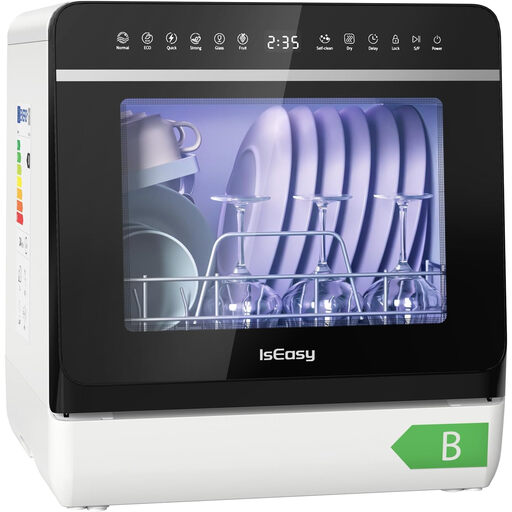 No image available
Countertop dishwasher with 5-litre water tank
Could suit small loads without a fixed water inlet, provided the dishwasher can drain safely from its intended position.
The product description lists 3 place settings, 52 dB, a Quick programme and a delay-start function.
View at Joybuy
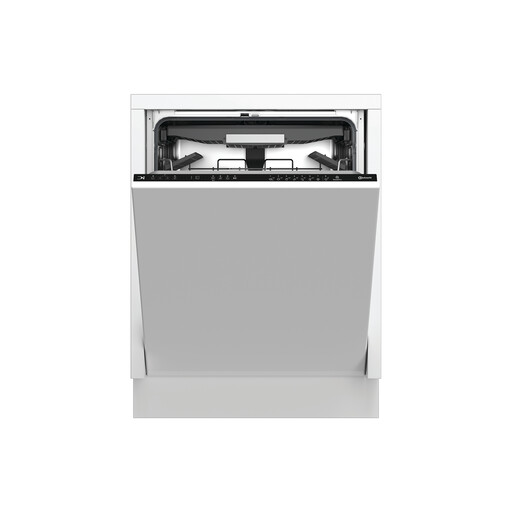 No image available
Bauknecht BKSV2IAN3C fully integrated dishwasher, 60 cm
Could be suitable if you have a suitable 60 cm space and can wash your cups with other household dishes.
The title lists 41 dB and an A energy efficiency rating; the product description specifies 14 place settings, MultiZone and a 1–24-hour delay-start function. According to the product description, installation requires a suitable 60 cm space.
View at Joybuy
 No image available
Bosch SPS4HKW49E Serie 4, freestanding dishwasher, 45 cm
Could suit a narrow kitchen layout if you want to wash cups with other dishes and have space for a freestanding model.
The product description lists 10 place settings, adjustable baskets and cup shelves, and a 1–24-hour delay-start function. Noise levels are listed as 44 dB and 41 dB on the Silence programme; these figures alone don’t guarantee an undisturbed night.
View at Joybuy
Frequently asked questions
How do I compare energy use and noise for a late wash?
Compare the EU label details for the specific models you’re considering. These include electricity use per 100 Eco cycles, water use per Eco cycle, the Eco cycle duration and noise emissions. These Eco figures don’t automatically describe other programmes, and a noise rating alone can’t tell you whether the machine will disturb your household.
Do I need to rinse cups before putting them in the dishwasher?
The UK Environment Agency advises against pre-rinsing dishes, particularly with hot water. Also check the care instructions for your cups, and load them so they fit properly in the dishwasher.
Does a tank-fed countertop model need no water connection at all?
The integrated 5-litre tank in the Bomann TSG 5702 can replace a fixed water inlet, but you’ll still need a safe way to drain the wastewater. Before setting it up, check that you can route the drain hose appropriately.


