For family loads with plenty of cutlery, a dishwasher with a cutlery drawer may be a good choice if you want to keep the lower basket as free as possible for plates and pans. A cutlery basket can be removed, but it takes up space in the lower basket. You should also consider which installation type and basket layout will suit your kitchen and the loads you usually wash. When comparing running costs, look at the specific Eco figures and programme duration rather than just the energy efficiency class.
Who should think carefully about this choice?
Families with full loads of dishes
If you want to put cutlery, plates and other dishes in the machine together after a meal, you’ll need enough capacity and a basket layout that suits the items you usually wash. Bosch Home Appliances Germany describes dishwashers with different cutlery systems.
Households with limited kitchen space
You’ll need to balance the available space, installation type and room for your usual loads. Germany’s Federal Environment Agency distinguishes between dishwashers with a width of 45 and 60 cm.
Households that run the dishwasher frequently
If your dishwasher is used often, weigh up its electricity and water consumption and Eco programme duration against the purchase price and your own usage habits.
What should you look for when buying?
Cutlery drawer
A good fit if: You want to load cutlery separately and keep the lower basket as free as possible for plates and pans.
Bear in mind: Check whether long items will fit in the specific model and whether the drawer affects the usable height of the upper basket.
Cutlery basket
A good fit if: You prefer a removable basket or want to handle cutlery separately when loading the dishwasher.
Bear in mind: The basket takes up space in the lower basket, so check where it sits alongside a typical family load.
| What matters |
What to check when buying |
Who this matters most to |
| Cutlery space and safe loading |
Check the cutlery system and space for long items on the specific model; load sharp items according to the appliance’s instructions. |
If I want to wash the cutlery and dishes from a family meal together, having a suitable place for everything matters. Around 33% of consumers put cutlery space first. |
| Room for a full family load |
Check the place settings, basket layout and space for the plates, bowls and pans you actually use. |
If I want everything from a meal to fit in one load, I need to allow for large bowls and pans too. Around 27% of consumers prioritise space for a full load. |
| Ongoing electricity and water use |
Compare kWh per 100 Eco cycles, litres per Eco cycle and Eco programme duration on the EU energy label. To estimate your own costs, factor in your usage and electricity tariff. |
If the dishwasher runs frequently, I want to compare the consumption figures with how I use it. Around 20% of consumers put running costs first. |
| Fit and installation type |
Check the recess, appliance height, width and depth, and installation type before choosing. For integrated models, check the door panel and hinges too. |
If space in my kitchen is limited, the appliance needs to fit its designated recess first. Around 20% of consumers prioritise how well it fits their kitchen. |
Common buying mistakes
-
Looking only at the number of place settings
The stated capacity alone won’t tell you how your bowls, pans and cutlery will fit together in the baskets.
Check the basket layout and height adjustment against a typical family load.
-
Assuming a short programme is automatically more economical
The figures shown on the energy label refer to the Eco programme. According to Germany’s consumer advice centre, quick programmes can use more water and electricity despite having a shorter cycle.
For regular washes, compare the Eco figures first, then consider separately when you might need a faster programme.
-
Judging a cutlery drawer or basket by the product image alone
A cutlery basket takes up space in the lower basket. Depending on the model, a third loading level may be a cutlery drawer or a basket used in a different way.
Check the specifications for the full model code and make sure there’s room for long and sharp items.
-
Comparing energy efficiency classes without checking what they’re based on
The energy label shows, among other things, electricity consumption per 100 Eco cycles and water consumption per Eco cycle. Your personal annual consumption also depends on how you use the appliance.
Compare the individual Eco figures on a like-for-like basis, then factor in your washing habits and electricity tariff.
Key dishwasher brands to consider
Bosch
Bosch Home Appliances Germany describes dishwashers with different designs and cutlery systems.
- Depending on the model, you’ll find either a cutlery level or a deeper third basket with a cutlery basket.
- Features and accessory compatibility vary by model, so check the details for the specific appliance.
Siemens
Siemens Home Appliances Germany lists the fully integrated SN87TX00CE iQ700 with an upper cutlery drawer.
- For this model, Siemens lists dimensions of 815 × 598 × 550 mm, energy efficiency class A and 9,5 l on the Eco programme.
- These figures apply to this specific model code; the Eco figure is not the consumption for every programme.
Miele
Miele Germany lists the fully integrated G 7790 SCVi AutoDos K2O with a cutlery drawer.
- Miele gives this model an energy efficiency class of A and a noise level of 41 dB.
- These details apply to this specific model and shouldn’t be assumed to apply to other appliances from the brand.
Beko
Beko Germany describes the fully integrated BG640EXVI as having a cutlery tray and a sliding cutlery basket.
- For this model, Beko lists 16 place settings, a height-adjustable upper basket, energy efficiency class C, 9,5 l per Eco cycle and 42 dB(A).
- The best basket layout depends on the load you actually wash; manufacturer claims about drying aren’t an independent performance comparison.
Joybuy products
The Joybuy models below are dishwashers with a cutlery drawer. Compare their design and the features listed in the product names with your kitchen and the loads you usually wash.
 No image available
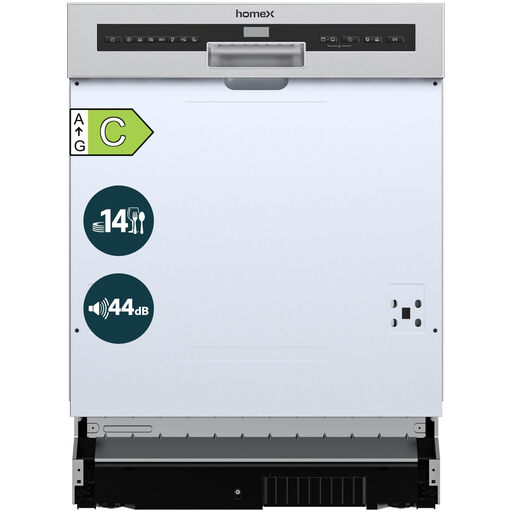
homeX DWSI601444C, 60 cm, semi-integrated, 14 place settings
The cutlery drawer is a good option if you want to load cutlery separately and use the lower basket for other dishes.
Features listed in the product name: 60 cm, semi-integrated design, 14 place settings, energy efficiency class C and AutoDoor.
View at Joybuy
 No image available
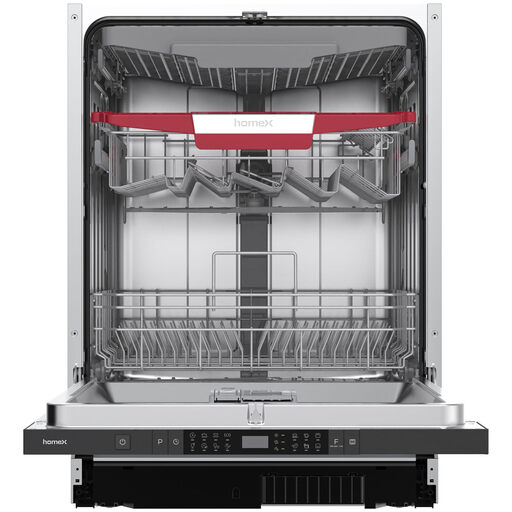
homeX DWFI601444C, 60 cm, fully integrated, 14 place settings
The cutlery drawer could suit you if you want to load cutlery separately from plates and pans; check the basket heights against the loads you wash.
Features listed in the product name: energy efficiency class C, 8 programmes, 44 dB, AutoDoor and Floor Light.
View at Joybuy
 No image available
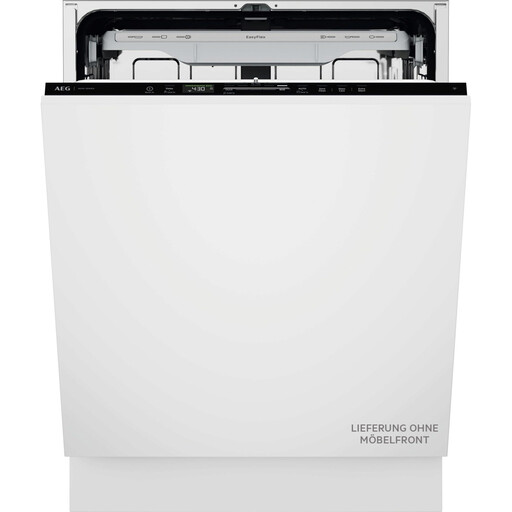
AEG GI8200A2TC Series 8000, fully integrated, 14 place settings
The cutlery drawer keeps cutlery separate from the lower basket. Check that the appliance and its installation type suit your load and kitchen measurements.
Features listed in the product name: 60 cm, water consumption of 8,4 l, 38 dB and a cutlery drawer.
View at Joybuy
 No image available
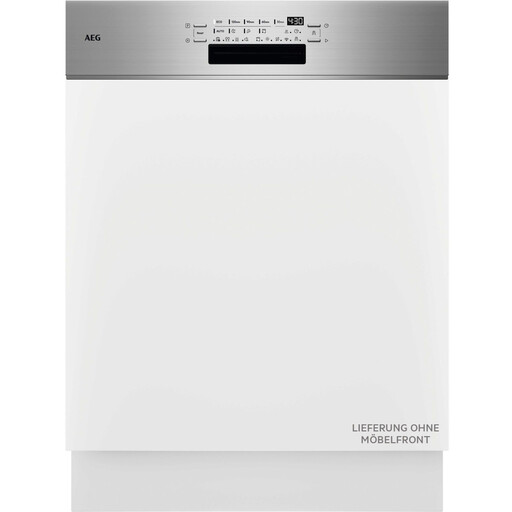
AEG GT8200B2SCM Series 8000, semi-integrated, 14 place settings
This semi-integrated model may suit you if that design works with your kitchen and you’d like a cutlery drawer.
Features listed in the product name: 60 cm, water consumption of 8,4 l, 40 dB, QuickLift upper basket and a cutlery drawer.
View at Joybuy
 No image available
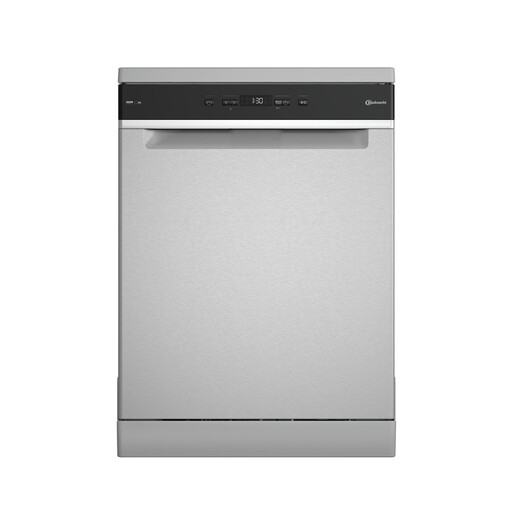
Bauknecht BKSV2FCN3X, 60 cm, freestanding, 14 place settings
The cutlery drawer gives you a separate place for cutlery. As a freestanding appliance, this model will only suit a kitchen that can accommodate this design.
Features listed in the product name: energy efficiency class C, 41 dB, ActiveDry and MultiZone.
View at Joybuy
Frequently asked questions
How can I tell whether my cutlery is dishwasher-safe?
Check the care instructions for the cutlery. The glass-and-fork symbol indicates that an item is suitable for contact with food, not that it’s dishwasher-safe, so don’t rely on that symbol alone.
Do I need to rinse cutlery before loading it?
No. Germany’s Federal Environment Agency advises against pre-rinsing dishes, particularly with warm water. For sharp items, also follow the loading instructions for your appliance or cutlery system.
Why should I compare the Eco and quick programmes separately?
The EU energy label shows consumption and duration for the Eco programme, not every other programme. According to Germany’s consumer advice centre, quick programmes can use more water and electricity despite having a shorter cycle.
What running costs and maintenance should I budget for?
Estimate electricity costs using the label figure in kWh per 100 Eco cycles, how many cycles you expect to run and your electricity tariff. Also factor in detergent and the water-softener setting that’s right for your appliance and water hardness. Germany’s Federal Environment Agency also explains why regeneration salt is important for the softener to work properly.
Does the energy label have to be visible when a dishwasher is sold in Germany?
Yes. The European Commission explains that energy labels must be clearly visible at the point of sale, including in online shops. Household dishwashers are covered by the relevant EU energy labelling rules in Regulation (EU) 2019/2017. This doesn’t mean you have to choose a particular energy efficiency class.


