The right dishwasher depends first on the available space and the appliance type, then on how you load it. A cutlery drawer keeps the lower basket free for bowls and pans, while a removable basket is quick to load and can be taken out when needed. Bosch Home Appliances Germany describes these different benefits, but does not claim that either option generally cleans better. Also compare care instructions for your cutlery and consumption figures based on the same Eco programme.
Which option suits you?
Meal preppers with lots of cutlery
If meal prep means washing cutlery as well as bowls and other cooking equipment, compare a cutlery drawer, basket and basket layout. Bosch Home Appliances Germany describes the drawer as a way to free up space in the lower basket, while the removable basket is a quick-to-load alternative.
Meal preppers with limited kitchen space
First check which appliance type and dimensions will fit in your kitchen. Then see how the loading capacity compares with the amount of crockery you usually use. Bauknecht Germany lists dishwashers with cutlery drawers in both 45 and 60 cm widths.
Meal preppers focused on hygienic food preparation
If you also handle raw ingredients, clean suitable utensils according to their care instructions and avoid transferring contamination to ready-to-eat food during preparation. The German Federal Institute for Risk Assessment highlights the importance of keeping food preparation separate and hygienic.
What to consider when buying
First check that the appliance and its type will fit in your kitchen. Then consider whether the layout suits your usual load, along with the care instructions and comparable consumption figures.
| Priority |
What to check before buying |
Who is it important to? |
| Space for cutlery and crockery |
Compare the layout with your usual load and check whether long kitchen utensils will fit in the drawer. |
If you load cutlery and bowls together after meal prep, you’ll want to make good use of the lower basket. Around 33% of consumers prioritise space for cutlery and other cooking equipment. |
| Fit in your kitchen |
Measure the available floor space or installation recess, as well as the height and depth. Check the connections and appliance type too. |
If your kitchen’s width limits your choice, the appliance must fit the available space first. Around 27% of consumers prioritise finding an appliance that fits their kitchen. |
| Hygienic use |
Check the care instructions for each cutlery item and the appliance’s loading instructions. |
If you prepare raw ingredients, you’ll want to clean suitable utensils correctly and avoid cross-contamination during preparation. Around 20% of consumers prioritise hygienic handling. |
| Consumption and running costs |
Compare energy use per 100 Eco cycles and water use per Eco cycle, taking your own usage and tariffs into account. |
If you’re particularly mindful of running costs, you’ll need comparable consumption figures and an estimate of your own usage. Around 20% of consumers prioritise this. |
The EU energy label shows energy consumption per 100 Eco cycles and water consumption per Eco cycle. The European Commission lists these as the label figures for dishwashers; don’t assume that other programmes are directly comparable.
Common buying misconceptions
-
Choosing based only on a cutlery drawer or basket
A drawer can free up space in the lower basket, while a basket is quick to load and can be removed when needed. Which option works best in practice depends on your usual load and the layout of the baskets in that particular model.
Put together a typical meal-prep load and check where the cutlery, bowls and larger utensils will actually fit.
-
Assuming Eco label figures apply to every programme
The energy and water figures on the EU label refer to the Eco programme and use specific measurement standards.
Compare like-for-like label figures. To estimate your own costs, use the number of wash cycles you expect to run and your own tariffs.
-
Confusing a food-contact symbol with dishwasher suitability
According to the Verbraucherzentrale, the glass-and-fork symbol indicates that an item is suitable for contact with food; it doesn’t automatically mean that it can go in the dishwasher.
Follow the separate care instructions for each item of cutlery.
Relevant brands at a glance
Bosch
Worth considering when comparing cutlery baskets and drawers, as well as slimline built-in appliances.
- Bosch Home Appliances Germany describes the removable basket as quick to load and the drawer as a space-saving option for the lower basket.
- The different loading benefits don’t prove that one option generally cleans better. For the SPV6EMX09E, the manufacturer lists a Vario drawer and dimensions of 815 × 448 × 550 mm.
Beko
The BG840EXTIP is a 60 cm built-in model with a cutlery drawer.
- Beko Germany lists 15 place settings and height-adjustable baskets for this model.
- These details apply to this specific model. The manufacturer’s comparison of PowerIntense cleaning refers to a particular reference model and doesn’t represent a general brand advantage.
Miele
The fully integrated G 7281 SCVi is available with a cutlery drawer.
- Miele Germany lists features including QuickPowerWash and AutoOpen for this model.
- Check the installation dimensions and features you need for the specific appliance; details for one model can’t be applied to all Miele dishwashers.
Bauknecht
Bauknecht Germany lists slimline and full-width appliances with cutlery drawers; the BK6FB10BS7A0X is listed as a freestanding 45 cm model.
- This range gives you options for comparing different widths and appliance types.
- Check the cutlery system on the specific model before making a basket or drawer a deciding factor.
Joybuy products on this topic
The appliances below include slimline 45 cm models and 60 cm models with either a cutlery basket or drawer. Compare the width, appliance type and loading capacity with your available kitchen space and the amount of crockery you usually use.
 No image available
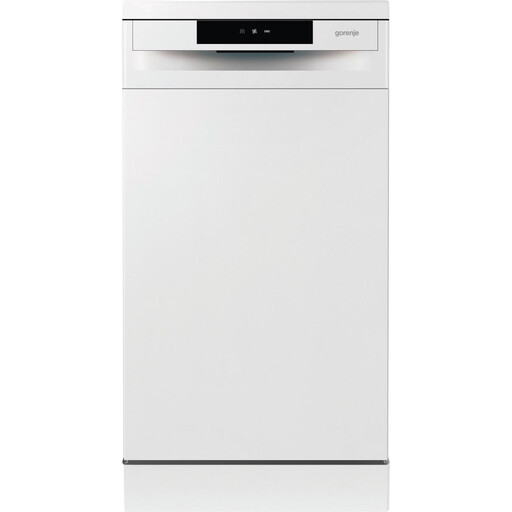
Gorenje GS520E15W, freestanding, 45 cm
This slimline design is an option if your kitchen has limited width.
9 place settings; 5 programmes, including Eco and Intensive; stainless steel tub.
View at Joybuy
 No image available
Beko BDFS26040XQ, freestanding, 45 cm
A cutlery basket is a good option if you want to load cutlery quickly and remove the basket when needed.
10 place settings; 6 programmes; stated water consumption: 8,9 l per cycle; height-adjustable upper basket.
View at Joybuy
 No image available
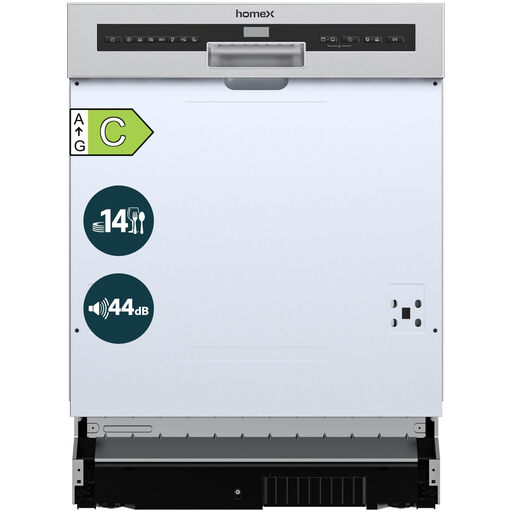
homeX DWSI601444C, semi-integrated, 60 cm
A cutlery drawer is a good option if you want to keep the lower basket free for other crockery.
14 place settings; height-adjustable upper basket; 7 programmes, including Eco and Hygiene.
View at Joybuy
 No image available
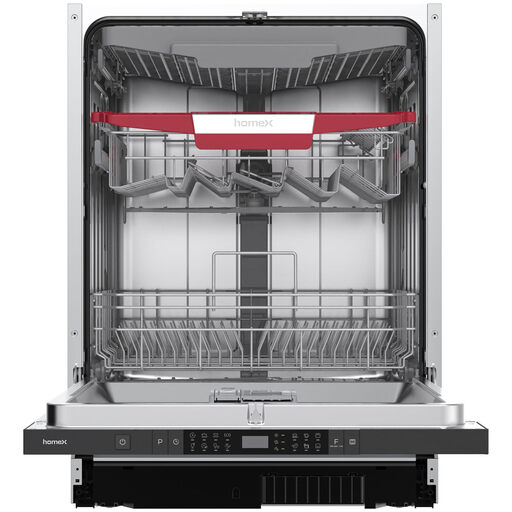
homeX DWFI601444C, fully integrated, 60 cm
A cutlery drawer could suit you if you load cutlery alongside a larger load of crockery.
14 place settings; 8 programmes, including Eco; 75 kWh per 100 cycles; height-adjustable upper basket.
View at Joybuy
 No image available
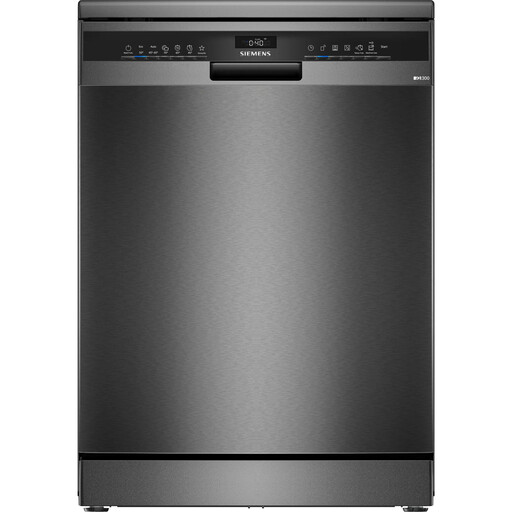
Siemens SN23EC03ME, freestanding, 60 cm
A cutlery drawer is a good option if you load cutlery and other crockery together.
14 place settings; 6 programmes; stated water consumption: 9,0 l per cycle; varioDrawer.
View at Joybuy
Frequently asked questions
Do I need to rinse cutlery before loading it?
No. The German Environment Agency advises against pre-rinsing crockery, especially with hot water. Also follow the loading and care instructions for your appliance and cutlery.
Is a cutlery drawer or basket more practical?
It depends on what you’re washing. A drawer keeps the lower basket free, while a removable basket is quick to load and can be taken out when needed. Bosch Home Appliances Germany describes these different handling benefits. Check the specific model to see how well it accommodates cutlery and larger utensils.
Is one wash programme enough after preparing raw ingredients?
You can’t assume that a single programme will eliminate all germs. The German Federal Institute for Risk Assessment recommends avoiding the spread of pathogens during food preparation. Clean suitable utensils correctly and keep raw food separate from ready-to-eat food.
How do I compare the consumption of different dishwashers?
Compare the energy figure per 100 Eco cycles and water consumption per Eco cycle on the EU energy label. To estimate your own running costs, you’ll also need to work out how many wash cycles you expect to run and check your own tariffs. Other programmes aren’t directly comparable with the Eco label figures.


