If you need your lunchboxes again soon, a suitable short or rapid programme and how well the dishwasher dries plastic parts are important factors to consider. For small loads added at different times, the machine’s footprint and a suitable half-load option matter too. If you can wash lunchboxes with other dishes, compare 60 cm models and their Eco consumption as well. Before every cycle, check that the container, lid and seal are approved for dishwasher use.
Which appliance is right for you?
Households with changing mealtimes
If lunchboxes come back at different times, programme length and drying performance matter if you want them ready in time. Siemens Home Appliances Germany and Bosch Home Appliances Germany, for example, provide information about rapid programmes and drying.
Small households with limited space
If you usually wash just a few lunchboxes at a time, consider the available width and how much space the open containers will take up. The German Environment Agency describes dishwashers with widths of 45 cm and 60 cm; Beko Germany lists a 45 cm built-in model as an example.
Households that can wait until there’s a full load
If you can wash lunchboxes with other dishes, a well-loaded Eco cycle may fit your routine better than running a separate cycle straight away. The German Environment Agency recommends using the Eco programme with a full load, while the consumer advice centre explains the Eco consumption figures on the energy label.
What should you look for when buying?
When comparing dishwashers for lunchboxes that need washing at different times, first consider the right appliance size and how soon you need the boxes ready to use again. The Eco figures on the energy label don’t automatically show how much a short programme uses.
45 cm dishwasher
A good fit if: space for a freestanding or built-in appliance is limited and you usually have smaller loads.
Consider: A narrower appliance won’t necessarily use less energy per clean lunchbox. Compare the figures for the specific model.
60 cm dishwasher
A good fit if: you regularly have other dishes to wash alongside your lunchboxes and can run them together.
Consider: Waiting for a full load may not suit you if you need a lunchbox again soon. Eco figures aren’t a general guide to the consumption of quick programmes.
Countertop dishwasher
A good fit if: there’s no room for a larger appliance and a compact model can fit the number of lunchboxes you need to wash.
Consider: The shape and size of containers and lids can limit the usable space. Check the water connection and the specifications for the appliance, too.
| What matters |
What to check when buying |
Who is this important to? |
| Getting lunchboxes clean in time |
Length of the short or rapid programme and whether it’s suitable for the level of soiling; consider Eco consumption separately. |
If a lunchbox comes back between meals, I want to get it clean before packing it again; around 36% of consumers prioritise this quick turnaround. |
| Small loads and the right appliance size |
Freestanding or built-in dimensions, space for open containers and lids, and whether there’s a half-load function. |
With limited space and only a few lunchboxes to wash at once, I want an appliance that suits both my kitchen and the size of my load; around 29% of consumers put this combination of space and small loads first. |
| Drying plastic parts before using them again |
The drying method used by the specific model, and whether the container, lid and seal are approved for the selected programme. |
If I want to fill a lunchbox again soon, I need the plastic parts to be dry in time too; around 21% of consumers give this priority. |
| Consumption when washing regularly |
kWh per 100 Eco cycles, litres per Eco cycle, Eco programme duration and how often you’re likely to run well-loaded cycles. |
If lunchboxes can wait until the next full load, I want to give more weight to ongoing consumption; around 14% of consumers put this first. |
Common buying and usage mistakes
-
Assuming the glass-and-fork symbol means an item is dishwasher-safe
The symbol indicates that an item is suitable for contact with food, not that it’s suitable for a particular dishwasher programme.
Read the care instructions for the container, lid and seals individually, and follow any programme or temperature limits they specify.
-
Assuming Eco consumption is the same as consumption on a quick programme
The consumption figures on the energy label refer to the Eco programme. A different programme that you use often may use more or less.
Check the programme duration and consumption figures for the specific model, and consider how often you’re likely to use each programme.
-
Buying a large appliance without planning your loads
An Eco cycle may not suit your need to reuse a single lunchbox as soon as possible; you may end up waiting until you have a full load.
Estimate how many lunchboxes and dishes you’ll have at a time before comparing 45 cm, 60 cm and compact models.
Brand examples to help you choose
The information below relates to the specified model ranges and isn’t a general assessment of each brand’s full range.
Beko
The models featured include a 45 cm built-in dishwasher and a freestanding 60 cm appliance.
- Beko Germany lists the BDIS38040Q as 45 cm wide, with 10 place settings, an adjustable upper basket and Fast+. The freestanding BDFN26430W is listed as 60 cm wide, with 14 place settings and a half-load function.
- These features apply to the models listed and may not be available on every Beko appliance. Check the installation type and programmes for the specific model.
Bosch
The SMH4ECX28E is an example of a fully integrated 60 cm dishwasher with flexible loading options.
- Bosch Home Appliances Germany lists energy class A, water consumption of 9.0 l per Eco cycle and automatic door opening at the end of the programme for this model.
- The Eco figures don’t show consumption for a short programme, and the door-opening feature doesn’t mean that every lunchbox part is suitable for the selected programme.
Siemens
The SN87TX00CE is a 60 cm built-in model for buyers interested in rapid programmes and drying plastic items.
- Siemens Home Appliances Germany lists varioSpeed Plus and Zeolith drying for this model, and says that it also dries plastic items.
- The drying claim is the manufacturer’s specification for this model, not the result of an independent test with lunchboxes. Make sure the installation works for your kitchen.
Miele
The G 5611 SC Active is a freestanding 60 cm model with QuickPowerWash and AutoOpen.
- Miele describes QuickPowerWash as a programme that delivers results in under an hour and lists a delay start of up to 24 hours.
- These manufacturer specifications don’t confirm that every lunchbox lid is suitable for the programme; check the care instructions for each part.
Dishwashers for lunchboxes
The products below include 45 cm and 60 cm dishwashers, as well as a countertop model – for limited space, washing dishes together or small loads that build up at different times.
 No image available
Gorenje GS520E15W, freestanding dishwasher, 45 cm
A 45 cm design may suit kitchens with limited space for appliances.
For 9 place settings; 5 programmes.
View at Joybuy
 No image available
Beko BDFS26040XQ, freestanding slimline dishwasher, 45 cm
The stated width may be useful if you have limited space for a freestanding appliance.
Energy class C; stainless steel finish.
View at Joybuy
 No image available
Exquisit EGSP52109-E-030E, freestanding dishwasher, 45 cm
A 45 cm model may suit a kitchen with limited space.
For 9 place settings; 6 programmes.
View at Joybuy
 No image available
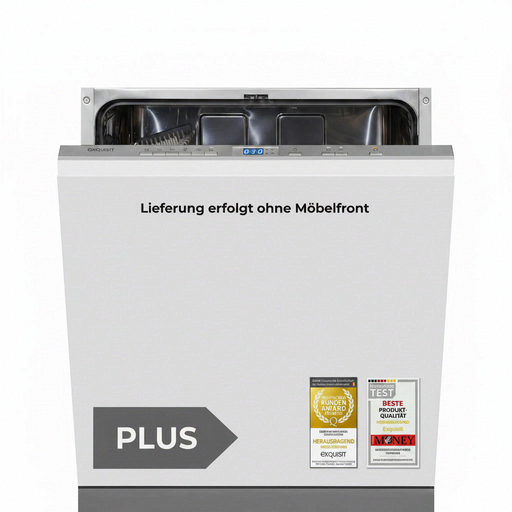
Exquisit EGSP52113-E-030E, fully integrated built-in dishwasher, 60 cm
A 60 cm built-in model may suit you if you want to wash lunchboxes alongside other dishes.
For 13 place settings; 6 programmes; delay start.
View at Joybuy
 No image available
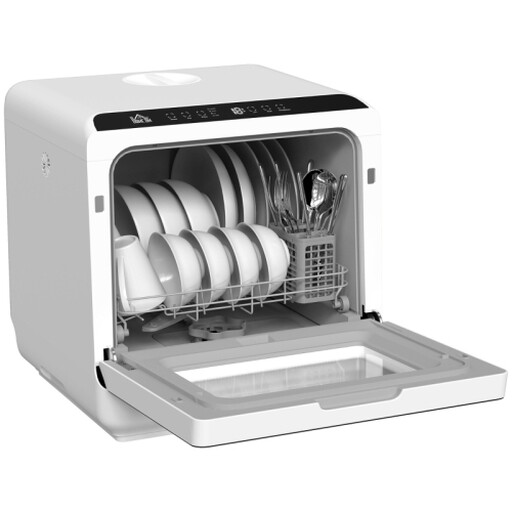
Countertop dishwasher with 6-litre tank
A countertop model may be an option if there’s no room for a larger dishwasher.
6-litre tank; 5 programmes; drying function.
View at Joybuy
Frequently asked questions
Does the glass-and-fork symbol mean a lunchbox is dishwasher-safe?
No. The symbol indicates that an item is suitable for contact with food. Check the care instructions for the container, lid and seal, including any programme or temperature limits.
Which programme should I use if I need a lunchbox again soon?
Check whether the specific appliance has a short or rapid programme that’s suitable for the level of soiling. Don’t assume its duration and consumption are the same as the Eco figures on the energy label.
How can I estimate running costs?
The EU energy label shows electricity consumption per 100 Eco cycles and water consumption per Eco cycle. To estimate your own costs, you’ll also need to know how many cycles you expect to run and your utility tariffs. The German Environment Agency recommends skipping the pre-rinse and using the Eco programme with a full load.
What should I do with my old dishwasher?
The German Federal Ministry for the Environment lists an authorised collection point or a retailer obliged to accept old appliances as disposal options. For certain large appliances, collection from your home may be available if agreed when you sign the contract; this isn’t guaranteed in every case.


