Course leader with lots of lunchboxes
After a class, you need to fit plenty of containers and lids in the dishwasher. The usable rack space and a design that suits your kitchen are key.


The key factors are the actual dimensions and number of lunchboxes and lids, as well as the available space for a freestanding or built-in appliance – not just the place-setting capacity. For a large number of items, a 60 cm model may be suitable if you can load it fully; if space is tight, a 45 cm model could work, provided the course load fits in the racks. Also check the care instructions for every lunchbox component and compare drying performance and programme duration. Eco consumption figures do not automatically apply to other programmes.
After a class, you need to fit plenty of containers and lids in the dishwasher. The usable rack space and a design that suits your kitchen are key.
If space for a freestanding or built-in appliance is tight, a slimline dishwasher still needs to accommodate the actual course load.
If you’ll need the lunchboxes again soon, consider the care instructions, drying performance and programme duration for containers, lids and seals.
When it’s suitable: If you regularly have lots of lunchboxes, lids and other dishes to wash after a class, and have enough space for a freestanding or built-in appliance.
The trade-off: The larger design takes up more space, and the place-setting capacity doesn’t tell you how many lunchboxes will actually fit in the racks.
When it’s suitable: If your kitchen has limited width and you can arrange the course load to fit, or split it across suitable wash cycles.
The trade-off: There may be less room in the racks for lots of containers opened at the same time.
The European Commission’s EU energy label shows consumption and programme duration for the Eco programme, not for every wash cycle. The German Environment Agency bases its efficiency assessment for larger appliances on a full load.
| Buying consideration | What to check before buying | Who it matters most to |
|---|---|---|
| Rack space for the course load | Number and dimensions of lunchboxes and lids; rack layout and appliance dimensions. | When there are lots of open lunchboxes and separate lids after a class, I want to be able to arrange them so they fit. Around 29% of consumers put rack space for the course load first. |
| Suitable lunchbox components and cleaning | Care instructions for the container, lid and seal; suitability for the wash cycle selected. | I want to be sure that every part can withstand the selected wash cycle and will be reached by the spray water. Around 24% of consumers prioritise cleaning that’s suitable for the material. |
| Drying before using the lunchboxes again | Drying method and programme duration for the specific model. | If the lunchboxes will be needed again soon, I want to be able to check them before putting them back together or storing them. Around 18% of consumers prioritise being able to reuse items after a wash cycle. |
| Fitting into a small kitchen | Space or recess dimensions; water and waste connections, and room for the door to open. | When space is limited, the appliance needs to fit in the kitchen without losing sight of the actual course load. Around 17% of consumers prioritise a suitable design. |
| Electricity and water consumption | kWh per 100 Eco cycles and litres per Eco cycle; expected usage and load. | If I’ll be using the dishwasher regularly, I want to compare the Eco programme’s consumption figures with how I expect to use it. Around 12% of consumers put consumption over the planned period of use first. |
The place-setting capacity doesn’t tell you how containers and separate lids will fit in the appliance’s specific rack layout.
Check the dimensions of your usual containers and the number of individual items against the appliance or its rack layout.
If lunchboxes and lids take up rack space differently from ordinary dishes, you may need to run extra wash cycles.
The glass-and-fork symbol indicates that an item is suitable for food contact; it doesn’t tell you which wash cycles the container, lid or seal can withstand.
Check the care instructions for each part separately and choose the wash cycle accordingly.
Individual parts could be damaged or need to be washed by hand if they aren’t suitable for the selected wash cycle.
The consumption and time figures on the energy label relate to the Eco programme, not automatically to quick or intensive programmes.
Compare appliances using the same programme as your basis, and consider which programmes you’re likely to use during your course.
For comparing slimline freestanding models: the SPS6EMI21E is 45 cm wide and has an adjustable rack system.
The BDFN26430W and DIS46020 models allow you to compare a freestanding 60 cm appliance with a fully integrated 45 cm model.
The fully integrated G 5651 SCVi Active is an example of a 45 cm appliance with a cutlery tray and automatic door opening.
The manufacturer’s overview provides information on built-in, freestanding and compact dishwashers, as well as fully and semi-integrated models.
The selection below includes freestanding and integrated dishwashers in 45 cm and 60 cm widths, to suit different space and load requirements.
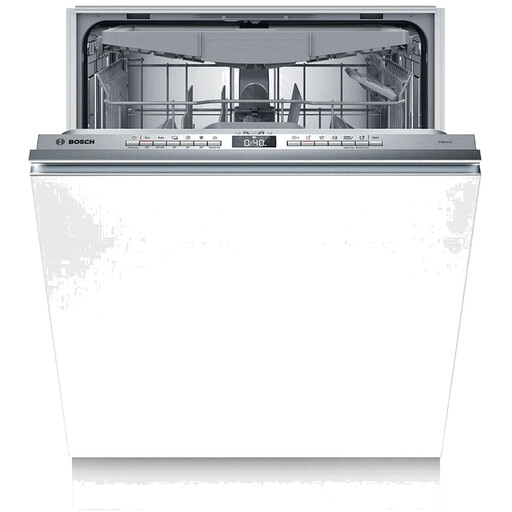 No image available
An option for larger course loads, if the installation setup is suitable and the racks can accommodate the lunchboxes and lids.
13 place settings, height-adjustable upper rack, PerfectDry with Zeolith drying, Home Connect and energy class D.
Fully integrated installation; furniture door not included, professional installation required.
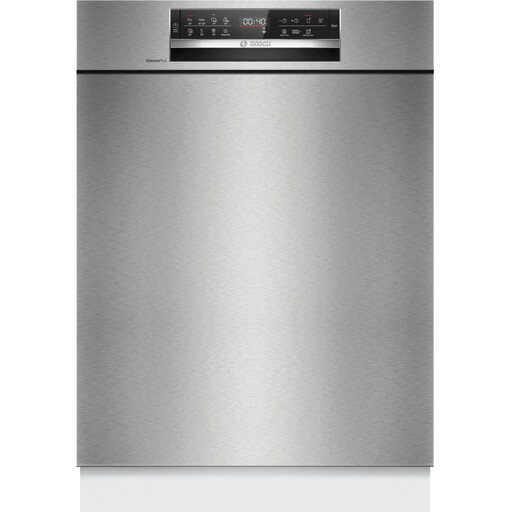 No image available
For a larger load, if a 60 cm built-in appliance suits your kitchen and offers enough rack space.
14 place settings, height-adjustable upper rack, flexible racks and automatic door opening; 42 dB and Home Connect.
 No image available
A slimline freestanding design for kitchens with limited width, provided the course load fits in the racks.
9 place settings, 6 programmes, adjustable rack and extra drying; the stated width is 44,8 cm.
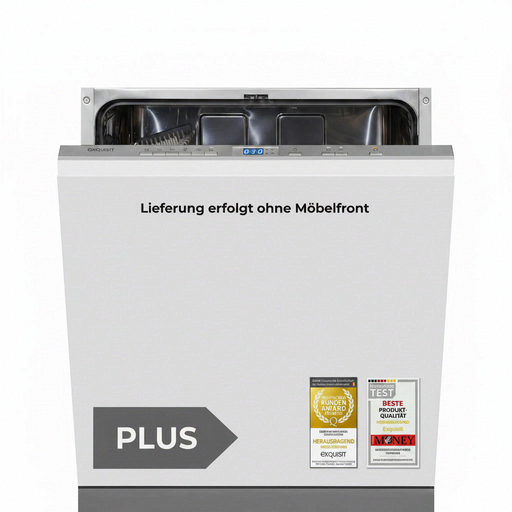 No image available
For a larger load, if you have a suitable recess and want a fully integrated design.
13 place settings, height-adjustable upper rack, extra drying, 6 wash programmes and Eco mode.
The recess must match the stated appliance dimensions.
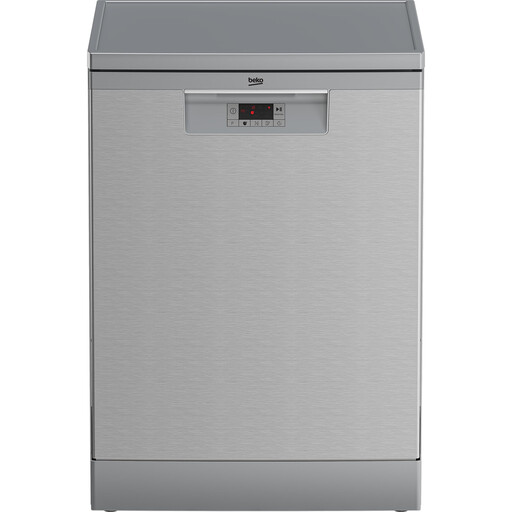 No image available
For a larger load, if you have enough space and the right connections for a freestanding 60 cm appliance.
14 place settings, height-adjustable upper rack, Half Load, Quick & Clean and SelfDry with automatic door opening; 5 programmes.
No. The symbol indicates that an item is suitable for food contact, not that it’s suitable for a particular wash cycle. Check the care instructions for each container, lid and seal separately.
The European Commission’s label includes figures such as kWh per 100 Eco cycles, litres per Eco cycle, Eco programme duration, capacity and noise levels. These figures don’t automatically describe a quick or intensive programme.
Check the appliance’s dimensions and design against the available space, water inlet and waste outlet, and load items so the spray arms can move freely. The German Environment Agency recommends using the Eco programme and running a full load to save water and electricity.
It depends on how the course is organised and whether it is classed as a food business or as catering for a community setting. The EU Regulation on food hygiene applies to food businesses; Germany’s Federal Institute for Risk Assessment provides separate hygiene guidance for catering for others. The term ‘weekend cookery course’ alone isn’t enough to determine how it should be classified.