Hosts with a small kitchen
If you need to wash a few cups between guest stays but don’t have a suitable fixed water supply, consider a compact water-tank model. Even a tank-fed dishwasher needs a safe way to drain the waste water.


For a few cups and where there’s no suitable fixed water supply, a compact water-tank model is an obvious choice, provided you can route the drain hose safely. The manufacturer lists a 5-litre tank and three place settings for the Bomann TSG 5702. If you have more washing up, a larger countertop model could work, provided the water connections and available space are suitable. An under-counter model also requires a suitable space for installation. Before buying, check the actual cup height, basket layout and Eco figures for the specific model.
If you need to wash a few cups between guest stays but don’t have a suitable fixed water supply, consider a compact water-tank model. Even a tank-fed dishwasher needs a safe way to drain the waste water.
If you regularly wash plates and cutlery as well as cups, compare the basket layout and available space with the load you actually have. A larger countertop or under-counter model requires suitable connections.
If the washing-up area is close to the living space, the stated noise level may help you choose between models. Manufacturer figures apply to the specific model listed.
Suitable if: there’s no suitable fixed water supply and you usually have small loads of cups.
Consider: You’ll need to fill the tank by hand, and a drain is still required. The number of place settings doesn’t tell you whether tall or wide cups will fit.
Suitable if: you have a water supply and drain, and regularly wash plates and cutlery as well as cups.
Consider: The appliance needs more space and a suitable connection.
Suitable if: your kitchen has a suitable space for installation and you often have larger, full loads.
Consider: It takes up more space and is more involved to install. An Eco figure for a full load doesn’t prove you’ll save money if you often run small, partial loads.
According to the Verbraucherzentrale, Eco-label figures in kWh per 100 cycles and litres per cycle are the right basis for comparing running costs. The best type for you also depends on cup dimensions, available space, and how the water supply and waste water will be managed.
| What matters | What to check when buying | Who is this important to? |
|---|---|---|
| Cups and capacity | Compare the interior height, cup holders, basket layout and external dimensions with the cups you usually use. | If my tall or wide cups need to fit, handles and all, the actual basket layout matters more to me than the number of place settings; around 36% of consumers are likely to put cup fit and usable capacity first. |
| Water supply and drainage | Check the water supply, drain outlet, hose routing and installation location against the instructions for the specific model. | If there’s no fixed water supply at the holiday home, I still need a practical way to drain the waste water; around 29% of consumers are likely to give most weight to the water supply and drainage. |
| Consumption during use | Compare Eco figures on the same programme basis and take into account how many small and full loads you expect to run. | If the appliance is only used occasionally, I don’t want to confuse the Eco figures with my actual annual consumption; around 21% of consumers are likely to prioritise electricity and water consumption. |
| Noise in the living area | Consider the noise level stated for the specific model and where the kitchen is located. | If the kitchen and living area are open-plan, I want to avoid disruptive operating noise; around 14% of consumers are likely to consider peace and quiet in the living area their top priority. |
Even a water-tank model that you fill by hand needs to drain its waste water. According to the manufacturer, the HAVA R01’s drain hose runs into a sink or bucket.
Before choosing a water-tank model, check that you can route the drain hose safely where you plan to put it.
Handles, cup height and the basket layout can all limit usable capacity.
Measure the cups you usually use and compare them with the interior and cup holder of the specific appliance.
The energy label shows electricity and water consumption for the Eco programme, not for every quick or special programme.
Compare appliances on the same programme basis and factor in how you expect to use them.
A voluntary manufacturer’s guarantee doesn’t automatically replace your statutory rights against the retailer.
Read the guarantee terms and your statutory rights separately.
The TSG 5702 and TSG 7405 are two different countertop options: a water-tank model for smaller loads and a larger appliance with water supply and drain hoses.
According to the manufacturer, the R01 is a compact countertop model that can be filled by hand or connected to a tap.
The SMU4ETS08E is one example of a 60 cm under-counter model. It’s only suitable if you have the right space for installation and suitable connections.
The Amazonia Nano is a compact countertop model for a location where you can use the tap connection described.
Bob is a compact alternative with a manually filled tank and a basket for three place settings.
This selection ranges from compact water-tank countertop models for smaller loads to larger countertop and freestanding dishwashers for bigger loads. Compare the capacity of each model and check that the water supply, drainage and available space are suitable for your holiday home.
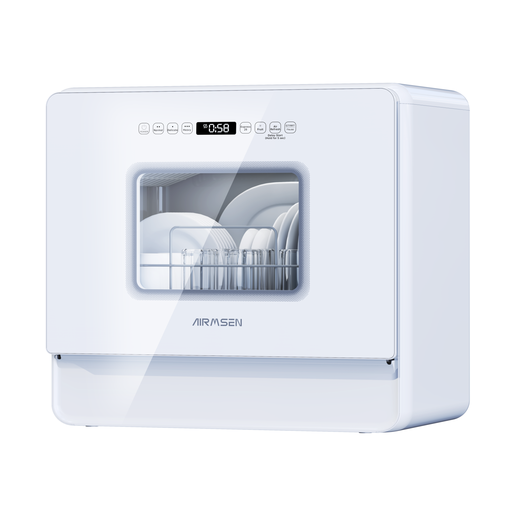 No image available
The compact countertop design and manually filled tank make this a good fit for a location without a fixed water supply.
5-litre tank; two-tier basket; three spray arms; delayed start of up to 12 hours.
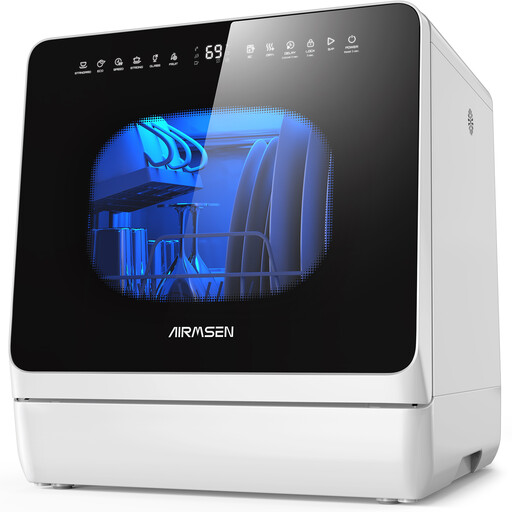 No image available
The built-in tank is an option for a location without a fixed water supply.
Built-in 4.9 l tank; eight programmes; dimensions: 42.8 × 42.5 × 45.7 cm.
 No image available
The tank option and three place settings suit smaller loads if you don’t plan to use a fixed water connection at the installation location.
5-litre tank; three place settings; seven programmes; works with or without a water connection; 56.3 dB; energy class C.
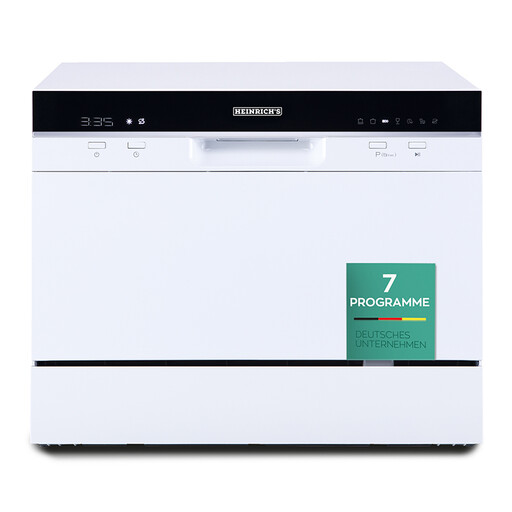 No image available
With six stated place settings, this countertop model is an option if you regularly wash other dishes as well as cups and have a water connection.
Six place settings; seven programmes; 6.5 l of water per cycle; 47 dB; energy class D.
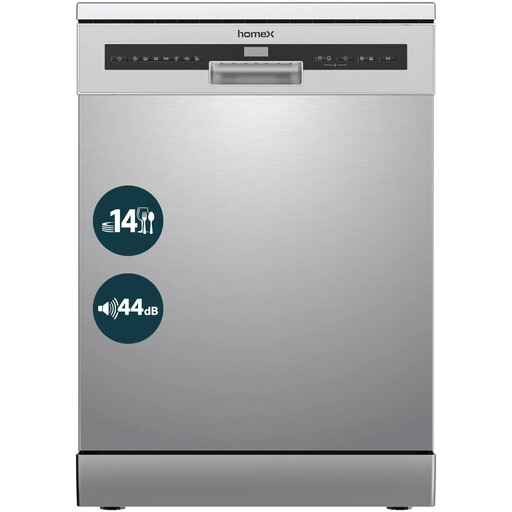 No image available
The stated capacity is designed for larger loads. Check that you have enough space and the right connections in your holiday home.
14 place settings; adjustable upper basket; cutlery drawer; separate washing zones; energy efficiency class C.
No. According to the Verbraucherzentrale, the glass-and-fork symbol indicates that an item is suitable for contact with food. For dishwasher suitability, follow the care instructions for the specific cup.
No, because a water-tank model still needs a suitable way to drain waste water. According to the manufacturer, the HAVA R01 drains through a hose into a sink or bucket, so the location and drainage need to be suitable.
First, compare the Eco-label figures on the same programme basis: electricity in kWh per 100 cycles and water in litres per cycle, as described by the Verbraucherzentrale. To estimate your own costs, you’ll also need to consider how many cycles you expect to run and your energy and water prices. An Eco figure doesn’t automatically apply to other programmes.
No. According to Your Europe, when you buy as a consumer from a trader in the EU, you’re generally entitled to at least two years of legal guarantee from the date you receive the goods. A voluntary manufacturer’s guarantee is separate.
Appliances that require a label must display the energy label when sold online, too. Your Europe states that dishwashers use the current A to G scale. The Umweltbundesamt explains that end-of-life electrical appliances must be collected separately, for example at a local authority collection point. Check with the seller whether collection of your old appliance is offered when your new one is delivered.