First, choose a design that suits the space, cabinet front and door opening in your new kitchen. Then consider how much crockery you use and how the racks are arranged to find a size that works for everyday life. Compare energy and water consumption, as well as programme duration, using the same energy label basis, and check the figures against how you plan to use the appliance. Manufacturers’ specifications for individual models are no substitute for checking the installation plan or consulting an independent cleaning test.
Which requirements matter to different households
Kitchen renovation with a planned cabinet front
Check the appliance type and installation dimensions against your new kitchen first. Bosch lists dimensions of 815 × 598 × 550 mm for its fully integrated SMV4EVX08E, while the VarioHinge is specified for the SMH4ECX28E model.
Households with plenty of dishes to wash every day
As well as checking the number of place settings, make sure the racks can accommodate your plates, glasses and cookware. Siemens lists water consumption of 9.5 l for the SN87TX00CE on the Eco programme; the actual load capacity depends on the model.
Kitchens with a narrow appliance space
A slimline design may suit your plans, but that alone won’t tell you whether your dishes will fit comfortably. Miele describes the G 5790 SCVi SL as a fully integrated 45-cm model.
What to consider when buying
Check the installation and cabinet front first, then look at capacity and operating figures. That way, you can compare appliances that are actually suitable for your kitchen layout.
| Consideration |
What to check when buying |
Who it matters most to |
| Installation and design |
Check the appliance dimensions, cabinet front, plinth and door opening against the specific installation plan. |
I check the entire installation setup before weighing up the finer features. For around 31% of consumers, choosing the right installation type comes first. |
| Space for everyday dishes |
Check the number of place settings and the rack layout; picture how your usual plates, glasses and pans will fit. |
If I often need to wash larger loads, the usable space matters most. Around 25% of consumers put capacity first. |
| Electricity and water |
Compare kWh per 100 Eco cycles and litres per Eco cycle using the same energy label basis. |
If I use my dishwasher frequently, I want to weigh up its energy and water consumption alongside a suitable design. Running costs come first for around 19% of consumers. |
| Noise and wash time |
Consider dB(A) and Eco programme duration separately; check figures for other programmes on their own. |
In an open-plan kitchen or with a busy schedule, I pay particular attention to noise and programme duration. Around 13% of consumers make these their top priority. |
| Service and overall costs |
Check delivery and installation separately, and distinguish a voluntary guarantee from your statutory rights. |
If I need to plan for installation or aftercare, I check exactly what’s included in advance. The overall cost comes first for around 12% of consumers. |
Common buying mistakes
-
Comparing the width of the space only
When renovating a kitchen, the appliance, cabinet front, plinth and door movement all need to work together.
Check the full dimensions and door design of the specific model against the installation plan.
-
Assuming Eco figures apply to every programme
The stated energy and water figures relate to the Eco programme and don’t automatically apply to other programmes.
Compare appliances using the same Eco figures, and check the details of any quick programme you use regularly.
-
Assuming place settings mean unlimited space for cookware
The stated capacity doesn’t tell you exactly how your plates, glasses and pans will fit in the specific rack layout.
Check the usable rack positions against your usual dishes and the details for the specific model.
-
Assuming all services come as one package
Delivery, installation, removal of your old appliance and a voluntary guarantee may be separate services. The Verbraucherzentrale points out that a guarantee is not the same as your statutory rights.
Before signing a contract, get confirmation of each service included and the terms of any voluntary guarantee.
Brands to consider
Bosch
The model examples listed include fully integrated 60-cm appliances for different installation setups.
- Bosch lists dimensions of 815 × 598 × 550 mm and adjustable racks for the SMV4EVX08E.
- The VarioHinge is specified for the SMH4ECX28E, not for all models; check the cabinet front and door opening against your installation plan.
Siemens
The SN87TX00CE is listed as a fully integrated 60-cm dishwasher for a suitably planned fitted kitchen.
- Siemens lists energy class A, 9.5 l per Eco cycle and zeolith drying for this model.
- The manufacturer’s claims about drying are not the same as an independent comparative test. Check the full model number.
Miele
The G 5790 SCVi SL is a fully integrated 45-cm model for a suitably planned slimline space.
- Miele lists energy class C, 44 dB and a cutlery tray for this model.
- A slimline design doesn’t guarantee that it will fit all your dishes; check the space and capacity together.
Beko
The German model examples listed include one fully integrated and one freestanding appliance.
- Beko lists a height-adjustable upper rack for the BDIN16N22.
- For the freestanding DFN04321W, Beko lists a non-adjustable upper rack and 49 dB(A); these features apply only to the specific models mentioned.
AEG
The FSK76727P is a fully integrated 60-cm dishwasher with specially designed racks for glasses.
- AEG lists 14 place settings, 54 kWh per 100 Eco cycles, 10.9 l per Eco cycle and 43 dB for this model.
- The glass holders promoted by AEG don’t prove a lower breakage rate in independent tests.
Dishwashers for different kitchen layouts
The following Joybuy selection includes built-under, semi-integrated, freestanding and fully integrated appliances for different kitchen layouts.
 No image available
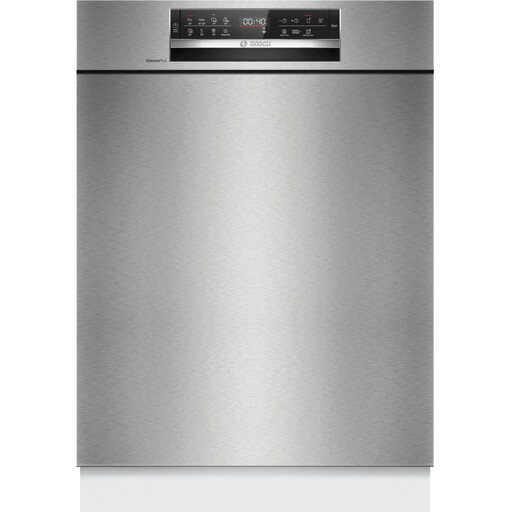
Bosch SMU6ECS12E, built-under, 60 cm
For a kitchen layout with a built-under appliance rather than a fully integrated cabinet front.
14 place settings; 42 dB(A).
View at Joybuy
 No image available
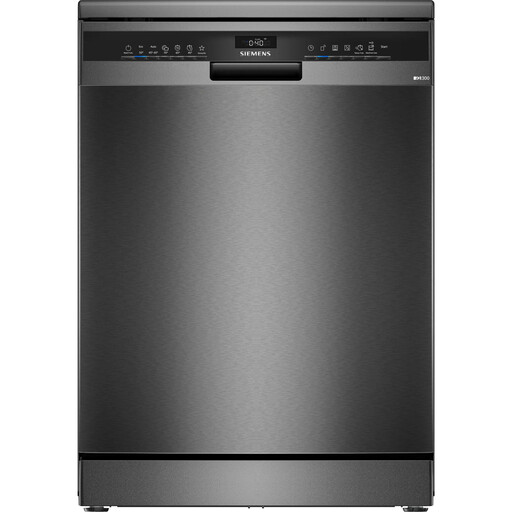
Siemens SN23EC03ME, freestanding, 60 cm
For a designated space without a fully integrated cabinet front.
14 place settings; 5 programmes; energy class B.
View at Joybuy
 No image available
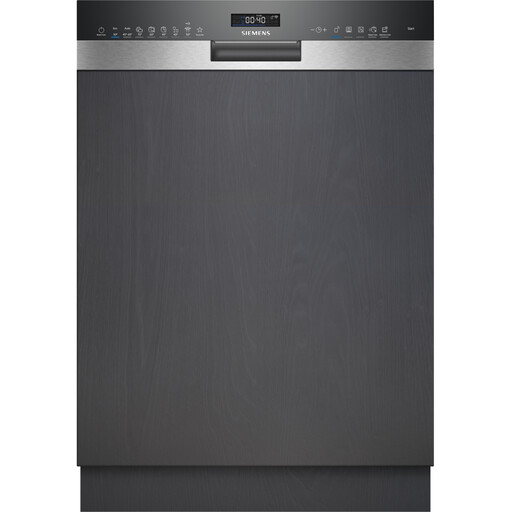
Siemens SN55ES12CE iQ500, semi-integrated, 60 cm
For a kitchen layout with a visible control panel and a suitable installation space.
60 cm wide.
View at Joybuy
 No image available
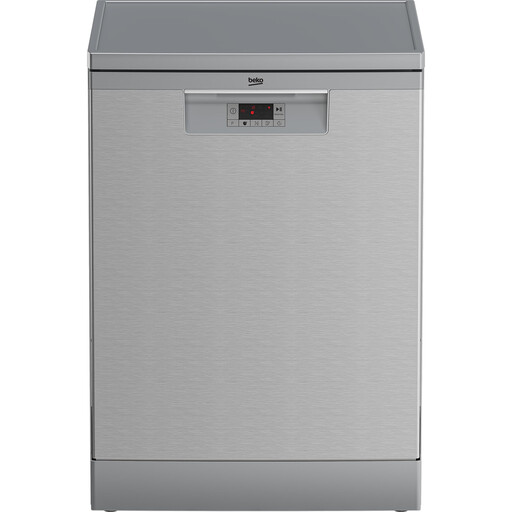
Beko BDFN16O44XW, freestanding, 60 cm
For a kitchen layout with space and connections for a freestanding appliance.
14 place settings; half-load function.
View at Joybuy
 No image available
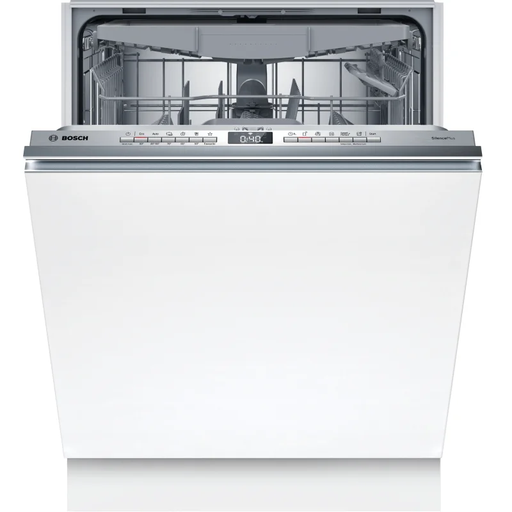
Bosch SMV4EVX08E, fully integrated, 60 cm
For a kitchen layout with a suitable space and fully integrated cabinet front.
14 place settings; 44 dB; energy class B.
View at Joybuy
Frequently asked questions
How do I compare the consumption of two dishwashers?
Compare kWh per 100 Eco cycles and litres per Eco cycle using the same energy label basis. The Verbraucherzentrale lists these as figures for comparison; quick programmes don’t automatically use the same amount of energy and water as the Eco programme.
Can I choose a fully integrated appliance based on width alone?
No. Also check the full appliance dimensions, cabinet front, plinth and door opening against your kitchen plan. Bosch specifies the VarioHinge for the SMH4ECX28E model; it isn’t a standard feature of all appliances of a similar width.
Will my everyday dishes fit in a 45-cm dishwasher?
Width alone won’t tell you. Miele describes the G 5790 SCVi SL as a fully integrated 45-cm model; also check the dimensions of the space and whether your plates, glasses and pans will fit in the rack layout.
When is a freestanding dishwasher suitable for a new kitchen?
It may be suitable if your kitchen plans don’t include a fully integrated cabinet front and you have an appropriate space with the necessary connections. Check the space and connections against the requirements of the specific appliance.


