Anyone planning a kitchen renovation with an integrated front
You want your dishwasher to fit permanently into your new kitchen, so you’ll need to coordinate the space, front panel and loading capacity before installation.


First, plan the final space and check that your own dinner plates fit with the racks set as needed; the place-setting capacity alone won’t tell you. If you’re planning a matching kitchen front, a suitable built-in dishwasher could be right for you. A freestanding model may work if you have a suitable space, while a worktop dishwasher could help during the renovation, though it has significantly less capacity. Compare Eco figures on the same label basis, and check the connections, front panel and installation requirements before ordering.
You want your dishwasher to fit permanently into your new kitchen, so you’ll need to coordinate the space, front panel and loading capacity before installation.
You regularly load lots of large plates after dinner and need enough usable rack space, not just a high place-setting capacity.
You need a temporary washing-up solution during the renovation and have a suitable space to put it.
First decide whether the appliance needs to fit permanently into your planned kitchen or simply see you through the renovation. Then check that your plates will fit and consider running costs.
| Priority | What to check when buying | Who it matters most to |
|---|---|---|
| Fitting your finished kitchen | Check the height, width and depth of the space, door clearance and front-panel fixing against the exact model’s dimensions. | If the appliance is to be permanently installed in a new kitchen, the space and furniture front need to work together. Around 31% of consumers focus primarily on how well it fits. |
| Space for your dinner plates | Measure your plate diameter and check the racks, spray-arm clearance and space in the raised upper rack on the specific appliance. | If you regularly have lots of large dinner plates to wash after dinner, usable rack space matters. Around 25% of consumers put plate capacity first. |
| Washing up during the renovation | Check the available space, power supply, water inlet, drainage and plate fit for the exact model. | If the new built-in space isn’t ready to use, a temporary solution may be important. Around 19% of consumers prioritise having an appliance during the renovation. |
| Energy and water consumption | Compare kWh per 100 Eco cycles, litres per Eco cycle and programme duration using the same current EU label. Germany’s consumer advice centre explains these Eco figures. | If you wash dishes often and want to factor in running costs, comparable label figures can help you choose. Around 19% of consumers put running costs first. |
| Noise while washing | Compare the noise level in dB(A) and the noise emission class for the specific models. | If the appliance will be running while you’re nearby, its noise level could help you decide. Around 6% of consumers focus primarily on operating noise. |
The external width doesn’t tell you whether the height, depth and furniture front will fit your finished kitchen.
Check your kitchen plan against the installation instructions for the exact model before ordering.
The standard capacity doesn’t tell you whether your plates will fit with the racks set as you need them.
Measure your plates and check the space in the upper and lower racks, as well as the spray arm’s clearance.
The rating system and measurement basis have changed. The Energy Label Guide points out that old Plus ratings and current A-to-G ratings aren’t directly comparable.
Compare current appliances using like-for-like Eco figures, and bear in mind which generation of label applies to older models.
The Midea ST 5.31 wi is rated for three place settings, a much smaller standard capacity than the 60 cm models considered here.
Think separately about what you need during the renovation and how much your future appliance will need to hold.
A fully integrated model is an option if you’re planning to fit a matching kitchen front permanently.
The semi-integrated SPI4EMS02D is an example of a model for a narrower built-in space.
A freestanding model could be suitable if you have a suitable space rather than a fitted furniture front.
A compact worktop dishwasher could be a temporary option if there’s no built-in space available during the renovation.
Fully integrated ranges also include XXL models for kitchens designed to accommodate them.
This selection includes undercounter and built-in appliances for planned kitchens, as well as freestanding 60 cm models for a suitable space.
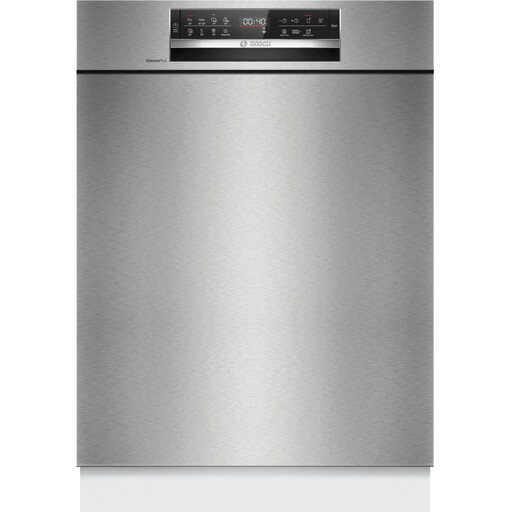 No image available
Described as an undercounter model for a 60 cm kitchen installation.
14 place settings; height-adjustable upper rack and cutlery drawer; 9 l of water per Eco programme.
The space needs to suit the appliance dimensions and your available installation area.
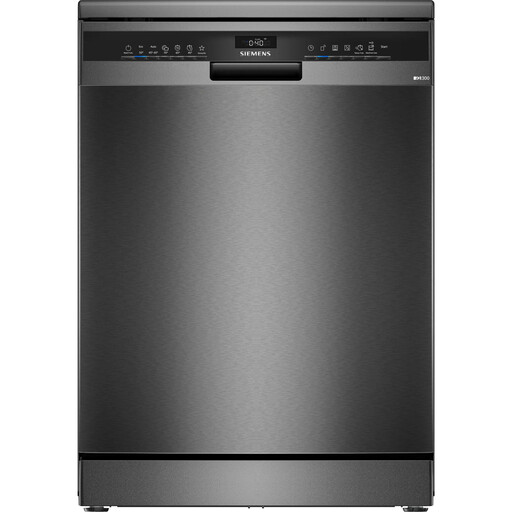 No image available
A freestanding option if suitable water and power connections are available where you plan to put it.
14 place settings; height-adjustable upper rack system; energy efficiency class B; 65 kWh per 100 Eco cycles and 42 dB(A).
The listed appliance dimensions are 84,5 × 60 × 60 cm.
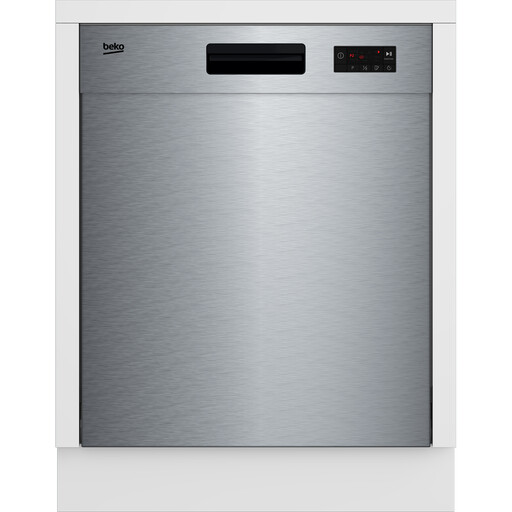 No image available
Described as an undercounter model with a furniture front, for fitting into a planned kitchen.
14 place settings; energy efficiency class A; 54 kWh per 100 cycles and 10,9 l per cycle.
The listed appliance dimensions are 81,8 × 59,8 × 57 cm; the space and front panel need to fit.
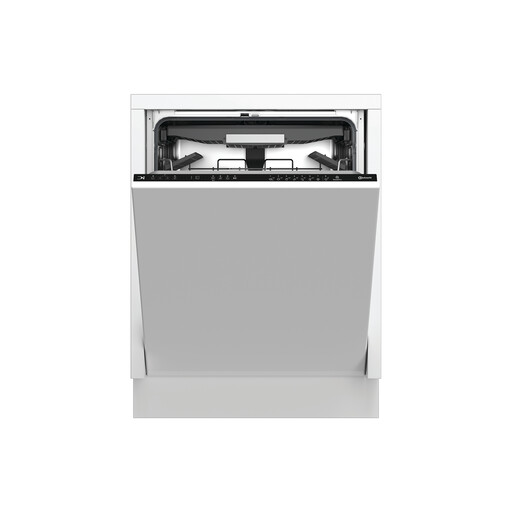 No image available
A fully integrated model for a suitable 60 cm space and a furniture front designed for it.
14 place settings; energy efficiency class A; 54 kWh per 100 Eco cycles, 9,5 l per Eco cycle and 41 dB(A).
The listed space dimensions are 820–900 × 600–608 × 555 mm; the description recommends professional installation.
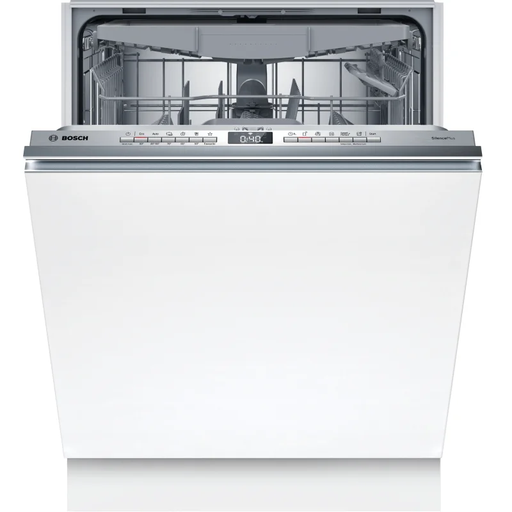 No image available
A fully integrated model for a suitable kitchen front and built-in space.
14 place settings; energy efficiency class B; 65 kWh per 100 Eco cycles, 9 l per Eco cycle and 44 dB(A).
An installation space height of 815–875 mm is specified; the furniture front must meet the installation requirements.
Measure the finished space and check it against the appliance dimensions and the furniture front planned for the exact model. Use your kitchen plan and the relevant installation instructions to check the water inlet, drainage, power supply and door clearance; the dimensions of a different model won’t be enough.
No. The place-setting capacity doesn’t prove that your plates will fit with the racks set as you need them. Measure your plates and check the lower rack, spray-arm clearance and remaining space in the upper rack on the specific model.
The current EU label lists electricity consumption per 100 Eco cycles and water consumption per Eco cycle. To work out your own costs, you’ll also need to know how often you use the appliance and the electricity and water rates that apply to you; an Eco label figure doesn’t apply to every programme.
Find out the local water hardness and set up the appliance as described in its instructions. Bosch recommends doing this when you first install the appliance; Germany’s Federal Environment Agency also explains the role of dishwasher salt in softening water.
Germany’s Federal Environment Agency recommends not rinsing dishes first, especially with warm water, and using the Eco programme with a full load. You can remove any large food scraps before loading.