You need a way to wash up during the renovation
You need an appliance you can use before the kitchen is finished. Check the available space, door clearance and water and power connections at its temporary location.


If you need to wash up during a kitchen renovation, a table-top or freestanding appliance is a more practical option than a dishwasher that requires a finished cabinet space – provided there’s room for it and the connections are usable. For your new kitchen, choose a design and basket layout that suit the space and your usual load. If you use lunchboxes, also check the care instructions for each component and consider how well it dries.
You need an appliance you can use before the kitchen is finished. Check the available space, door clearance and water and power connections at its temporary location.
If you often wash lunchboxes, lids and smaller items, the basket layout and how well it dries plastic items are important factors to consider.
If the appliance is intended to stay in your new kitchen, consider the planned cabinet space, your usual load and the operating figures for the specific model.
| What matters when buying | What to check | Who will find this most important? |
|---|---|---|
| Positioning and connections | Measure the temporary and permanent locations; check the water inlet, drain, power supply and door clearance for the specific model. | If I need to wash up during the renovation, I need a suitable space and compatible connections. Around 31% of consumers prioritise a temporary solution. |
| Lunchboxes and drying | Check the care instructions for each container, lid and seal individually; compare the items you usually wash with the basket layout and drying method. | If you regularly wash containers and lids, you’ll want to fit them in easily and avoid having to dry plastic items by hand. Around 25% of consumers make this a priority. |
| Room for your full load | Compare your usual daily load, including containers, lids, plates and cutlery, with the basket dimensions and layout. | If I want to wash lunchboxes along with my usual dishes, they all need to fit in the basket. Around 19% of consumers prioritise capacity. |
| Power, water and programme duration | Compare consumption figures and Eco programme duration, and consider which programme you’re likely to use regularly. | If you want to weigh up running costs, remember that Eco figures don’t represent the consumption of every programme. Around 13% of consumers prioritise running costs. |
| Repairs and servicing | Check the servicing and installation options included with the specific offer; keep the model number for any future service queries. | If I want to avoid hassle with installation or a future fault, I factor service options into my choice. Around 12% of consumers focus on this. |
A label confirming that an item is suitable for contact with food doesn’t mean that its containers and lids can go in the dishwasher.
Check the care instructions for each item individually, including any seals.
An open door needs extra space. If you’re using a temporary solution, the connections also need to be within reach at the actual location.
Before ordering, compare the available floor space, door clearance and pipe routes with the dimensions and connection details for the specific model.
The stated energy and water figures relate to the Eco programme and don’t automatically describe the consumption of other programmes.
Compare label figures on a like-for-like basis and consider which programme you’re likely to use day to day.
Table-top models can be a temporary solution if there’s enough worktop space and the connections are suitable at the temporary location.
Slimline integrated models are an option if your new kitchen is designed with a suitable cabinet space and door front.
This range includes a slimline freestanding model as well as integrated models for planned kitchens.
Slimline integrated models with automatic door opening could be a good fit if the cabinet space and area in front of the appliance allow for it.
A 60 cm integrated appliance is an option if your finished kitchen has a suitable cabinet space.
The models below include table-top and freestanding dishwashers for suitable temporary or permanent locations.
 No image available
Described as a table-top appliance; the stated choice of tank or tap water supply could be useful at a temporary location. Check that the connections will work there.
3 place settings; 7 programmes; 56.3 dB; energy class C.
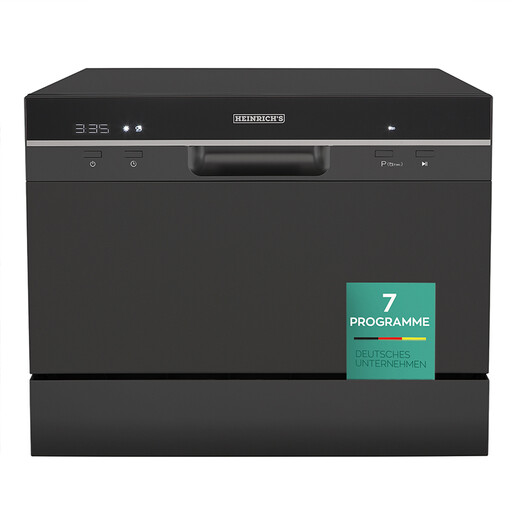 No image available
This table-top appliance could suit a worktop during your renovation, provided there’s enough space. Before buying, compare its external dimensions and door clearance with the space available.
6 place settings; 7 programmes; 30-minute quick programme; automatic door opening for drying.
 No image available
This 45 cm freestanding model could be a good fit if you have a suitable space and the required connections. Remember to allow for the open door.
9 place settings; 5 programmes; stated depth with the door open: 115 cm.
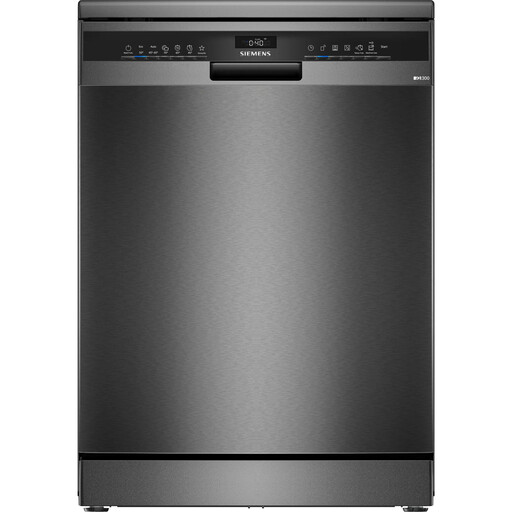 No image available
This freestanding 60 cm model is intended for a suitable location with water and power connections. Check that there’s enough room for the appliance and its open door.
Automatic door opening for drying; Home Connect; energy efficiency class B.
 No image available
This 45 cm freestanding model could fit a narrow space, as long as you also allow for door clearance and the necessary connections.
9 place settings; 6 programmes; stated depth with the door open: 115 cm.
No. The symbol indicates that an item is suitable for contact with food, not that it’s dishwasher-safe. Check the care instructions for the container, lid and seal, if there is one, individually.
As well as the space for the appliance, measure the clearance needed with the door open and check the connection routes against the documentation for the specific model. Exquisit states that the GSP206-030D silver table-top model is 50 cm deep with the door closed and 81 cm deep with it open.
Compare the Eco programme figures on a like-for-like basis, including kWh per 100 cycles and litres per cycle. To work out your own costs, use the number of washes you expect to run and your electricity tariff; other programmes may have different figures.
New mains-powered domestic dishwashers sold on the German market must comply with EU energy labelling and ecodesign requirements, including requirements for an Eco programme. The European Commission describes these requirements for dishwashers; they don’t tell you whether a particular lunchbox is suitable for a specific programme.