Lunch box users short on worktop space
First, check whether you have room for a tabletop model or whether a slimline freestanding dishwasher would fit better in your kitchen.


Choose a dishwasher based on the space available, the water supply and drainage, and whether your lunch boxes and lids will actually fit in the basket – not just on the number of place settings. A tank-fed model may work if there’s no mains water supply, but you’ll still need a safe way to drain the wastewater, and basket space is usually limited. A larger tabletop model or a slimline freestanding dishwasher may be a better choice if you regularly want to wash several lunch boxes along with other dishes. When comparing consumption figures, use the information on the EU energy label. The German Environment Agency points out that a full Eco cycle is important to achieve the stated savings.
First, check whether you have room for a tabletop model or whether a slimline freestanding dishwasher would fit better in your kitchen.
A tank-fed model can replace a mains water connection, but you’ll still need a safe solution for draining the wastewater.
The key question is whether the boxes, lids and other dishes will actually fit in the basket – the place-setting capacity alone won’t tell you.
First, check that the appliance and its connections will fit in the space you have in mind. Then compare the basket layout and Eco-cycle consumption against the loads you’ll actually wash.
Suitable if: there’s no mains water supply and your lunch boxes and lids fit in the small basket.
Things to consider: The tank doesn’t replace the drain; the appliance takes up worktop space and has a low stated capacity.
Suitable if: you have the right water supply and drainage connections, as well as enough space, and want to wash several lunch boxes with your everyday dishes.
Things to consider: Even a higher place-setting capacity doesn’t guarantee that wide boxes or loose lids will fit neatly in the basket.
Suitable if: you have floor space rather than worktop space, and regularly have other dishes to wash.
Things to consider: Make sure the height, depth, door clearance and connections will all work in the space you have in mind.
| What to consider | What to check before buying | Who should pay particular attention |
|---|---|---|
| Available space and design | Measure the appliance, door swing and the space required where you plan to install it. | If I don’t want to lose worktop or floor space in a small kitchen, I measure the area, including the door clearance. Around 33% of consumers put available space first. |
| Water supply and drainage | Check the inlet and drain hoses, the drain position and the connection requirements for the specific appliance. | If there’s no mains water supply where I want to put the dishwasher, I look for a suitable tank option and still plan how to drain the wastewater. Around 25% of consumers prioritise the connections. |
| Fit and loading | Measure your largest lunch box and check the basket, spray-arm clearance and how securely smaller items sit in the specific model. | If I want to wash several boxes and lids in one cycle, the practical basket layout matters more to me than the place-setting capacity. Around 25% of consumers put basket space first. |
| Everyday consumption | Compare the EU label figures for 100 Eco cycles, water per Eco cycle, programme duration and noise level; check the care instructions for your lunch boxes. | If I wash dishes frequently, I want to compare Eco figures on a like-for-like basis and check that the programme suits the care instructions for my lunch boxes. Around 17% of consumers prioritise running costs. |
The stated capacity doesn’t tell you whether the shape of your boxes, lids or dividers will fit.
Measure your largest box and check how it sits in the basket with its lid and smaller parts, without obstructing the spray arm.
If some parts don’t fit, you may need to wash them by hand or run another cycle.
A tank can replace a mains water supply, but it can’t drain the wastewater for you.
Plan for drainage before you buy and check the installation instructions for your chosen model.
You’ll need to make sure wastewater can be drained safely where the appliance will stand.
The EU energy label gives figures based on a defined Eco cycle. The German Environment Agency explains that the savings come from washing a full load on the Eco programme.
Compare label figures on the same basis and think about how many lunch boxes you’ll actually have to wash together.
The TSG 5702 mini dishwasher is a tank-fed option for small loads where there’s no mains water supply.
MEDION says the LIFE DWT20 MD37763 is designed for small loads and can be used with or without a mains water connection.
The Amazonia 6, item number 10047786, is a larger tabletop dishwasher for a space with water supply and drainage connections.
The freestanding 45 cm SPS4HKW49E is an option if you have floor space and suitable connections.
Siemens offers freestanding dishwashers in widths of 45 and 60 cm.
The products below include tank-fed and tabletop models, as well as slimline freestanding dishwashers for different spaces and connection requirements.
 No image available
Tank operation may suit a space without a mains water supply; you’ll still need to plan for drainage.
The product details list an integrated 5-litre tank, 9 programmes and dimensions of 37 × 50 cm. The description says a separately available adapter may be needed to connect it directly to a tap.
 No image available
This freestanding design may suit you if you have floor space and access to water and electricity.
The product details list a capacity of 9 place settings, 6 programmes and dimensions of 81.5 × 44.8 × 55 cm. Check first that the appliance and its door clearance will fit where you plan to put it.
 No image available
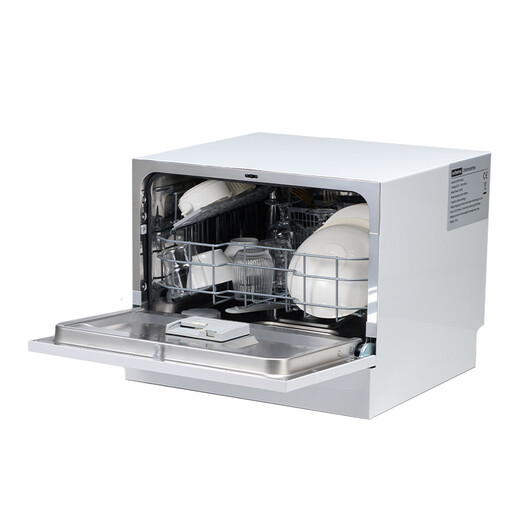
A tabletop model with a higher stated capacity may be a good choice for washing lunch boxes with other dishes, provided you have the space and the right connections.
The product details list 6 standard place settings and 8 programmes, including a 30-minute quick wash. Check the basket dimensions against your lunch boxes.
 No image available
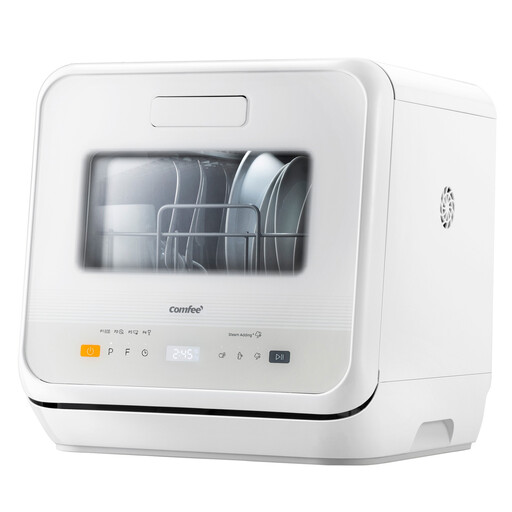
The integrated tank may suit a space without a mains water supply; check that the usable interior is large enough for your lunch boxes.
The product details list a 5-litre tank, 6 programmes and dimensions of 420 × 435 × 435 mm. The maximum dish diameter is listed as 250 mm.
 No image available
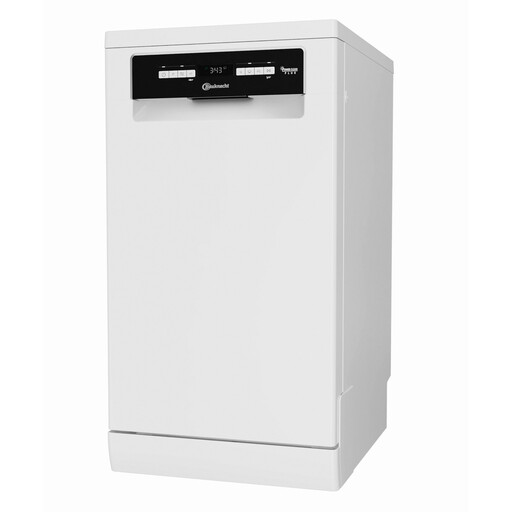
This freestanding design is an option if you have a suitable space on the floor, as well as water and drainage connections.
The product details list a width of 45 cm and a capacity of 10 place settings. According to the description, the MultiZone option lets you wash either the upper or lower basket separately.
No. Check the care instructions for each box, lid, seal and divider separately. Follow any temperature or placement guidance. The appliance’s place-setting capacity doesn’t confirm that your items will fit or that every part is suitable for machine washing.
No. A tank-fed model still needs a suitable place to stand and a safe way to drain wastewater. For the Bomann TSG 5702, the manufacturer lists inlet and drain hoses. Check the installation instructions for your specific model and make sure you’ve planned for the power supply too.
The German Environment Agency recommends using the Eco programme and washing a full load; it also advises against pre-rinsing with warm water. Continue to follow the care instructions for your lunch boxes.
The EU energy label ranks dishwashers from A to G and includes information such as energy consumption for 100 Eco cycles and water consumption per Eco cycle. The European Commission also lists programme duration, capacity and noise level as label information.
No. According to the German consumer advice centre, your statutory rights apply against the seller, while a guarantee is an additional voluntary service with its own terms and conditions. If a product is faulty, the first remedy may be a repair or replacement.