Weekday lunch box users
If you wash lunch boxes frequently, the wash programme and drying function should suit your routine. Check the care instructions for every individual part.


First, choose a design that fits your kitchen, then check that the baskets, programmes and drying function suit your lunch boxes and washing routine. If you have lots of plastic items, a suitable drying function can be helpful. However, the consumption figures on the EU label relate to the Eco programme and don’t tell you how quickly a short programme runs.
If you wash lunch boxes frequently, the wash programme and drying function should suit your routine. Check the care instructions for every individual part.
If space is tight, check the design and installation dimensions first. A 45-cm model could be an alternative to a 60-cm one.
For lunch boxes, lids and inserts, secure placement and suitable drying are important. Automatic door opening varies by model and doesn’t guarantee that every item will be dry.
First check that the appliance will fit in your kitchen, then compare programme times, consumption and interior layout with your daily routine.
| Priority | What to check when buying | Who is this especially important for? |
|---|---|---|
| Clean lunch boxes when you need them | Compare the Eco programme duration, time-saving options and basket layout; the label duration applies to Eco. | If I need the lunch boxes back in time to pack them again, the right washing routine matters. Around 33% of consumers put this first. |
| The right design and fit | Check the space available or niche dimensions, door clearance and the dimensions of your lunch boxes. | When kitchen space is fixed, the appliance needs to fit with the door open and the baskets loaded. Around 27% of consumers say this is their main priority. |
| Ongoing running costs | Compare kWh per 100 Eco cycles and litres per Eco cycle; take the Eco programme duration into account when planning. | If I wash dishes frequently, I want to weigh up electricity and water use on a like-for-like programme basis. Around 20% of consumers prioritise running costs. |
| Cleaning and drying plastic items | Check the care instructions for every item, make sure it sits securely in the basket and find out how the specific model dries. | If I have lots of loose lids, seals and inserts, I want to position them correctly and follow their care instructions. Around 20% of consumers put this first. |
A food-contact symbol doesn’t tell you whether an item can be cleaned in a dishwasher.
Check the label and care instructions for each container, lid, seal and insert.
The consumption and duration figures on the EU label relate to the Eco programme. Other programmes may differ.
Compare label figures on a like-for-like basis, and also check which programme fits your schedule.
Freestanding and built-in appliances have different requirements for floor space, the niche, door clearance and the furniture front.
Measure the niche and depth, then check that the design, front and basket layout suit your kitchen and lunch boxes. If the installation dimensions aren’t right, modifications may be needed.
The SN23EC03ME freestanding model is a 60-cm example offering flexible loading and automatic door opening.
The 60-cm semi-integrated SMI4EVS08E is an example of a built-in solution with adjustable baskets.
The semi-integrated DSS28021X is a 45-cm example for kitchens with limited built-in width.
The fully integrated 45-cm FD645V is a slimline built-in option.
The selection below mainly features 60-cm built-in appliances, as well as one 60-cm freestanding model for households that want to wash lunch boxes alongside other dishes.
 No image available
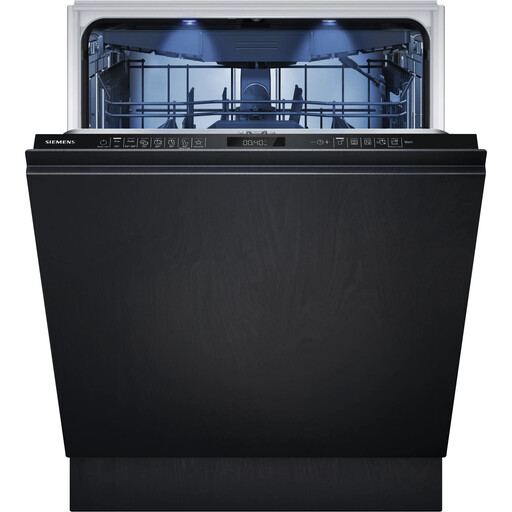
For a built-in space where flexible baskets and a time-saving option to suit your washing routine are important.
Siemens lists capacity for 14 place settings, seven programmes, a height-adjustable upper basket, varioSpeed Plus and autoOpen dry. The furniture front isn’t included; the niche dimensions and front need to fit.
 No image available
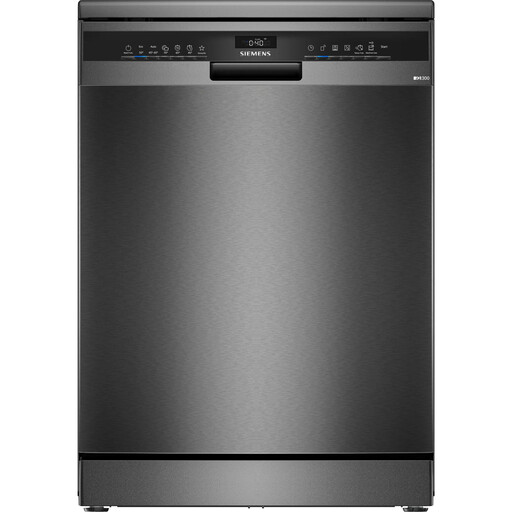
A freestanding option if you have a suitable spot and want to wash lunch boxes alongside other dishes.
Siemens lists capacity for 14 place settings, six programmes and an Eco programme duration of 3:35 hours. It also features autoOpen dry, varioSpeed Plus, a varioFlex basket and varioDrawer.
 No image available
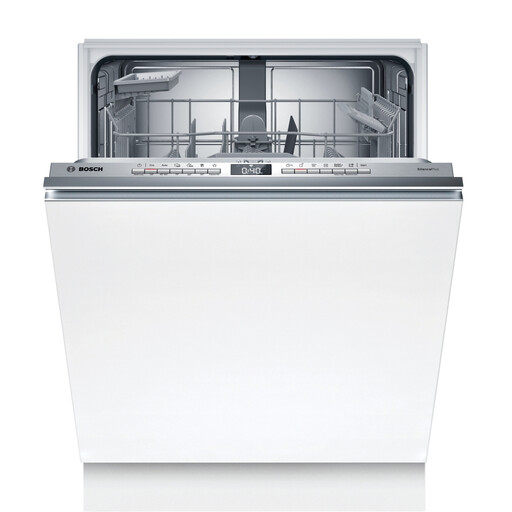
For a suitable built-in niche if adjustable baskets and automatic door opening are among your requirements.
The product details list capacity for 13 place settings, 42 dB(A), Home Connect Wi-Fi and AquaStop. Efficient Dry opens the door automatically. The furniture front isn’t included and needs to suit your kitchen.
 No image available
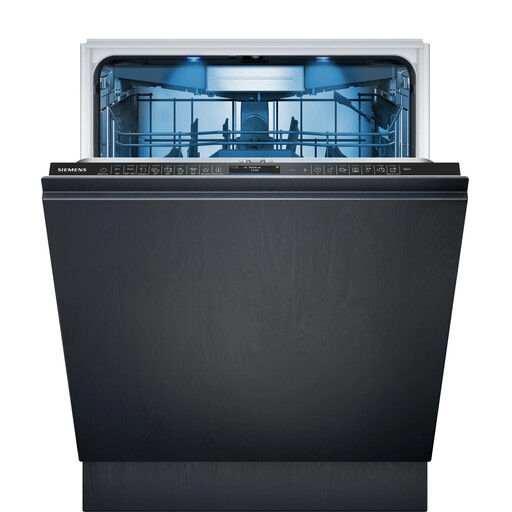
For a suitable built-in cabinet when you need flexible arrangement for lunch boxes and smaller items.
Siemens lists capacity for 14 place settings, eight programmes, a height-adjustable upper basket, Zeolith drying, automatic door opening and varioSpeed Plus. The stated niche dimensions need to suit your kitchen.
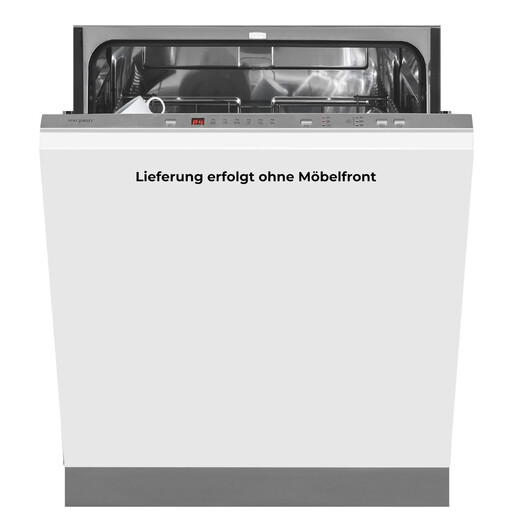 No image available
For a suitable 60-cm built-in niche if a short programme and adjustable loading are important to you.
The product details list six programmes, 49 dB(A), an adjustable basket and a fold-down cup rack. The niche dimensions need to suit your kitchen.
No. The glass-and-fork symbol indicates that an item is suitable for food contact, not that it can go in the dishwasher. Check the care instructions for each container, lid, seal and insert individually.
Compare the Eco programme duration with the time you have available, and check the programme details for any time-saving option. On models with this feature, automatic door opening helps with drying, but doesn’t guarantee that seals or recesses will be dry.
Germany’s consumer advice centre recommends comparing electricity use per 100 Eco cycles and water use per Eco cycle on a like-for-like basis. Factor in how many washes you expect to run and your own electricity and water costs; other programmes may differ.
Since 1 March 2021, the European Commission has used an A to G scale for household dishwashers. The label includes information such as Eco consumption, programme duration, capacity and noise level. It doesn’t tell you whether a particular lunch box is suitable for every programme.
No. The German Federal Institute for Risk Assessment points out that germs can potentially spread via kitchen utensils and work surfaces. Follow the care instructions for every part of your lunch box, and don’t treat a hygiene claim for a particular model as approval to wash unsuitable materials.