For hosts with lots of lunchboxes
If you want to wash lunchboxes, lids and dishes together after a meal, check the usable rack space and the shape of your containers first.


Start by checking the care instructions for each part of your lunchbox, then consider how many boxes, lids and other dishes will actually fit in the machine together. A countertop model is better suited to smaller loads if you have spare worktop space; a 45 cm model fits narrower spaces, while a 60 cm model is ideal for regular, larger loads that you can usually run full. The German Environment Agency considers 60 cm models efficient for households of two or more, provided they are always run with a full load.
If you want to wash lunchboxes, lids and dishes together after a meal, check the usable rack space and the shape of your containers first.
If worktop space is limited, consider whether a countertop model or a slimline freestanding dishwasher will fit better in the space available.
If you want to clean containers, lids and seals without exceeding their material limits, check the care and temperature instructions for each part individually.
A good fit if: you usually have smaller loads and have enough worktop space, including room for the door to open.
Things to weigh up: According to the manufacturer, the Exquisit GSP206-030D black is designed for six place settings. That doesn’t mean large lunchboxes or lids will fit. Check that there’s a water supply, drainage and a socket where you plan to put it.
A good fit if: there isn’t room for a wider machine, but you regularly have more washing-up than a small countertop model can handle.
Things to weigh up: According to the manufacturer, the Bosch SPS6EMI21E measures 845 × 450 × 600 mm. If you have lots of lunchboxes and plates, its narrower design may mean running several cycles. Also check the rack height and space for lids.
A good fit if: you regularly have larger mixed loads, have a suitable space for a freestanding or integrated model, and can usually run it full.
Things to weigh up: The German Environment Agency considers 60 cm models efficient for households of two or more, provided they are always run with a full load. A larger model isn’t automatically the right choice if you only have small loads occasionally.
Check the care instructions for your lunchbox parts first, then consider rack space and how much room you have in the kitchen. Compare consumption figures on a like-for-like programme basis: the European Commission lists electricity use per 100 Eco cycles, water use per Eco cycle and Eco programme duration as comparison figures.
| What matters | What to look for when buying | Who should pay particular attention |
|---|---|---|
| Care of lunchbox parts | Check the dishwasher and temperature instructions for containers, lids and seals individually; only use programmes within these limits. | If I want to clean lunchboxes and lids without exceeding their care limits, I check each part individually. Around 33% of consumers would put protecting lunchbox parts first. |
| Space for a mixed load | Check how your largest container and its lid fit alongside the rack shape, rack height and adjustable features; place settings don’t tell you how large containers can be. | If I want lunchboxes and other dishes to fit in together, the actual rack space matters most. Around 27% of consumers would consider a combined load first. |
| Space and connections | Measure the appliance, the space needed to open the door and, for countertop models, the worktop area required; check the water inlet, drainage and power supply against the instructions. | If space is limited in my kitchen, I measure the appliance and the open door at the intended location. Around 20% of consumers would check the available space first. |
| Running costs and time | Compare Eco figures and programme duration on the same basis; don’t assume Eco programme figures also apply to quick or intensive programmes. | If running costs and the time available matter to me when using the dishwasher regularly, I compare the Eco figures and the work involved in connecting it. Around 20% of consumers would weigh up these running requirements first. |
The Verbraucherzentrale (German consumer advice centre) points out that the term has no binding definition. High temperatures can damage unsuitable plastics.
Read the care and temperature instructions for containers, lids and seals separately before choosing a programme.
The capacity figure doesn’t describe the shape or height of your lunchboxes and lids. Flexible rack layouts can help, but you still need to check how your own items fit.
Before buying, compare your largest container and bulky lids with the rack layout and adjustable features of the specific model.
An open door needs extra space. For the Exquisit GSP206-030D black countertop model, the manufacturer states that it requires 81 cm of depth with the door open.
Measure the space needed to open the door and check the connections for your actual installation location using the appliance instructions.
The models mentioned suit different spaces: the SMS4EBW0ME is a 60 cm freestanding model, while the SPS6EMI21E is a 45 cm freestanding model.
The G 5611 SC Active is a freestanding model that could suit a 60 cm space.
The GSP206-030D black countertop model is designed for compact spaces and smaller loads.
The BKSV1 FAM is a 60 cm freestanding model, another option for larger mixed loads.
These models include slimline freestanding and 60 cm dishwashers, plus a countertop model for different load sizes.
 No image available
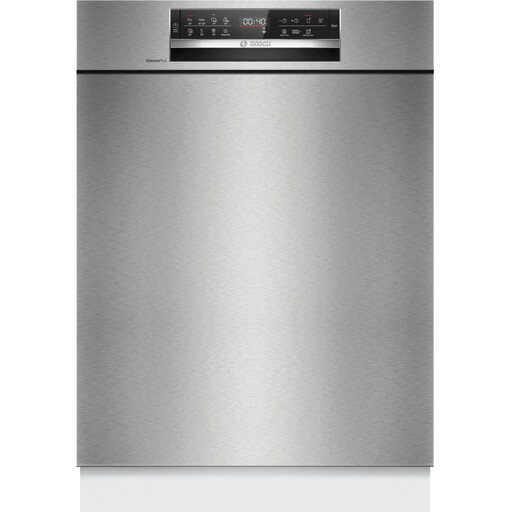
A slimline freestanding design for regular loads when a wider appliance won’t fit in your space.
45 cm wide; 10 place settings; C energy rating; upper basket adjustable to three heights; cutlery tray; six programmes.
 No image available
For larger combined loads, provided you have a suitable space for a 60 cm integrated model.
60 cm; 14 place settings; Home Connect; 42 dB; Max-Flex baskets and foldable tines.
 No image available
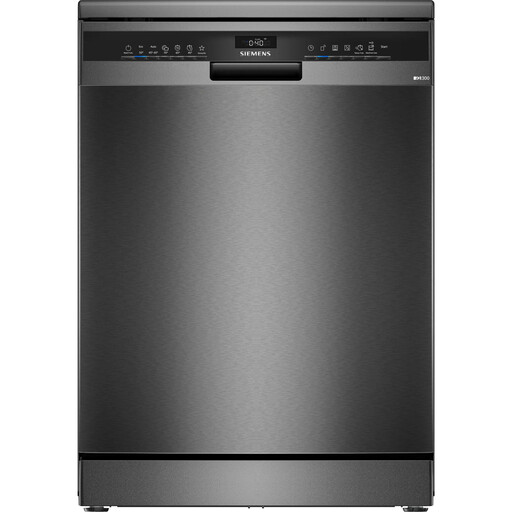
A freestanding 60 cm option for larger mixed loads, provided the available space and your typical load suit this design.
14 place settings; B energy rating; varioFlex basket and varioDrawer; Eco programme and height-adjustable upper basket.
 No image available
For regular loads where space is limited; check how the rack layout works with your largest lunchboxes and lids.
45 cm; 10 place settings; Vario-Flex basket system and height-adjustable baskets.
 No image available
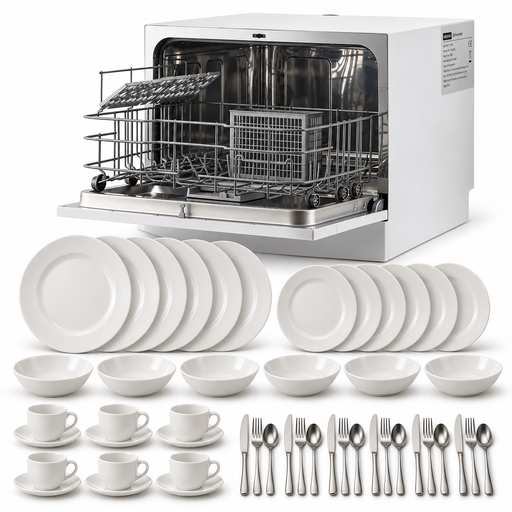
For smaller loads, if there’s enough worktop space and room for the door to open at the planned location.
Six standard place settings; 30-minute quick programme; delay start up to 24 hours; eight functions. The capacity figure doesn’t guarantee that your particular lunchboxes or lids will fit.
No. The symbol indicates that an item is suitable for contact with food; it doesn’t confirm that it’s dishwasher-safe. The Verbraucherzentrale (German consumer advice centre) also points out that ‘dishwasher-safe’ has no binding definition. So check the instructions for the container, lid and seal, as well as the maximum permitted temperature.
Compare figures for the same programme. The European Commission lists electricity use per 100 Eco cycles, water use per Eco cycle and Eco programme duration as comparison measures; don’t assume these figures also apply to quick or intensive programmes.
Measure the space available and the room needed to open the door, and check the water inlet and drainage against the instructions for the specific appliance. For the GSP206-030D black countertop model, Exquisit states that it needs 81 cm of depth with the door open.
The Verbraucherzentrale explains that consumers generally have a two-year statutory right to claim against the seller for faulty goods. For purchases made from 31 July 2026, it explains that this period extends to three years if, within the first two years, you choose a repair rather than a replacement under your statutory rights. A voluntary manufacturer’s guarantee is separate.
No. According to Germany’s Federal Environment Ministry, waste electrical equipment must be handed over to an authorised collection provider, such as a local council collection point. Retailers are required to take back appliances under specific conditions set out by law.