Households with several lunchboxes
If you regularly wash boxes and separate lids alongside everyday dishes, the usable basket layout is key.


For regular loads of lunchboxes, a dishwasher is a good fit when its design suits your kitchen and its baskets can hold the usual combination of boxes, lids and everyday dishes. If you need the plastic items again soon, check the drying method and programme duration separately; Eco consumption figures don’t automatically apply to quick programmes. Check the care instructions for each item to confirm whether it’s dishwasher-safe.
If you regularly wash boxes and separate lids alongside everyday dishes, the usable basket layout is key.
The dimensions and installation type need to suit your existing kitchen, while still accommodating your usual load of boxes.
If you prepare meals regularly, drying performance and programme duration both matter, as does knowing when the boxes will be ready to use again.
First, check that the dishwasher’s design and dimensions suit your kitchen. Then compare the basket layout with your usual load, and consider drying performance, programme duration and Eco consumption as separate criteria.
| What matters | What to check when buying | Who is it important to? |
|---|---|---|
| Room for boxes and lids | Basket layout and height adjustment; check whether your usual load, including separate lids, will fit. | If I regularly wash several boxes and lids with everyday dishes, the layout needs to work in practice. Around 29% of consumers put space for boxes and lids first. |
| A suitable design | Check the appliance and kitchen-space dimensions, and whether you’ll need a furniture door. | If I have a fixed space or a specific spot in mind, I need an appliance that can actually be installed or placed there. Around 24% of consumers prioritise a design that suits their kitchen. |
| Drying plastic | Check the drying method and the conditions in the manufacturer’s information; follow the guidance for boxes, lids and seals. | If I want to use my plastic boxes again soon after washing, I’d like to avoid having to dry them by hand as much as possible. Around 18% of consumers focus primarily on drying. |
| Time until the next load | Check how long the programme you want to use takes; don’t assume it’s the same as the Eco programme duration. | If I need my boxes again soon for the next prepared meal, the right programme duration matters. Around 17% of consumers prioritise a short cycle time. |
| Eco consumption | Compare electricity consumption per 100 Eco cycles, water consumption per Eco cycle and programme duration on the same basis. | If I wash dishes frequently, I want to compare the running consumption of the Eco programme. Around 12% of consumers prioritise this comparison. |
The glass-and-fork symbol indicates that an item is suitable for contact with food, not which dishwasher programme it can withstand. The Verbraucherzentrale (German consumer advice centre) makes this distinction clear.
Check the care instructions for each box, lid and other item individually, rather than assuming that if one part is dishwasher-safe, the others are too.
The capacity figure doesn’t tell you whether the shape of your particular boxes and lids will fit in the baskets.
Compare your usual load of boxes with the basket layout of the dishwasher, taking your other dishes into account too.
According to Bosch, its PerfectDry comparison is based on comparable Bosch appliances, plastic household items, the Eco 50°C programme and a specific detergent. It doesn’t prove that every lunchbox will dry in the same way. AEG’s AirDry opens the door during the drying phase.
Check the conditions behind each manufacturer’s claim, along with the care instructions for your boxes, lids and seals.
Depending on the box, drying it by hand may take extra time.
Removal, installation and disposal are separate services that need to be checked. The Federal Environment Agency lists local collection points and returning an old appliance when buying a new one as options for disposal.
Before ordering, check which delivery and installation services are included and how you can return your old appliance.
Installation or removal of an old appliance may need to be arranged separately.
The SMS6ZCI16E is one example of a freestanding 60 cm model, with Zeolith drying and a flexible basket.
The fully integrated 45 cm SR65ZX22ME is one example of a slimline built-in model.
The freestanding BDFN26430S is one example of a 60 cm model with an adjustable upper basket.
The fully integrated FSE32407Z combines a 45 cm design with AirDry and a 30-minute Quick programme.
The fully integrated G 5651 SCVi Active is one example with a cutlery tray, QuickPowerWash and AutoOpen.
The following Joybuy listings include freestanding and integrated dishwashers in a range of widths and capacities. Before choosing, check the appliance dimensions against your kitchen and consider your usual load of boxes, lids and everyday dishes.
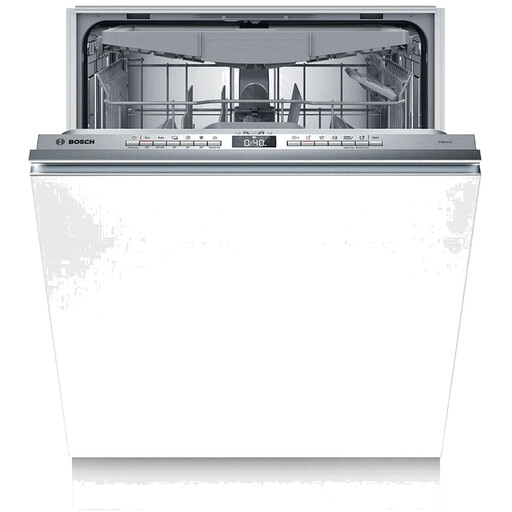 No image available
An option if you’re looking for a fully integrated dishwasher with stated plastic-drying performance.
60 cm; 13 place settings; PerfectDry with Zeolith drying; Home Connect; energy efficiency class D.
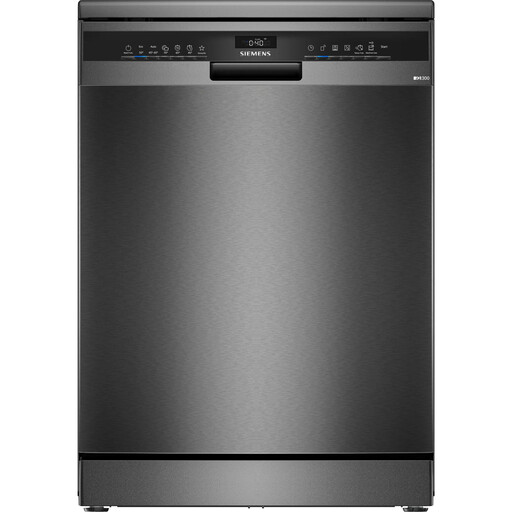 No image available
An option if you’re looking for a freestanding appliance to fit a suitable 60 cm space.
14 place settings; BlackInox; autoOpenDry; Home Connect; varioDrawer; energy efficiency class B.
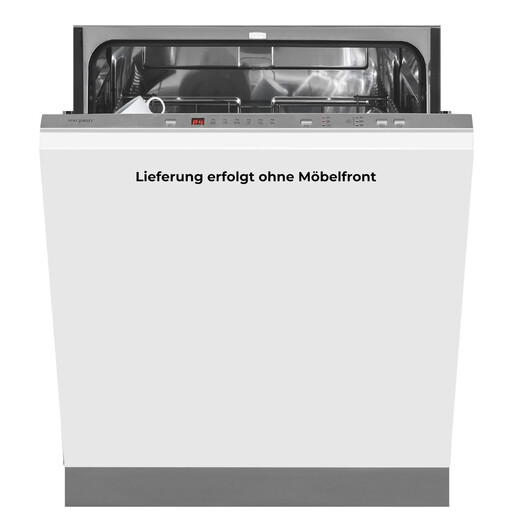 No image available
An option if you’re considering a built-in appliance with an adjustable basket.
12 place settings; 6 programmes; 49 dB; Aquastop; LED display; energy efficiency class E.
 No image available
An option if you’re looking for a freestanding appliance whose product name specifies a width of 45 cm.
9 place settings; 6 programmes; 45 cm; delay start; Intensive and Eco modes; silver finish.
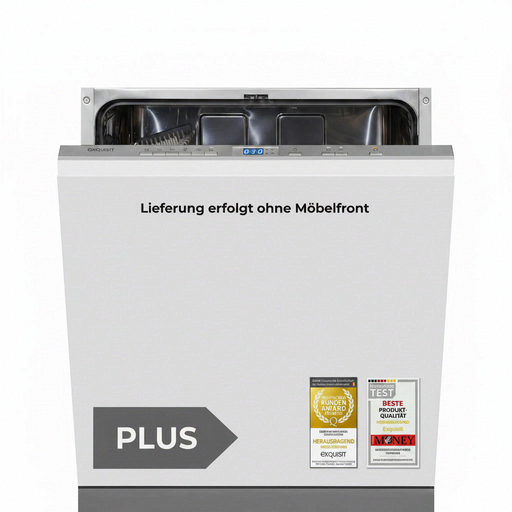 No image available
An option if you’re looking for a fully integrated appliance to fit a suitable 60 cm space.
13 place settings; 6 programmes; delay start; Power+; Eco mode; silver finish.
No. The symbol indicates that an item is suitable for contact with food, not that it’s dishwasher-safe. Check the care instructions for each box, lid and other item separately.
No. The Verbraucherzentrale (German consumer advice centre) explains that the label figures for electricity consumption per 100 cycles, water consumption per cycle and programme duration relate to the Eco programme. You can’t use them to work out figures for other programmes.
Before buying, check the appliance and kitchen-space dimensions, and whether you’ll need a furniture door. AirDry opens the door during the drying phase; check the instructions for your chosen model to make sure there’s enough room for the door to open in your kitchen.
Compare the Eco figures for each appliance, then work out the stated electricity consumption based on how many times you expect to run the dishwasher each year and your electricity price. Follow the instructions for your chosen model for care and descaling.
No. The Federal Environment Agency lists local collection points or returning the old appliance to the retailer when buying a new one as options for separate disposal. Before ordering, check whether your specific delivery includes removal of the old appliance.