First, choose a style that suits your kitchen, then check whether the lunchbox, lid and seal are dishwasher-safe according to their individual care instructions. After that, consider the drying process, the duration of the programme you’ll actually use, and the noise rating for evenings after work. The German Environment Agency says that a fully loaded Eco programme uses less energy than washing by hand. If you’ll need the box again soon, also check the programme duration and any speed-up options.
Who is this selection for?
Shift workers with plastic lunchboxes
If you wash your box, lid and seal after a shift, check the care instructions for each part and the appliance’s drying options. The Consumer Advice Centre points out that the glass-and-fork symbol indicates that an item is suitable for food contact; it doesn’t automatically mean it’s dishwasher-safe.
People in flats where noise carries
If you run the dishwasher late, you can use the noise rating on the energy label to compare appliances. The German Environment Agency lists noise level as information shown on the label, but whether a cycle is disruptive in your home depends on your living situation.
Households short on kitchen space
If you have limited room under the worktop or on the floor, compare the appliance dimensions with your available space and check that your boxes and lids fit in the racks. The German Environment Agency lists water consumption, Eco programme duration and noise level, as well as energy consumption, as useful details for comparing appliances.
Which features matter after a shift?
Start by identifying the factor that will have the biggest impact on when you can use your lunchbox again. The overview below links common concerns with specific things to check.
| What matters |
What to look for when buying |
Who will find this most important? |
| Washing and drying boxes |
Check whether the box, lid and seal are each dishwasher-safe; look at the rack layout and drying method on the specific model. |
If I want to wash my box, lid and seal after a shift and reuse them as dry as possible, I check the care instructions for each part and the drying process. Around 26% of consumers place the greatest importance on handling and drying lunchboxes. |
| Ready to use again in time |
Check the duration and drying phase of the programme you plan to use in the model’s instructions; a quick-wash button alone won’t tell you how long the Eco programme takes. |
If I’ll need my lunchbox again soon, I look at the duration of the programme I’ll actually use and its drying phase. Around 21% of consumers put being able to reuse their lunchbox in time first. |
| Noise when washing late |
Compare the airborne noise emissions of the specific appliance on its EU energy label; the German Environment Agency lists noise level as information shown on the label. |
If I wash up late in a flat where noise carries, I want to consider the noise rating of the specific model. About 21% of consumers prioritise quiet operation in the evening. |
| Style and interior space |
Check the available space, connections and appliance dimensions; compare the usable rack layout with the dimensions of your boxes. |
With limited kitchen space, I need a style that fits under the worktop or in a free-standing spot, with enough usable room for lunchboxes. Around 16% of consumers put suitable dimensions and interior space first. |
| Energy and water consumption |
Compare appliances in the same size class using kWh per 100 Eco cycles and litres per Eco cycle; these figures are shown on the EU energy label. |
If I wash up regularly, I want to compare consumption figures for similar appliances and programmes, and load the machine appropriately. Around 16% of consumers prioritise ongoing energy and water consumption. |
Which mistakes should you avoid?
-
Assuming the food-contact symbol means an item is dishwasher-safe
The glass-and-fork symbol indicates that an item is suitable for food contact; it doesn’t automatically mean it can be cleaned in a dishwasher. This can be particularly easy to misread when it comes to lids and seals.
Check the care and cleaning instructions for the box, lid and seal individually.
-
Assuming the cycle has finished when the door opens automatically
With Electrolux’s AirDry function, the door may open while the programme is still running. The exact process depends on the model and programme.
Before packing your lunchbox away, check the remaining-time display and make sure the programme has actually finished.
-
Regularly running a large dishwasher with just one box inside
The German Environment Agency’s guidance on efficient Eco operation is based on a full load. A large appliance will therefore be underused if you run it with just one lunchbox.
Choose an appliance size to suit the usual combined load of lunchboxes and household dishes.
Which brands are worth considering?
Bosch
The semi-integrated SMI4HVS31E is an example of a built-in appliance with features that may be useful for drying and putting dishes away.
- Bosch Home Appliances Germany lists an optional Extra Dry function on the SMI4HVS31E for dishes that are difficult to dry.
- Check that the semi-integrated design, programmes and rack layout suit your kitchen and lunchboxes; these features are specific to this model and don’t represent all Bosch appliances.
Siemens
The fully integrated SR65EX09ME is a 45-cm option for a suitably sized narrow built-in space.
- Siemens Home Appliances Germany lists autoOpen dry and varioSpeed Plus for this model.
- As a fully integrated built-in appliance, it needs a suitable installation space; also check which programmes the extra function applies to.
Beko
The freestanding BDFN26430S is an example of a 60-cm dishwasher for kitchens without a suitable built-in space.
- Beko Germany lists 14 place settings and 44 dB(A) for this model.
- These specifications don’t automatically apply to other Beko appliances; check the available space and connections.
Electrolux
The fully integrated 45-cm KEAD2215L is a slim built-in option with AirDry.
- Electrolux Germany lists AirDry and an Eco programme duration of four hours for this model.
- According to Electrolux Support, the door may open while the programme is still running. So check when the programme ends and make sure the built-in space is suitable.
Miele
AutoOpen is a possible end-of-cycle feature on suitably equipped dishwashers, for certain programmes.
- Miele Germany explains that, on some programmes, the door opens before the remaining time has run out.
- Check whether AutoOpen is available on the specific model and enabled for the programme you’ve chosen.
Dishwashers at Joybuy
This selection includes worktop, built-in and freestanding dishwashers with features that may be useful for lunchboxes after a shift. Before choosing, check that the style, available space and capacity suit your kitchen and the rest of your dishes.
 No image available
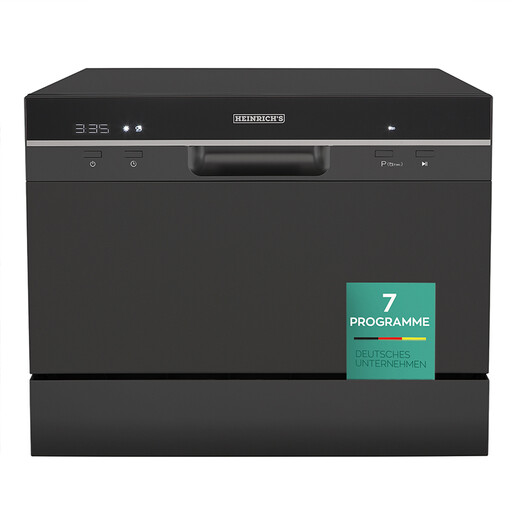
Heinrich's HTG 8840 worktop dishwasher, 6 place settings
As a worktop appliance, this model could suit a kitchen with limited floor space. Check that its capacity is enough for your usual load and that the delay start suits your shift pattern.
Listed in the product name: 6 place settings, 7 programmes, 24-hour delay start, Auto-Open drying, water softener, 47 dB and energy class D.
View at Joybuy
 No image available
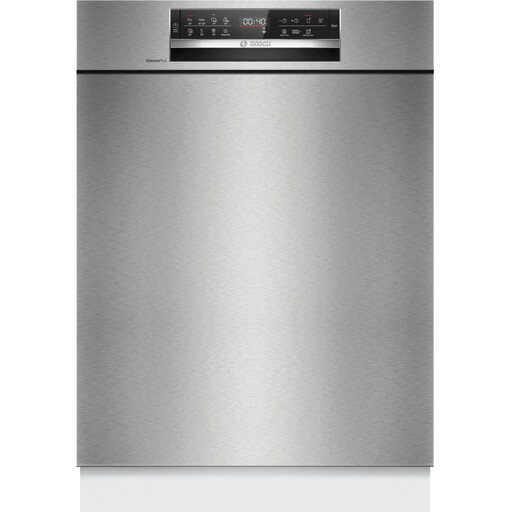
Bosch SMU6ECS12E Series 6 under-counter dishwasher, 60 cm
If you have a suitable 60-cm under-counter space and wash other dishes as well as lunchboxes, the stated capacity may be useful. Check the appliance dimensions against your kitchen.
Listed in the product name: 14 place settings, brushed stainless steel, Home Connect and 42 dB.
View at Joybuy
 No image available
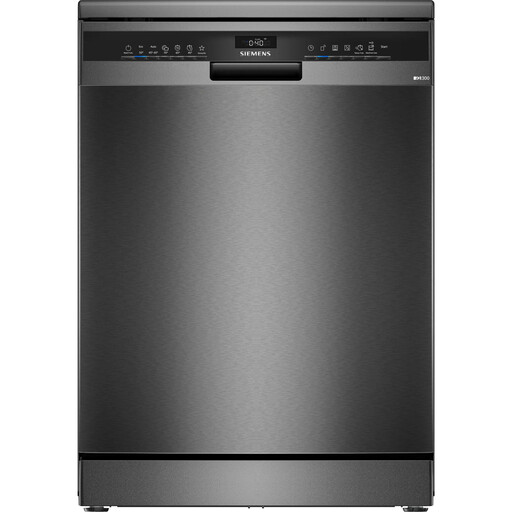
Siemens SN23EC03ME freestanding dishwasher, 60 cm, BlackInox
If you have a free-standing space rather than a built-in gap, a freestanding model could be a good fit. Check that there’s enough room for the 60-cm appliance and to open the door.
Listed in the product name: autoOpenDry, Home Connect, varioDrawer and energy efficiency class B.
View at Joybuy
 No image available
Exquisit EGSP52109-E-030E freestanding dishwasher, 45 cm
If you have a narrower space for a freestanding appliance, this 45-cm model could be an option. Check that its capacity suits your lunchboxes and the household dishes you usually wash.
Listed in the product name: 9 place settings, 6 programmes, delay start, Intensive and Eco modes; silver finish.
View at Joybuy
 No image available
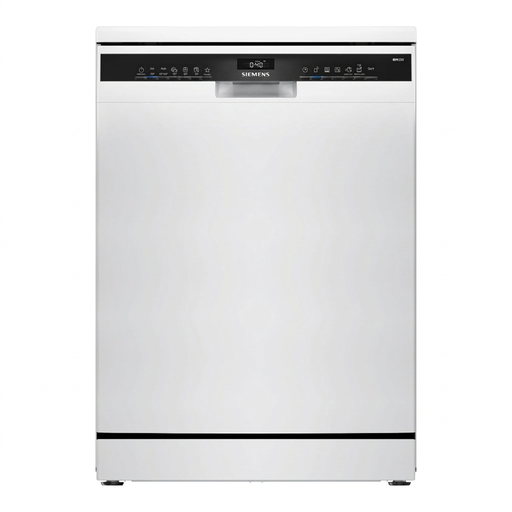
Siemens iQ300 SN23HW05ME freestanding dishwasher, 60 cm, white
If you’re looking for a freestanding dishwasher with a stated capacity, check that its dimensions and interior space work for your lunchboxes and other dishes.
Listed in the product name: 14 place settings and Wi-Fi functionality; white finish.
View at Joybuy
Frequently asked questions
Can I put lids and seals in the dishwasher with the lunchbox?
Don’t assume they’re safe to wash just because the box is. Check the care instructions for each part. The Consumer Advice Centre explains that the glass-and-fork symbol indicates suitability for food contact; it doesn’t automatically mean an item is dishwasher-safe.
Is the lunchbox ready as soon as the door opens automatically?
Not necessarily. Electrolux says that with AirDry, the door may open while the drying phase is still running, depending on the programme. Always check when the programme has actually finished and follow the instructions for your specific model.
How do I compare energy and water costs?
For appliances in the same size class, compare the label figures for kWh per 100 Eco cycles and litres per Eco cycle. To work out your personal costs, you’ll also need the number of cycles you actually run, along with your electricity and water rates.
Which energy label applies to dishwashers in Germany?
Household dishwashers use the EU energy label, with classes from A to G. The European Commission has used this scale since 1 March 2021. The label shows, among other details, energy consumption per 100 Eco cycles, water consumption, Eco programme duration and noise emissions.
What should I do with an old dishwasher?
Local collection points generally take back old electrical appliances free of charge. The German Environment Agency also notes that retailers have take-back obligations under certain legal conditions. Check collection and dismantling arrangements separately with the retailer.


