A kitchen with limited worktop space
If you want to wash lunchboxes in a machine regularly but can’t spare much worktop space, check whether a specific 45 cm model will fit elsewhere in a suitable freestanding or built-in space.


If there’s a suitable space next to or beneath your worktop, a 45 cm dishwasher could be an option without taking up extra worktop space like a countertop model would. If there’s no room there, a countertop model may suit smaller loads, but it will take up worktop space. For either type, check the dimensions, connections and cleaning instructions for every part of your lunchbox.
If you want to wash lunchboxes in a machine regularly but can’t spare much worktop space, check whether a specific 45 cm model will fit elsewhere in a suitable freestanding or built-in space.
When washing lunchboxes, lids and other dishes, look for a suitable basket layout and secure places for smaller items. Check the care instructions for each individual lunchbox part too, to see whether it’s suitable for machine washing.
If there’s no suitable space for a 45 cm model, a countertop dishwasher could be an alternative, provided smaller loads are enough and you have sufficient worktop space for it.
A good fit if: there’s a suitable space away from the worktop and you regularly wash several lunchboxes along with other dishes.
Consider: the appliance needs its own space; width alone doesn’t guarantee it will fit where you plan to put it.
A good fit if: you have a suitable niche and the required connections, and want to keep your worktop clear.
Consider: the niche dimensions and kitchen door must be compatible with the specific model.
A good fit if: smaller loads are enough and you have a worktop that’s large enough and can support the appliance.
Consider: the appliance still takes up worktop space; also check that your lunchboxes will actually fit in the basket.
| Priority | What to check when buying | Who it matters most to |
|---|---|---|
| Type and available space | Check the appliance dimensions, door clearance, intended space, and water, drainage and power connections. | If I can’t spare much worktop space, I need a type that will fit elsewhere. Around 33% of consumers put this priority first. |
| Fit of lunchbox parts | Check the external dimensions and cleaning instructions for each lunchbox; place lids and small items according to the loading instructions. | If my lunchboxes and lids need to fit in the baskets alongside other dishes, the actual load matters more than the capacity figure. Around 27% of consumers focus mainly on this. |
| Space per wash | Check your usual load against the basket layout; don’t assume the place-setting capacity tells you how many lunchboxes will fit. | If you regularly want to wash several lunchboxes and other dishes together, check whether your usual load will fit. Around 20% of consumers prioritise load capacity. |
| Running costs | Compare kWh per 100 Eco cycles and litres per Eco cycle on the same basis, taking your expected usage into account. | If I wash dishes frequently, I want to be able to compare energy and water use in a way that reflects how I’ll use the appliance. Around 20% of consumers put running costs first. |
A countertop model sits on your worktop. A slimline freestanding or integrated model needs a suitable space elsewhere instead.
Measure the space where you plan to put or install the appliance and check the dimensions of the specific model before deciding which type to buy.
The capacity figure doesn’t tell you whether your lunchboxes and lids will fit.
Compare your usual lunchboxes and lids with the basket layout, and check the loading instructions for where to put smaller items.
The symbol indicates that an item is suitable for contact with food; it doesn’t confirm that it can be cleaned in a particular way.
Check the separate cleaning and temperature instructions for each lunchbox, lid and other part.
Figures for specified Eco cycles don’t automatically show what you’ll spend if you use the appliance more or less often, or run it with partial loads.
Compare the consumption figures on the same basis and factor in how many wash cycles you expect to run.
Worth considering for 45 cm freestanding and integrated models with published appliance and basket specifications.
Worth considering when checking whether a fully integrated 45 cm model will suit your kitchen.
A specific example of a 45 cm freestanding model with published capacity and basket details.
Useful for comparing a 45 cm freestanding model with a countertop model when space is limited.
This selection includes freestanding dishwashers for households that want to keep their worktop clear and have a suitable space elsewhere.
 No image available
Could be a good option if you have a suitable space next to the worktop and want to wash lunchboxes alongside other dishes.
9 place settings; 5 programmes, including Eco and Intensive; AquaStop; stainless steel interior; self-cleaning filter.
 No image available
Could be a good fit if you have space for a freestanding appliance beside the worktop and your load suits the basket layout.
10 place settings; height-adjustable upper basket; cutlery drawer; energy efficiency class C.
 No image available
An option if you have a suitable space away from the worktop; check first that your lunchboxes will fit in the baskets.
9 place settings; 6 programmes; height-adjustable basket; cutlery tray.
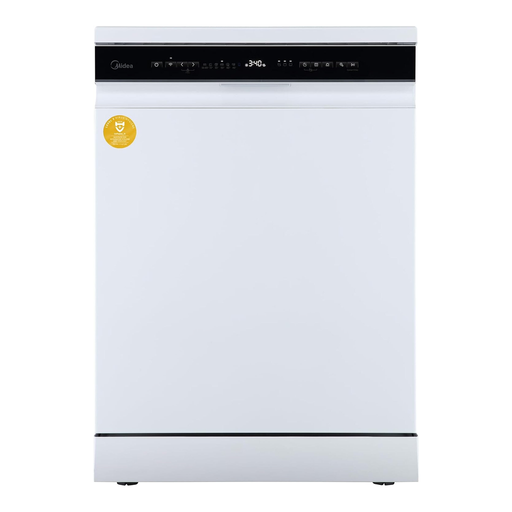 No image available
Could suit a mixed load of lunchboxes and other dishes if you have a suitable space for it.
10 place settings; cutlery basket; height-adjustable upper basket; Aqua Stop; delay start; energy efficiency class C.
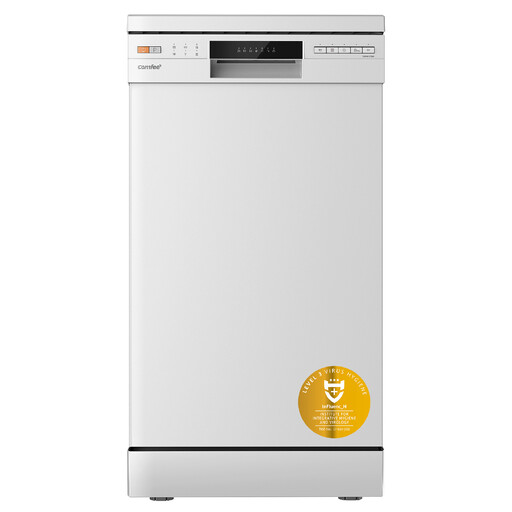 No image available
Could be a good fit if you have a suitable space beside the worktop and the half-load function would be useful for smaller loads.
10 place settings; Quick and Hygiene programmes; delay start; half-load function; adjustable basket; energy efficiency class E.
No. The symbol indicates that it’s suitable for contact with food. Check the separate cleaning and temperature instructions for the lunchbox, lid and any other parts.
Bosch recommends checking your local water hardness and setting the water softener according to the instructions for your specific appliance. The German Environment Agency recommends not pre-rinsing dishes with warm water and using the Eco programme with a full load wherever possible.
Compare the label figures for kWh per 100 Eco cycles and litres per Eco cycle. For a like-for-like estimate, use the same expected number of wash cycles for both appliances.
Since 1 March 2021, the EU energy label for household dishwashers has used a scale from A to G. The European Commission says the label includes, among other details, electricity consumption in Eco mode per 100 cycles, water consumption per cycle, capacity, Eco programme duration and noise levels.