One-person household with a small kitchen
If you want to machine-wash lunchboxes regularly, weigh up the rack space you need against the space available for the appliance. Measure your boxes and lids beforehand.


For dishwasher-safe lunchboxes in a one-person household, the key considerations are whether the box and lid fit in the rack and whether you can make up a suitable load with your other dishes. A tank-fed countertop dishwasher is worth considering if you don't have a fixed water supply and can safely drain the wastewater. A 45 cm dishwasher takes up more space and is mainly worth considering if you regularly wash other dishes at the same time. The German Environment Agency bases its efficiency comparison on fully loaded machines running the Eco programme; plastic items may still be damp after washing.
If you want to machine-wash lunchboxes regularly, weigh up the rack space you need against the space available for the appliance. Measure your boxes and lids beforehand.
A tank-fed countertop dishwasher could be a good fit if you can fill it manually and arrange a safe way to drain the wastewater. Even so, check that your boxes will actually fit in the rack.
If you want to wash other dishes alongside your lunchboxes, a larger appliance may be worth considering. You'll need enough space and the right connections for a freestanding model.
A good fit if: you don't have a fixed water supply, can arrange a safe drain and your boxes and lids fit in the rack.
Things to consider: you'll need to fill it with water by hand, and rack space is limited.
A good fit if: you need a small footprint and the connection type suits your kitchen.
Things to consider: check the height and position of your boxes in the rack. A small footprint doesn't automatically mean your boxes will fit inside.
A good fit if: you regularly want to wash other dishes alongside your lunchboxes and have enough space and suitable connections.
Things to consider: the appliance takes up more space, and the efficiency of a fully loaded machine can't automatically be applied to small partial loads.
| Consideration | What to check before buying | Who should pay particular attention? |
|---|---|---|
| Fit and load size | Compare the interior and rack with your boxes open and lids removed; measure the appliance height and door opening too. | I want to load boxes and lids sensibly alongside my usual dishes. Around 33% of consumers prioritise fit and load size. |
| Plastic and drying | Check the care instructions for each item, make sure lightweight lids can be secured, and look at the appliance's stated drying function. Bosch notes that plastic may still be damp after washing. | If I want to put my plastic boxes and lids away as soon as possible after a cycle, I pay particular attention to the drying results. Around 27% of consumers prioritise drying plastic. |
| Water connection and installation location | Check whether you have a mains water supply or where the drain hose of a tank-fed model can be safely positioned. Take the appliance and hose measurements into account at the installation location. | I need a solution for a kitchen without a fixed water supply, while still being able to drain wastewater safely. Around 20% of consumers prioritise flexible connection options. |
| Consumption and noise | Compare kWh per 100 Eco cycles, litres per Eco cycle and the noise level in dB(A). The consumer advice centre recommends comparing Eco figures on a like-for-like basis; the number of cycles you run also matters when assessing them. | If I use an appliance in an open-plan kitchen or want to keep an eye on ongoing consumption, I compare noise levels and Eco figures. Around 20% of consumers give the greatest weight to consumption or noise. |
The stated capacity tells you nothing about the dimensions of your box and lid. If a box doesn't fit in the rack, you'll still have to wash it by hand.
Measure your box and lid, and check the usable rack layout of the specific appliance before you buy.
According to the manufacturer, the Bomann TSG 5702 doesn't need a fixed water supply thanks to its 5-litre tank. However, it still comes with a drain hose.
Before choosing a tank-fed model, decide where the wastewater can drain safely and check the available space and hose routing.
Plastic items may still be damp after washing. Results depend on the item and the appliance; a drying function doesn't guarantee dry lids.
Follow the care instructions for your box and lid, load lightweight items securely and remove any remaining water before putting them away.
The German Environment Agency's statement about efficient machine washing is based on a full load using the Eco programme. That isn't the same as running frequent small partial loads.
Choose an appliance size that you can load sensibly with the dishes you generate, and only compare Eco figures on a like-for-like basis.
The TSG 5702 is an example of a mini tank-fed dishwasher for small kitchens without a fixed water supply.
The ST 5.31 wi is an example of a compact countertop dishwasher with a choice of connection options.
The freestanding SPS4EMW02D is an example of a 45 cm appliance with flexible loading levels.
The selection below includes compact countertop dishwashers with a tank option, as well as a freestanding 45 cm dishwasher for households that want to wash other dishes alongside their lunchboxes.
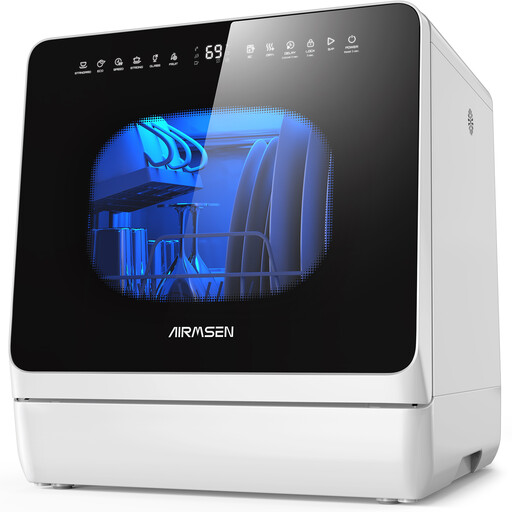 No image available
Worth considering for a small kitchen without a fixed water supply. First check how you can drain the wastewater safely and whether your lunchboxes will fit in the rack.
The product name lists 8 programmes, an integrated water softener, a delay start and a child lock. According to the product information, a separately available adapter may be needed to connect it to a tap.
 No image available
An option for kitchens where a tank-fed countertop model is preferred. Compare the external dimensions with your available space and the internal dimensions with your boxes.
The product name lists 9 programmes, dimensions of 37 × 50 cm and energy class D.
 No image available
Worth considering for smaller loads: compare the stated capacity with your lunchboxes and the dishes you want to wash at the same time.
The product name lists a capacity of 3 place settings, 7 programmes, a 5-litre tank, 56,3 dB and energy class C.
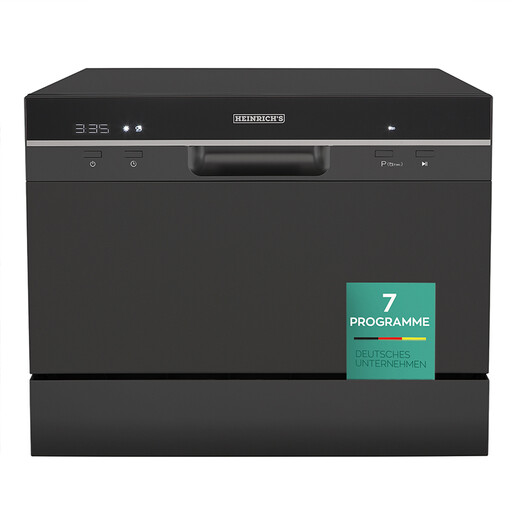 No image available
If you want to fit other dishes in the countertop dishwasher alongside your lunchboxes, check the rack layout and the dimensions of your items.
The product name lists a capacity of 6 place settings, 7 programmes, an automatic door opening for drying, 47 dB and energy class D.
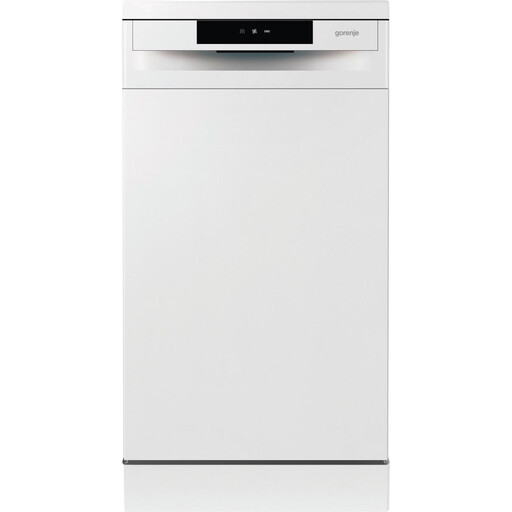 No image available
A larger option if you regularly want to wash other everyday dishes alongside your lunchboxes and have room for a freestanding model in your kitchen.
The product name lists a capacity of 9 place settings, 5 programmes, a stainless steel interior, AquaStop and a self-cleaning filter.
No. The symbol indicates that an item is suitable for food contact; it doesn't automatically mean it's dishwasher-safe. Check the instructions for the box, lid and other parts separately.
No, a tank-fed dishwasher still needs a safe way to drain wastewater and a suitable place to sit. According to the manufacturer, the Bomann TSG 5702 doesn't need a fixed water supply thanks to its 5-litre tank. Also check the hose routing, available space and electrical connection.
You can't draw that conclusion for a single box from the Eco figures. They relate to the Eco programme on the specific appliance; the German Environment Agency bases its statement about efficient machine washing on a full load.
No, plastic items may still be damp after washing. Follow the care instructions for each item and check that lightweight lids are secure in the rack; remove any remaining water before putting them away.
Compare Eco figures on a like-for-like basis, including electricity use per 100 cycles and water use per Eco cycle. The European Commission describes an A to G energy label for household dishwashers; it includes details such as consumption, programme duration, capacity and noise level.