What should you look for when buying?
First decide whether you need your dishes back before the next meal or can wait until you have a full load. Then check the space available and the consumption figures.
| What matters to you |
What to look for |
Who is this most important for? |
| Getting dishes back in time |
Check the duration of the programme you want to use and whether the appliance has a dedicated half-load function. |
If I need my plates and cutlery back before the next meal, the duration of the right programme matters to me. Around 33% of consumers prioritise having their dishes ready again quickly. |
| Washing dishes from several meals together |
Check the place settings and basket layout against your own dishes; compare Eco figures on the same stated basis. |
If I can wait until I’ve collected dishes from several meals, I want to run a full load and have enough room for plates. Around 27% of consumers prioritise capacity for collecting dishes. |
| Fitting into a narrow space |
Check the appliance’s width, height and depth, its installation type and, where relevant, the kitchen door against the available space. |
If I have a narrow or fixed space, the appliance needs to fit first and still have enough room for my everyday dishes. Around 20% of consumers prioritise finding an appliance that fits their available space or installation opening. |
| Consumption with regular use |
Compare kWh per 100 Eco cycles and litres per Eco cycle; don’t apply Eco figures to quick or partial-load programmes. |
If I use my dishwasher regularly, I compare the electricity and water figures on the same Eco basis. Around 20% of consumers prioritise running costs. |
Brands to consider
The details below relate to the product ranges or models mentioned. Always check the exact model number and installation requirements.
Beko
The freestanding BDFN26430W is 60 cm wide and listed for 14 place settings. Beko says it has a delay start and a half-load function.
- Beko lists energy efficiency class D and 9,9 l of water per Eco cycle for this model.
- The Eco figures don’t show how much you could save with a half load.
Bosch
The semi-integrated SMI4ETS08E is an option for a suitable 60 cm installation space.
- Bosch lists energy efficiency class B, 9,0 l per Eco cycle and dimensions of 815 × 598 × 573 mm for this model.
- The dimensions need to fit your specific space; they don’t guarantee compatibility with every kitchen.
AEG
The fully integrated FD645V is 45 cm wide and could suit a narrow installation space, provided the dimensions match.
- AEG lists nine place settings, a 30-minute programme and 70 kWh per 100 Eco cycles for this model.
- The stated Eco programme duration is four hours; the Eco consumption figure doesn’t describe the quick programme.
Siemens
According to Siemens, the iQ300 range includes freestanding and built-in dishwashers. Programmes and basket features vary by model.
- Siemens lists varioSpeed Plus and flexible baskets as features on selected models.
- Check features and dimensions against the exact model number; range details aren’t a substitute for comparing individual appliances.
Miele
According to Miele, the G 7600 SCU AutoDos under-counter dishwasher has automatic detergent dosing and a cutlery tray.
- Miele lists energy efficiency class A and 42 dB for this model.
- AutoDos is a manufacturer-specific feature. Before buying, check which detergent it uses and what the ongoing costs may be.
Joybuy product overview
The dishwashers below include models with quick or faster programmes, as well as appliances for different installation types and load sizes. Check that the design and dimensions suit your kitchen.
 No image available
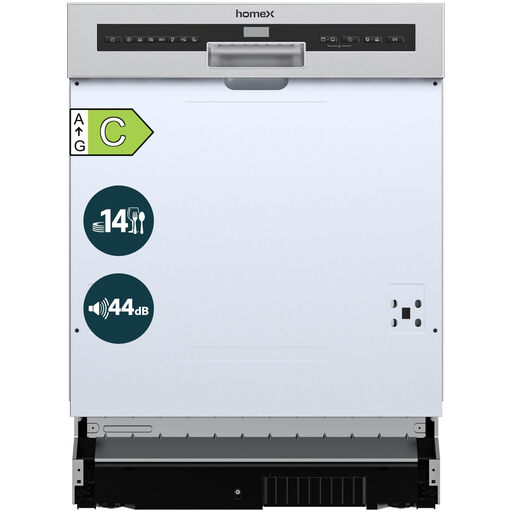
homeX DWSI601444C, semi-integrated, 14 place settings
A quick programme and a 58-minute programme are listed for everyday dishes you need back soon.
60 cm wide; 7 programmes; cutlery tray; automatic door opening; energy efficiency class C.
View at Joybuy
 No image available
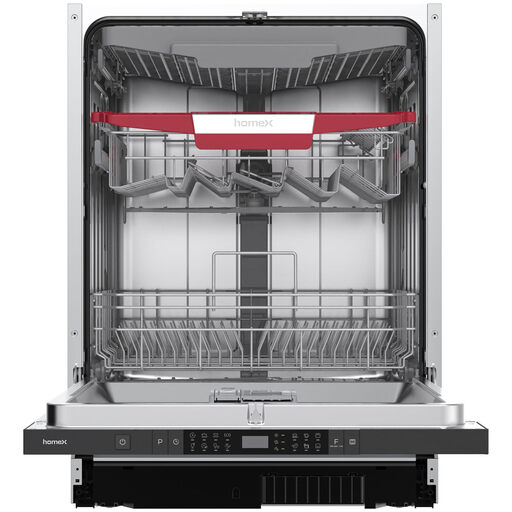
homeX DWFI601444C, fully integrated, 14 place settings
Rapid and Express are listed among the programmes for a suitable fully integrated installation.
60 cm wide; 8 programmes; energy efficiency class C; cutlery tray; AquaStop; 44 dB.
View at Joybuy
 No image available
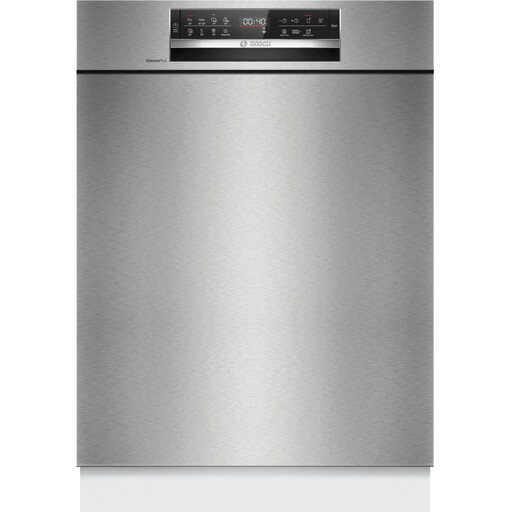
Bosch SMU6ECS12E, 60 cm, 14 place settings
With 14 place settings and flexible baskets, it’s designed for dishes from several meals.
Under-counter model; 42 dB; Eco programme duration 270 minutes; Max-Flex baskets, height-adjustable upper basket and VarioDrawer.
View at Joybuy
 No image available
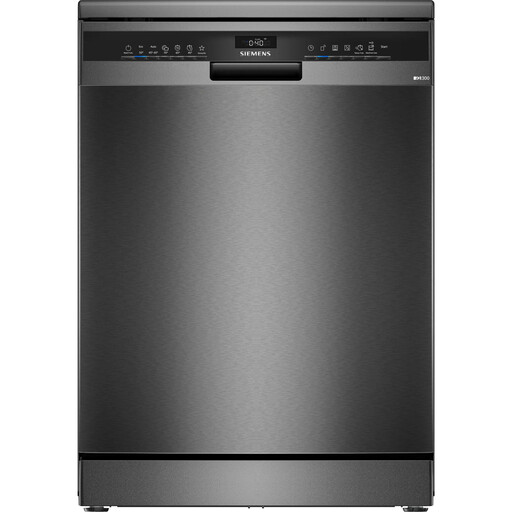
Siemens SN23EC03ME, freestanding, 14 place settings
A Half-Load function is listed for smaller loads between meals, while varioSpeed Plus is an option for reducing programme duration.
60 cm wide; energy efficiency class B; 42 dB(A); cutlery tray.
View at Joybuy
 No image available
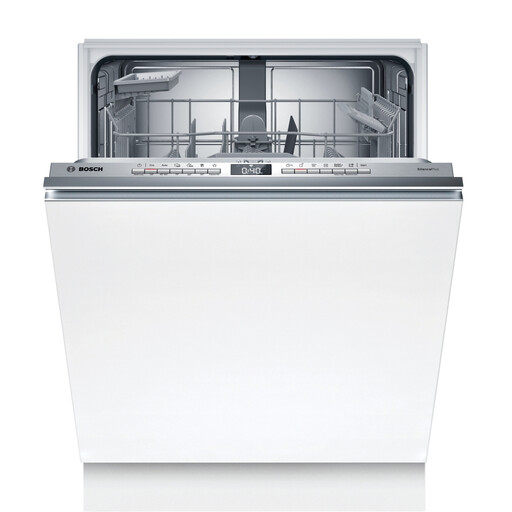
Bosch Series 4 SMV4EAX28E, fully integrated, 13 place settings
A Half-Load option and an Express programme are listed to handle different load sizes.
Six programmes; SpeedPerfect+; height-adjustable upper basket; Vario cutlery basket; 42 dB(A); energy efficiency class A.
View at Joybuy
Frequently asked questions
Is the Eco programme a good choice if the next meal is coming up soon?
If you can run a full load and don’t need your dishes back straight away, the German Environment Agency recommends using the Eco programme. Check the Eco programme duration and the duration of other programmes separately; the Eco figure doesn’t tell you how much the other programmes use.
What should I check before installation?
Check the appliance and opening dimensions, and make sure the design suits your kitchen. Follow the installation instructions for the specific model. Bosch notes that installation can vary from one model to another.
What should I bear in mind if there’s a long gap between washes?
Scrape off large food scraps, but don’t routinely rinse dishes in warm water first. Check your local water hardness and the appliance instructions: the German Environment Agency notes that you may need regeneration salt or suitable tablets to soften the water.
Does a newly marketed appliance in Germany have to have an energy label?
EU energy labelling rules apply to mains-powered domestic dishwashers newly marketed in Germany. The label includes details such as energy efficiency class, electricity consumption per 100 Eco cycles, water consumption per Eco cycle, capacity, Eco programme duration and noise level; it doesn’t require a particular efficiency class. The European Commission explains the information on the EU energy label for dishwashers.


