Households with dishes from several meals
If you collect plates, bowls and cutlery from several meals each day, check whether the baskets and supports can accommodate your largest items, as well as considering the number of place settings.


A 60 cm dishwasher can be a good choice for washing dishes from several meals if you can regularly fill it and its basket layout and installation type suit your crockery and kitchen. The German Environment Agency considers a 60 cm model efficient for households of two or more, provided it is always run with a full load. If space or the amount of washing-up is limited, a 45 cm model may be a better fit. Compare Eco consumption and programme duration separately from the figures for shorter programmes.
If you collect plates, bowls and cutlery from several meals each day, check whether the baskets and supports can accommodate your largest items, as well as considering the number of place settings.
Whether you’re replacing an appliance or planning a new kitchen door, the installation type, niche dimensions, door and plinth all affect whether a particular model will fit your kitchen.
If you need your dishes again soon, check the duration of the programme you’re likely to use. Eco consumption figures don’t apply to a quick programme.
First, decide where the dishwasher will go and which installation type you need. Then check that the baskets can hold the dishes you use every day, and compare the consumption and duration figures for the programmes you actually plan to use.
| What matters to you | What to check | Who is this especially important for? |
|---|---|---|
| Space for dishes from several meals | Check the number of place settings, adjustable upper basket and foldable supports; picture where your largest bowls and pans will go. | If you collect dishes from several meals, usable space matters more than a high stated capacity. Around 29% of consumers put loading capacity first. |
| Fit with your kitchen and available space | Choose a freestanding or integrated model, then check the niche, kitchen door and plinth against the model diagram. | If you’re fitting an appliance into an existing kitchen, its installation type and dimensions must suit the niche or available space. Around 23% of consumers prioritise how well it fits their kitchen. |
| Eco consumption for regular use | Compare kWh per 100 Eco cycles, litres per Eco cycle and Eco programme duration for the same model variant. | If you run the dishwasher frequently, you’ll want to compare the stated electricity and water figures on a like-for-like basis. Around 18% of consumers prioritise Eco consumption. |
| Getting your dishes back in time | Check the Eco programme duration and the duration of the shorter programme you need separately; compare its consumption only using its own stated figures. | If you need plates or cutlery again before your next meal, programme duration is an important factor. Around 18% of consumers prioritise shorter cycles. |
| Noise in your living space | Compare airborne noise emissions and the noise class on the EU label for the specific model variant. | Operating noise can be especially important in an open-plan kitchen or when the dishwasher is running while people are spending time together. Around 12% of consumers prioritise quiet operation. |
The number of place settings describes a standardised load, but it doesn’t tell you whether your largest everyday items will fit in the basket layout.
Before buying, check how the upper basket and supports can be adjusted, and where your largest items will go.
If the basket layout doesn’t suit your cookware, you may need to run extra cycles or wash items by hand.
Even if the width is right, the appliance may not fit because of the niche height, kitchen door or plinth.
Before ordering, check all the relevant dimensions against the installation diagram for the specific model.
An unsuitable kitchen door or plinth may mean extra adjustment and installation work.
The energy label’s consumption figures refer to the Eco programme and don’t automatically apply to other programmes.
Compare label figures on a like-for-like basis and check shorter programmes separately.
Since 2021, dishwashers have used the EU energy efficiency scale from A to G. An older A++ rating doesn’t correspond directly to a class on today’s scale.
For an accurate comparison, use the current EU energy label or the EPREL entry for the exact model variant.
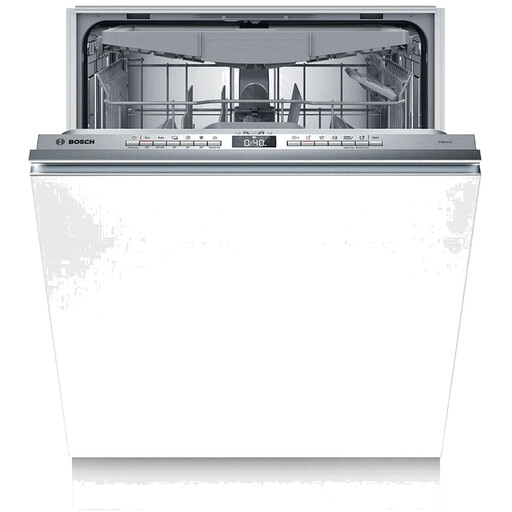
Freestanding and integrated models; the SMS4HVW14E is an example of a 60 cm freestanding model with flexible baskets.
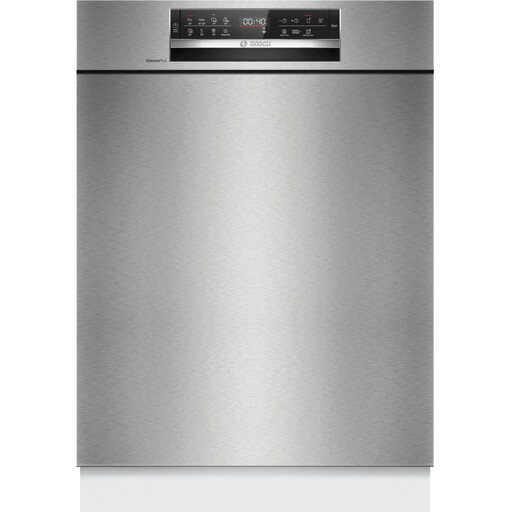
Freestanding and integrated models; the DIN28431 is an example of a 60 cm integrated dishwasher.
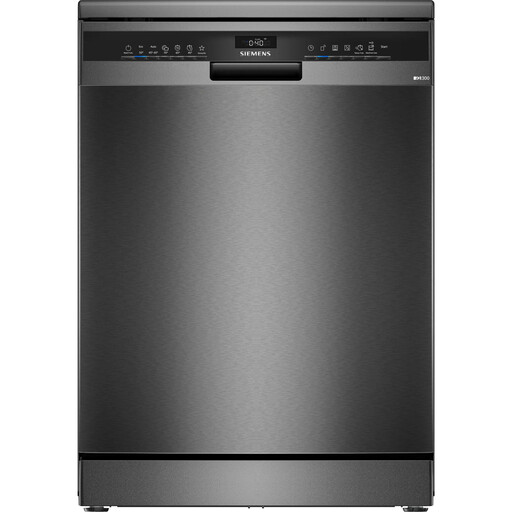
Freestanding and integrated models; the FFB7674XPW is an example of a 60 cm freestanding dishwasher with published Eco figures.
Including fully integrated models; the G 5662 SCVi Active S brings together several features in one specific model.
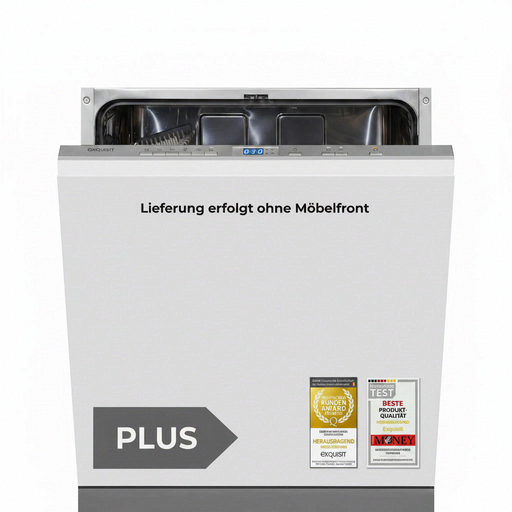
The range includes integrated models, with the BBC 3C26 X as a specific example.
The 60 cm dishwashers below are selected for households washing dishes from several meals each day. The selection includes integrated and freestanding models.
 No image available
With 13 place settings and a height-adjustable upper basket, it’s designed to handle several meals’ worth of dishes.
Fully integrated design; the product description states that the kitchen door is not included.
The description lists FlexBasket, SpeedPerfect, PerfectDry and Home Connect, as well as 65 kWh per 100 Eco cycles and 9,0 l per Eco cycle.
 No image available
The listed features offer several loading options for dishes of different sizes.
The product description lists 14 place settings, Max-Flex baskets, foldable supports and a cutlery tray.
The upper basket is height-adjustable; the built-under design is intended for a niche height of up to 87,5 cm.
 No image available
The freestanding design is worth considering if you’re looking for a standalone appliance rather than an integrated one.
The description lists 14 place settings, varioFlex baskets, a varioDrawer cutlery tray and varioSpeed Plus.
Eco figures are listed as 65 kWh per 100 cycles and 9,0 l per cycle.
 No image available
For mixed loads, the description lists a height-adjustable upper basket and a cutlery tray.
The model has six programmes, including ECO, Short and 90 min, according to the description; water consumption for the Eco cycle is listed as 11,0 l.
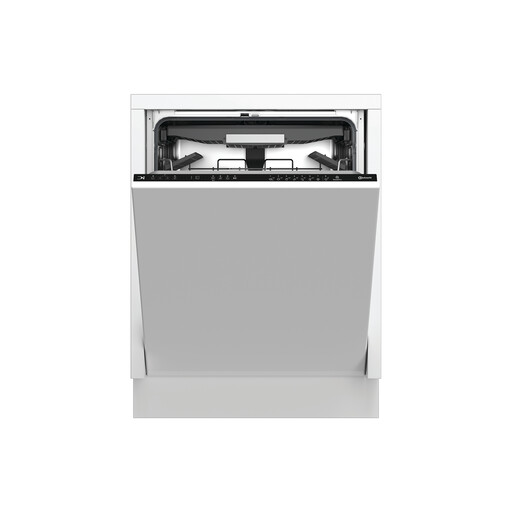 No image available
The stated capacity and height-adjustable upper basket are useful when planning loads from several meals.
The product description lists MultiZone for the upper or lower basket, along with 54 kWh per 100 Eco cycles and 9,5 l per Eco cycle.
The stated Eco programme duration is 4:50 hours.
No. The German Environment Agency considers a 60 cm model efficient for households of two or more, provided it is regularly run with a full load. A 45 cm model may be a better fit if you have fewer dishes or limited space. The amount of washing-up you actually have and the space available are what matter.
Check the niche height and width, as well as the installation type, kitchen door and plinth, against the installation diagram for the specific model. The appliance being the right width doesn’t necessarily mean it will fit your kitchen.
Compare the label figures for electricity and water, and the Eco programme duration, with the details for the programme you actually plan to use. Eco consumption figures don’t automatically apply to quick programmes.
The EU label shows electricity consumption per 100 Eco cycles, water consumption per Eco cycle and the Eco programme duration. For a fair comparison, the figures must relate to the same model variant and programme conditions.
The German Environment Agency recommends running the Eco programme with a full load wherever possible and avoiding pre-rinsing with warm water in particular. Also follow the care instructions for your specific appliance.