What should you look for when choosing?
During the transition, you’ll need a suitable water supply and space for the appliance. For a future integrated dishwasher, you’ll also need to consider the niche size and the amount of crockery you regularly wash together.
| What you need |
What to check before buying |
Who should consider this? |
| Water supply during renovation |
Manual tank filling and hose routing; plan for a safe, accessible waste-water outlet at the appliance’s location. |
If you need to wash dishes without a mains water supply, filling and draining are key. Around 25% of consumers put water supply first. |
| Will your bowls fit? |
Measure your largest bowl, including its rim and height, then compare the measurements with the basket layout and available space. |
If you want to wash bowls with cups and cutlery in the same load, usable basket space matters. Around 25% of consumers prioritise a suitable load capacity. |
| Fitting the appliance in your finished kitchen |
Check the planned niche, cabinet front, door movement and connections against the specifications for the exact appliance. |
If you’re already buying for your finished kitchen, the appliance type should suit the niche size and the amount of crockery you regularly wash. Around 20% of consumers prioritise their future integrated dishwasher. |
| Energy and water consumption |
Compare kWh per 100 Eco cycles and litres per Eco cycle using the same label basis, and take your expected usage into account. |
If energy and water use matter to you, compare the specific Eco figures rather than treating figures from different programmes as equivalent. Around 15% of consumers put running costs first. |
| Noise and wash time |
Check the noise rating and Eco programme duration on the label, as well as the programmes available on the specific model. |
If your kitchen is open-plan or you need to schedule your washes, noise and programme duration matter. Around 15% of consumers prioritise a predictable wash cycle that causes as little disruption as possible. |
Countertop dishwashers at Joybuy
This selection features countertop dishwashers with water tanks that could work as a temporary solution during a kitchen renovation.
 No image available
AIRMSEN Portable Countertop Dishwasher
The manually filled tank could make this a temporary option if you don’t have a mains water supply. The drain hose needs to be secured and the waste water directed to a suitable outlet.
Integrated 5-litre tank; five wash programmes and a drying mode; stated capacity of up to four place settings.
Joybuy
 No image available
Heinrich's HTG 8855
The integrated tank is an option if you don’t want to use a mains water connection during your renovation. Check the stated capacity against the size of your bowls.
Integrated 5-litre tank; three place settings; seven programmes; stated noise level of 56,3 dB; energy class C.
Joybuy
 No image available
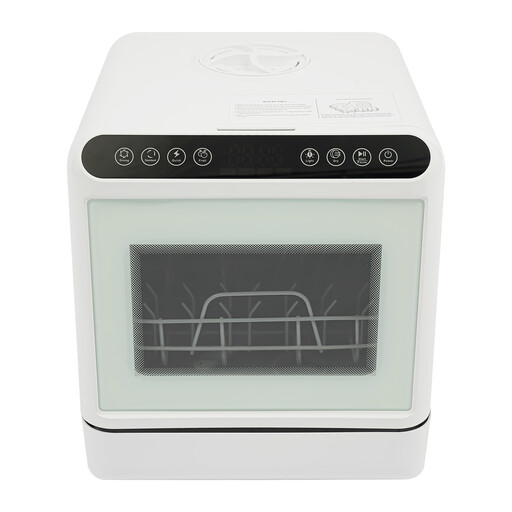
Countertop dishwasher with 6-litre water tank
The product description lists manual tank filling and a tap connection as water supply options. Check which set-up will work best during your renovation.
6-litre water tank; touch controls. A earthed socket is required for operation; the safety advice recommends against using extension leads.
Joybuy
 No image available
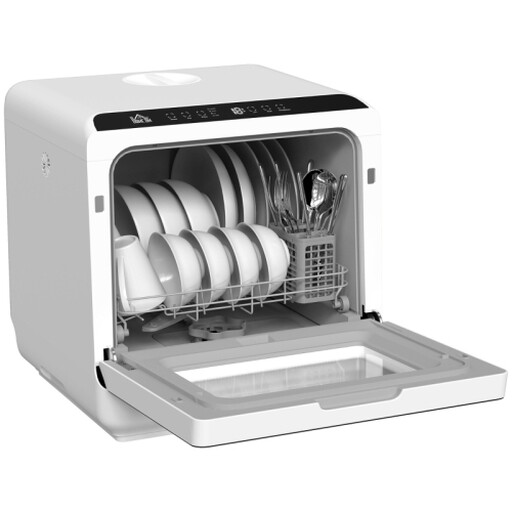
Countertop dishwasher with 6-litre tank
The manufacturer lists tank filling or a tap connection as water supply options. The stated capacity is only a starting point for bowls, so check their measurements against the basket.
Integrated 6-litre tank; five programmes; LED display; drying function; stated capacity of up to four place settings.
Joybuy
 No image available
Comfee' CDWMTO201D(W)
The product description lists an integrated tank that can be filled manually, plus an optional tap connection. Check your largest bowls against the stated crockery size.
Integrated 5-litre tank; six wash programmes; according to the description, crockery up to 250 mm in diameter. The drain hose needs to be secured and the waste water directed to a suitable outlet. A earthed socket is required, and the use of extension leads is not recommended.
Joybuy
Frequently asked questions
Can I use a tank-fed dishwasher during a renovation without any water connections?
It can work without a mains water supply if the specific model can be filled manually. You’ll still need a suitable way to drain the waste water. HAVA says the R01’s drain hose can go into a sink or bucket, while Bomann lists a drain hose for the TSG 5702.
How can I tell if my breakfast bowls will fit?
Measure your largest bowls, including their rims and height, then compare the measurements with the basket layout of the specific model. A place-setting capacity or an example load without bowl measurements doesn’t confirm that your own bowls will fit.
What should I consider when positioning the dishwasher and connecting it to the power supply during a renovation?
Check the surface it will stand on, the door’s range of movement, and the inlet and drain hoses against the instructions for the specific model. Make sure there’s a suitable socket nearby. ELEKTRO+ covers socket planning when modernising a kitchen; its advice on dedicated circuits applies to appliances with a connected load of more than 2.000 watts and isn’t a general limit for all countertop models.
Do the Eco label figures also apply to a quick wash?
No. The stated kWh per 100 cycles, litres per cycle and programme duration refer to the Eco programme. Check the figures for other programmes separately. The German Environment Agency also lists noise level as a label value.
Should I choose a 45 cm or 60 cm dishwasher for my finished kitchen?
Choose according to the planned niche and the amount of crockery you can regularly wash together. The German Environment Agency’s recommendation for 60 cm models assumes they’ll regularly be run with a full load. If you’ve planned a slimline niche, check the dimensions and connections for the specific 45 cm model.


