Start by considering the space available, whether the water inlet and drain can be used safely, and how much washing up you’ll have by the time you next run the dishwasher. A model with a water tank may suit you if there’s no fixed water connection; a plumbed-in countertop model could work if you have worktop space; and a 45 cm model is worth considering if you regularly need room for cookware too. A 60 cm model may be suitable if you already have the space and regularly have enough washing up for a worthwhile load. EU label figures are based on the Eco programme, and the German Environment Agency’s comparison with handwashing assumes a full dishwasher.
Who are the different types of dishwasher suitable for?
Single-person households without a suitable water connection
If you only have a few dishes to wash each day and can’t use a suitable fixed water connection, you could consider a model with a water tank. You’ll still need a safe way to drain the waste water.
Single-person households with a small kitchen
If you have a water connection but limited floor space, a countertop model could be an option. Check its dimensions against your usable worktop space, and allow room for the door and hoses.
Single-person households that cook often
If you regularly wash pans or cooking utensils as well as plates and cups, check the basket layout and usable interior space of a slimline freestanding model – not just its place-setting capacity.
What should you look for when buying?
Mini countertop dishwasher with water tank
A good fit if: there’s no suitable fixed water connection and you usually only have a few items to wash.
Consider: you’ll still need to fill the tank and arrange a safe drain; the interior may not be large enough for pans or large plates.
Countertop dishwasher with water connection
A good fit if: you have worktop space, a water inlet and a drain, but nowhere to put a freestanding model.
Consider: the appliance takes up worktop space; check that your cookware will fit inside.
Freestanding 45 cm dishwasher
A good fit if: you regularly have cookware to wash and have the space and connections for the appliance.
Consider: if you don’t have much washing up, it could take longer to build up a full load.
60 cm dishwasher
A good fit if: you already have a suitable space and regularly have larger amounts of washing up.
Consider: a higher stated capacity is not an advantage in itself if you only have a small amount of washing up each day.
| Buying priority |
What to look for |
Who is it most relevant to? |
| Available space and appliance type |
Measure the space, height, depth and door clearance. Compare the manufacturer’s stated appliance dimensions with the space you have in mind. |
If my kitchen is short on space, I measure the area available before settling on an appliance type. Around 36% of consumers prioritise finding a model that fits. |
| Amount of washing up and cookware |
Check how your usual plates, glasses and cooking utensils fit with the basket layout and usable height. Place settings alone don’t tell you whether your own pans will fit. |
If I cook often, I want to be able to fit pans and cookware in too. Around 29% of consumers put capacity first. |
| Water connection and drainage |
Check the water inlet and drain where the appliance will go. Only factor in water protection if it’s specified for the particular model. |
If I don’t have a suitable fixed water inlet, I check how to fill the tank and route the hose before buying. Around 21% of consumers prioritise connection requirements. |
| Consumption and noise |
Compare EU label figures on the same Eco programme basis and consider how many times you’ll actually run the dishwasher. If you have an open-plan kitchen, check the stated noise level too. |
If consumption or noise is particularly important in my day-to-day life, I compare the figures for the specific model. Around 14% of consumers prioritise these operating characteristics. |
Which buying decisions can be misleading?
-
‘No water connection’ doesn’t mean ‘no preparation needed’
A model with a water tank may still need a drain hose. For the HAVA R01, the manufacturer describes manual tank filling and a hose for draining waste water.
Before buying, check how you’ll fill the appliance with water and safely route the drain hose to a suitable outlet.
Filling the tank manually takes time, and you’ll also need to make sure there’s a reliable way to drain the water where the appliance will go.
-
Comparing place settings alone
Three, six or ten place settings indicate different stated capacities, but they don’t tell you whether your largest plates or regularly used pans will fit.
Check the interior, basket layout and usable height against your own dishes.
-
Comparing energy or water figures on different usage assumptions
EU label figures are based on defined Eco cycles. The German Environment Agency notes that the favourable consumption comparison with handwashing assumes a full dishwasher.
Compare figures on the same programme basis, and consider how long you’re willing to wait for a full load with the amount of washing up you have.
Which brands are worth considering?
MEDION
The DWT30 (MD370022) is a compact countertop model with several water supply options.
- MEDION says the model can be used with its tank, a fixed water connection or a bucket; its stated capacity is three place settings.
- Three place settings may not be enough for larger loads, and the figures are not an independent assessment of cleaning performance.
Exquisit
The GSP206-030D in silver is a plumbed-in countertop model with six place settings.
- Exquisit states that the model uses 6.5 l of water on the Eco cycle and is 55 cm wide.
- The dimensions alone won’t tell you whether your own cookware will fit inside.
Bomann
The TSG 7405 in black is a countertop model with a water connection and six place settings.
- Bomann specifies overflow protection and includes inlet and drain hoses.
- The model needs suitable connections, and the manufacturer’s specifications are not an independent performance assessment.
Midea
The MDWEF1034DW-WE and MDWEF1433DW-WE offer different capacities in freestanding 45 cm and 60 cm models.
- Midea states that the 45 cm model holds ten place settings and the 60 cm model holds 14; AquaStop is listed for both.
- The 60 cm model’s larger capacity is most relevant when your available space and regular amount of washing up are a good match.
Bosch
The SPS2HKI42E is a freestanding 45 cm Series 2 model.
- Bosch lists the dimensions, energy class E and Eco programme water consumption of 8.9 l for this model.
- These figures apply to the model named and don’t demonstrate that it performs better than other appliances.
HAVA
The R01 is a compact countertop model that, according to the manufacturer, can be used with a manually filled tank or a tap connection.
- HAVA specifies a 5-litre tank and a drain hose.
- You’ll still need a safe place for the drain when using the tank; the manufacturer’s claims about hygiene and cleaning are not independently verified.
Joybuy products by type
The Joybuy products below include countertop models with water tanks, plumbed-in countertop models, and slimline freestanding and built-under models. The key things to consider are the space available, the connections and how much washing up you want to save up before the next cycle.
 No image available
AIRMSEN countertop dishwasher with 5-litre water tank
An option if you have limited worktop space and no fixed water inlet where the appliance will go.
The product name lists nine programmes, dimensions of 37 × 50 cm and energy class D. It also describes 360° spray technology and drying followed by ventilation.
According to the product information, a separately sold adapter may be needed to connect it to a tap.
View at Joybuy
 No image available
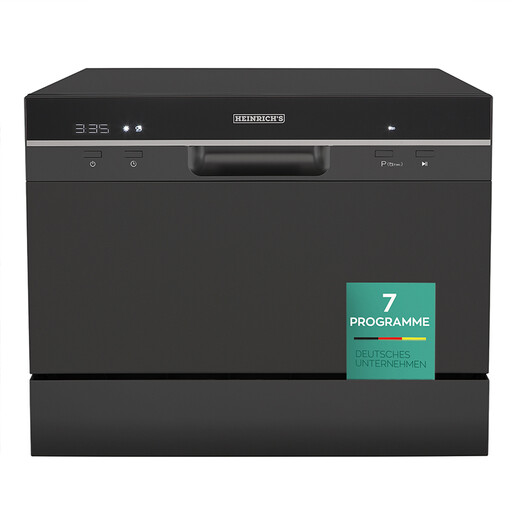
Heinrich's HTG 8840 black
This countertop model could suit you if you have a water connection and the hoses will fit where you plan to put it.
Specifications include six place settings, seven programmes, 6.5 l of water per cycle, 47 dB and energy class D.
View at Joybuy
 No image available
Exquisit EGSP52109-E-030E, silver
This freestanding model could be an option if you have a suitable floor space, water connection and power supply.
The product information lists nine place settings, six programmes and a width of 44.8 cm. Eco and Intensive programmes, an adjustable-height basket and a cutlery tray are also listed.
View at Joybuy
 No image available
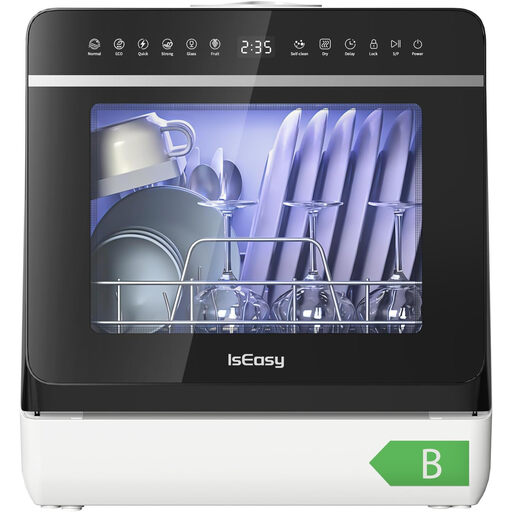
Countertop dishwasher with 5-litre tank, up to three place settings
A compact option for smaller daily loads if a water tank is convenient for where you plan to put it.
The description lists capacity for up to three place settings, seven programmes and a 5-litre tank, or alternatively a tap connection.
When using the tank, waste water still needs to be drained through the supplied drain hose.
View at Joybuy
 No image available
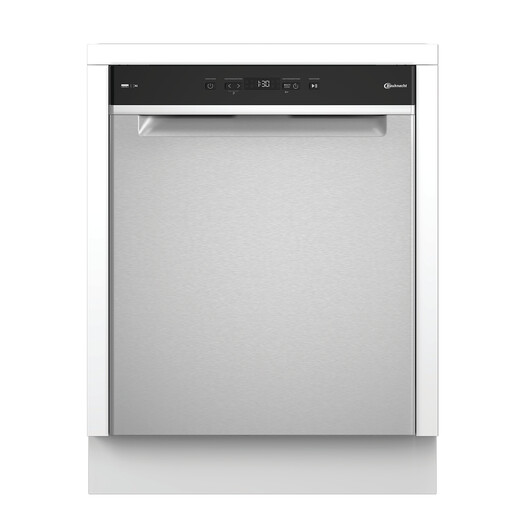
Bauknecht BKSV2UCN3X built-under dishwasher
This model is only suitable if you have a suitable 60 cm built-under space and the right connections.
Specifications include 14 place settings, energy class C and 41 dB. The product description lists an Eco programme and a MultiZone option, which it says lets you wash only the upper or lower basket.
View at Joybuy
Frequently asked questions
Is the smallest dishwasher always the most economical choice for one person?
No, size alone doesn’t determine that. Compare the Eco label figures and consider how often you can fill the dishwasher with the amount of washing up you actually have. The German Environment Agency’s comparison with handwashing assumes a full dishwasher.
Can you use a dishwasher with a water tank without a water connection or a drain?
Depending on the model, you can use a dishwasher with a tank without a fixed water inlet, but not without a properly arranged drain. For the R01, HAVA describes manually filling the tank and using a drain hose to a sink or bucket. Check the instructions for the specific appliance and make sure the hose is routed safely.
What should I bear in mind if I have hard water?
Check your water hardness and the water-softening system in your model. The German Environment Agency notes that limescale can affect efficiency and lifespan; for models with a water softener, top up the regeneration salt or use suitable tablets.
What ongoing costs should I budget for besides the purchase price?
Factor in energy and water use based on how you use the appliance, as well as detergent and, depending on the model, salt and rinse aid. Whether you’ll need connection or delivery services depends on the specific offer. EU label figures are based on the Eco programme.
What information does the EU energy label for dishwashers show?
According to the European Commission, dishwasher energy labels have used the A to G scale since 1 March 2021. They include information such as electricity consumption per 100 Eco cycles, water consumption per Eco cycle, capacity and noise. Compare the figures for the specific model, bearing in mind that they’re based on defined programme and test conditions.


