What should you look for when buying?
First, measure the available space, then check how well the machine accommodates the crockery you usually use. You can then compare cutlery layouts, programme duration and consumption more effectively.
| Buying priority |
What to look for |
Who prioritises this? |
| Design and space |
Measure the recess width, height and depth, as well as the space needed to open the door; distinguish between freestanding and integrated designs. |
If your kitchen has limited space, the machine needs to fit the available recess. Around 26% of consumers who need to check available space first prioritise this. |
| Room for a dinner load |
Check the stated capacity and basket layout. Test the largest items you regularly use to make sure the spray arms can move freely. |
If you want to wash the crockery and cutlery from a meal together, bear your usual load in mind. Around 21% of consumers with this priority focus on it. |
| Cutlery organisation |
Check whether a basket or drawer suits your loading routine and how much space it leaves for the rest of your crockery. |
If you load lots of cutlery, ease of use and the layout of the interior matter. Around 21% of consumers who prioritise organisation focus on this. |
| Time until the next use |
Consider the Eco programme duration separately from any quick or speed-up programmes the model may offer. |
If you’ll need your cutlery or crockery again soon, check the programmes available on the specific model. Around 16% of consumers with time as their main priority focus on this. |
| Electricity and water consumption |
Compare kWh per 100 Eco cycles and litres per Eco cycle on the same basis, and consider how often you’ll use the machine. |
If running costs are a key factor in your decision, compare like-for-like label figures and consider how many washes you expect to run. Around 16% of consumers prioritise this. |
Joybuy products for everyday dishwashing
This selection includes freestanding 45 cm models for tighter spaces, as well as 60 cm models for washing crockery and cutlery together.
 No image available
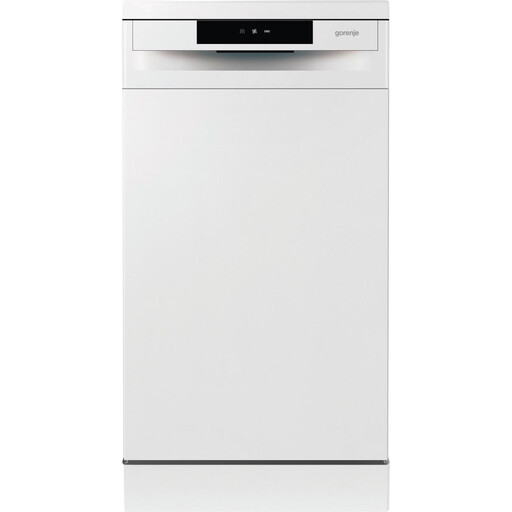
Gorenje GS520E15W, 45 cm, 9 place settings
The freestanding 45 cm design may suit a smaller space; check whether 9 place settings are enough for your typical dinner load.
The product name lists 5 programmes, a stainless steel interior, AquaStop and a self-cleaning filter.
Joybuy
 No image available
Beko BDFS26040XQ, 45 cm, 10 place settings
This freestanding 45 cm model may suit a narrow space; compare its stated capacity with the loads you usually wash.
The product name lists energy efficiency class C and a stainless steel finish.
Joybuy
 No image available
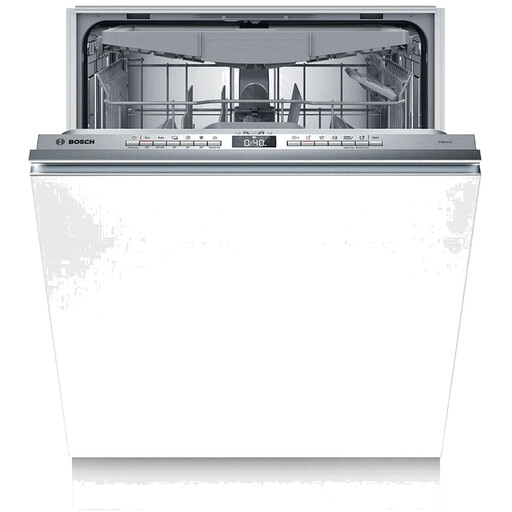
Bosch SMV4HVX03E, 60 cm, 13 place settings
This fully integrated 60 cm model is designed for a suitable fitted kitchen; check the recess dimensions and whether its stated capacity suits your load.
The product name lists PerfectDry, Home Connect and energy efficiency class D.
Joybuy
 No image available
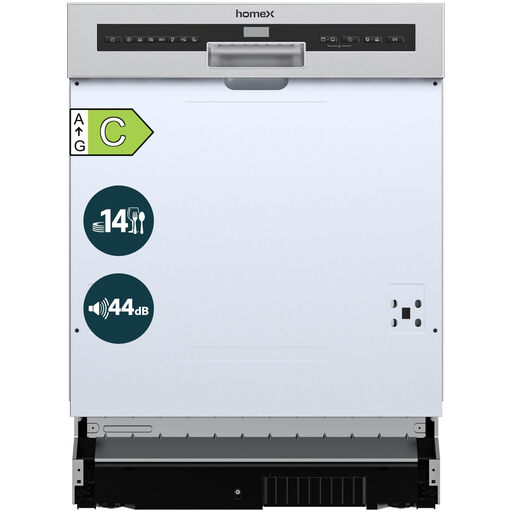
homeX DWSI601444C, 60 cm, 14 place settings
This semi-integrated 60 cm model may suit you if you’d like to put your cutlery in a drawer and your kitchen layout is compatible.
The product name lists a cutlery drawer and energy efficiency class C.
Joybuy
 No image available
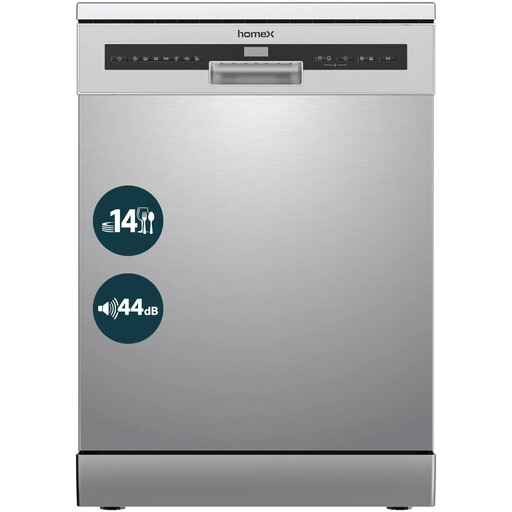
homeX DWFS601444C-S, 60 cm, 14 place settings
This freestanding 60 cm model may suit a kitchen with room for it and regular larger loads; check how well it accommodates the items you use.
The product name lists a cutlery drawer, under-counter installation, AquaStop and energy efficiency class C.
Joybuy
Frequently asked questions
Does the glass-and-fork symbol confirm that my cutlery is dishwasher-safe?
No. The symbol indicates that an item is suitable for contact with food, not that it’s dishwasher-safe. Follow the care instructions for your particular cutlery.
How should I load sharp cutlery safely?
Follow the instructions for your particular dishwasher and cutlery basket. For its variable cutlery basket, Bosch recommends placing sharp points facing down and putting long, sharp items and knives on the knife rack.
Should I rinse crockery before using the Eco programme?
The German Environment Agency recommends not pre-rinsing crockery, especially with warm water, and running the dishwasher with a full load on the Eco programme for efficient operation. Also follow the loading and care instructions for your model.
What costs should I consider besides the machine’s consumption?
To estimate running costs, consider how often you expect to use the machine and your electricity tariff; check installation costs separately. If something goes wrong, remember that your statutory rights against the seller are separate from any voluntary guarantee.
What information does the energy label show for dishwashers?
The EU energy label for dishwashers shows, among other things, the energy efficiency class, energy consumption per 100 Eco cycles, water consumption per Eco cycle, capacity, programme duration and noise emissions. It provides information and doesn’t require you to buy a machine from a particular energy efficiency class.


