Start by considering the space available, the water supply and how much washing-up you’ll have before the next cycle. A countertop dishwasher with a tank has different space and connection requirements from a slimline freestanding or built-in model, or a 60 cm machine. If you’re running it late, also compare the stated noise level and the duration of your chosen programme. The energy-label figures are based on the Eco programme, so they won’t necessarily apply to other programmes.
Which type is right for you?
Late-night peace seekers
If you load the dishwasher after an evening shift, check that the noise level and programme length work for your evening routine. The European Commission lists noise emissions and Eco programme duration on the EU energy label; these figures don’t tell you what to expect from other programmes.
Small kitchens without a fixed water supply
If space is limited or there’s no suitable water supply, a countertop dishwasher with a tank could be an option. Midea and Bomann list tank options for their respective countertop models, but you’ll still need to plan a safe way to drain the wastewater.
Households with several loads a day
If you regularly have plates, cups or cookware to wash as well as breakfast bowls, usable capacity and basket design matter. The German Environment Agency considers a 60 cm model efficient for an average household of two or more, provided it’s always run with a full load.
What to consider when buying
Countertop model with a tank
A good fit if: there’s no suitable fixed water supply, you have a small amount of washing-up and you’ve checked the space and drainage arrangements.
Things to consider: you’ll need to make room in your routine to fill the tank and drain the wastewater; check the internal dimensions to make sure your bowls will fit.
Freestanding 45 cm model
A good fit if: you have a suitable slim space with the right water and waste connections, and more washing-up than a small countertop model can handle.
Things to consider: the capacity and basket design need to suit your bowls and other dishes.
Fully integrated 45 cm model
A good fit if: you have a suitable space for a built-in model, with a matching cabinet door and the necessary connections.
Things to consider: the appliance width alone doesn’t confirm that it will fit with your kitchen door and connections.
60 cm model
A good fit if: you regularly have more household dishes to wash, have enough space and can usually run the machine with a full load.
Things to consider: if you only have a few bowls to wash, waiting until you have a full load may be inconvenient. The German Environment Agency’s efficiency assessment assumes a full load.
| What matters |
What to check when buying |
Who it matters most to |
| Quiet operation and timing |
Noise rating and Eco duration on the label; check the programmes for the specific model separately. |
If I want as little noise as possible after my shift and need the dishes again by a certain time. Around 36% of consumers put quiet operation and having dishes available when needed first. |
| Space and water connections |
Check the appliance and internal dimensions, as well as the space for installation; if it has a tank, plan for drainage too. |
If my kitchen is short on space or doesn’t have a fixed water supply, the appliance type still needs to work with the water supply and drainage arrangements. Around 29% of consumers prioritise space, appliance type and water connections. |
| Capacity and basket |
Use place settings as a guide and check that your bowls fit in the basket. |
If I regularly have other dishes to wash as well as breakfast bowls, I want to know whether they’ll all fit in a suitable load. Around 21% of consumers focus first on the capacity they need. |
| Electricity and water |
Compare consumption figures on the same Eco basis, and consider the Eco programme duration and capacity too. |
If I use the appliance regularly, I want to understand its consumption based on the label figures and how I use it. Around 14% of consumers put electricity and water consumption first. |
Avoid common buying mistakes
-
Assuming Eco label figures apply to a quick programme
The comparison figures on the EU energy label are based on the Eco programme. They don’t necessarily reflect the consumption or running time of a faster programme.
Compare appliances using the same label basis, and check the instructions for the specific model for details of other programmes.
-
Assuming a tank model means you don’t need to plan for water
An integrated tank can replace a fixed water supply, but you’ll still need to consider wastewater and the space required for the appliance.
Measure the space you have in mind, and plan how you’ll fill the tank and drain the wastewater safely before you buy.
-
Choosing based only on width or place settings
The appliance width and stated number of place settings won’t tell you whether your breakfast bowls will actually fit in the basket.
Check the dimensions of the space or installation area, and compare the basket layout with the dishes you use.
Notable brands and model examples
Bomann
The TSG 5702 is a specific example of a compact countertop model with a tank and space for three place settings.
- Bomann lists a 5-litre tank and a delay start for this model.
- Its stated 58 dB noise level and interior size are worth considering if you’ll use it late or wash larger bowls; these details don’t apply to all Bomann models.
Midea
The MDWMT201DW is an example of a countertop model with a tank from the manufacturer.
- Midea lists a 5-litre tank and app control for this model.
- These are manufacturer’s specifications, not independent cleaning or noise measurements.
Beko
The freestanding BDFS26040XQ is a slimline model with space for 10 place settings.
- According to Beko, the model has a C energy rating, uses 8,9 litres of water on the Eco cycle and has a noise emission of 44 dB(A).
- These model-specific technical details don’t demonstrate independent cleaning performance and don’t apply to other Beko models.
Siemens
The SR65EX09ME is an example of a fully integrated 45 cm model.
- Siemens gives the model’s dimensions as 815 × 448 × 550 mm and its water consumption as 8,7 litres on the Eco programme.
- Suitability also depends on the installation space, cabinet door and connections.
Bosch
The freestanding SMS4HTW16E is a 60 cm example for kitchens where larger loads are a regular occurrence.
- Bosch describes this model as having a Silence programme and a delay start function.
- These manufacturer’s specifications don’t guarantee that every late-evening cycle will be inaudible.
Joybuy products for different kitchens
The range includes compact countertop models with a tank or water connection, as well as larger appliances for slimline or 60 cm built-in spaces.
 No image available
AIRMSEN countertop dishwasher with 5-litre tank
The tank makes this a practical option for a kitchen without a fixed water supply; you’ll need a hose to drain the wastewater.
The product title lists 5+1 wash cycles and a door made from double-tempered glass.
View at Joybuy
 No image available
Heinrich's HTG 8855 countertop dishwasher
This countertop model is designed for a small load of three place settings; remember to plan for wastewater drainage too.
The product title lists a 5-litre tank, seven programmes, a 24-hour delay start, 56,3 dB and a C energy rating.
View at Joybuy
 No image available
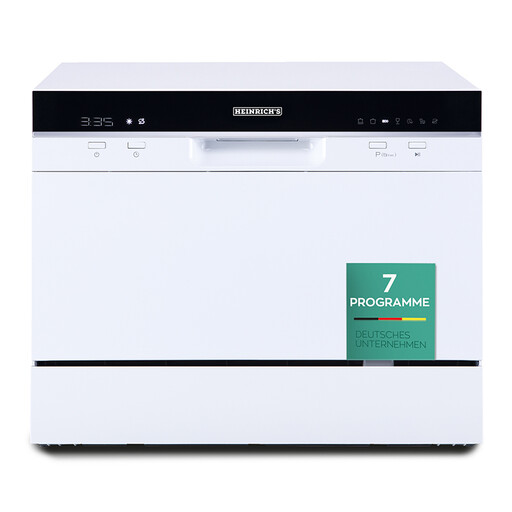
Heinrich's HTG 8840 countertop dishwasher
This countertop model is an option if six place settings meet your needs; the specified installation requires a water connection and drainage.
The product title lists seven programmes, a 24-hour delay start, 47 dB and a D energy rating.
View at Joybuy
 No image available
Beko BDFS26040XQ freestanding dishwasher, 45 cm
This slimline freestanding model could suit you if you have the right water and waste connections and a 10-place-setting capacity matches your usual load.
It has a C energy rating, six programmes and a noise level of 44 dB(A); the product description also mentions a height-adjustable upper basket.
View at Joybuy
 No image available
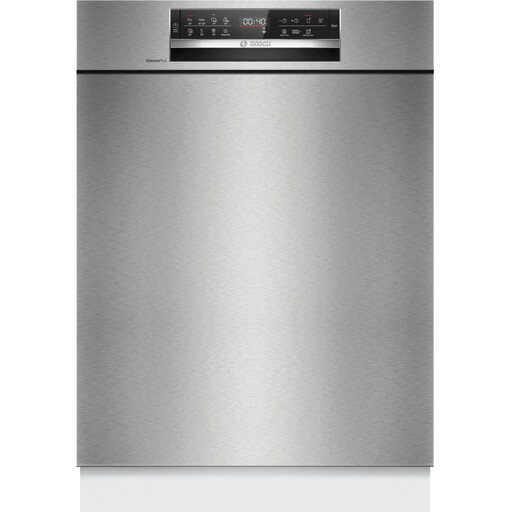
Bosch SMU6ECS12E Serie 6 built-under dishwasher, 60 cm
This built-under model is only suitable for a compatible 60 cm installation space; its stated capacity is 14 place settings.
The product description lists 42 dB(A), an Eco programme duration of 270 minutes, plus Eco and Silent programmes.
View at Joybuy
Frequently asked questions
What does the energy label tell me about running a cycle after my shift?
The EU energy label includes figures such as electricity use per 100 cycles, water use per cycle, programme duration and noise emissions, based on the Eco programme. Don’t assume these figures apply to other programmes.
Do I need to rinse breakfast bowls before loading them?
No. The German Environment Agency recommends removing larger food scraps, but not rinsing dishes by hand before loading them. Arrange the bowls so the water jets can reach their surfaces.
Does a countertop dishwasher with a tank need a water connection?
According to the manufacturer, the Bomann TSG 5702 can run without a fixed water supply thanks to its integrated tank; inlet and drain hoses are listed as accessories for this model. Still, plan where the wastewater can drain safely, and check the connection requirements for any other model separately.
What should I know about faults and disposal in Germany?
If a product is faulty, the seller is generally responsible for statutory consumer rights. The Verbraucherzentrale (German consumer advice centre) states that the claim period is two years from delivery and notes that separate rules apply to sales contracts from 31 July 2026. Electrical waste must not go in general rubbish; the German Environment Agency provides information on separate collection and the conditions for retailer take-back.


