Households who cook together
When several people are cooking, you’ll want cups, plates and cookware ready to use again in good time. Both the right capacity and the cycle time of your chosen programme matter.


If you regularly cook together and have enough space, a 60 cm dishwasher may be a good option; if you have a narrow gap or fewer dishes, a 45 cm model could be a better fit. The German Environment Agency recommends running the machine with a full load wherever possible. So compare the usable space for cups and the cycle time of the programme you actually use separately from the Eco programme’s consumption figures.
When several people are cooking, you’ll want cups, plates and cookware ready to use again in good time. Both the right capacity and the cycle time of your chosen programme matter.
If you regularly wash several dishwasher-safe cups, check that their shape and height fit in the racks without unnecessarily limiting space for pans and other dishes.
When space is limited, the dimensions of the gap and the appliance size will affect your choice. The usable capacity should also suit the amount of washing up you usually have.
The German Environment Agency lists dishwashers with widths of 45 and 60 cm. As well as checking the available space, consider the load size and when you’ll need your dishes again.
| What matters | What to check before buying | Who it matters most to |
|---|---|---|
| Space for cups | Check the height and diameter of your cups against the cup racks and adjustable upper basket on the specific model. According to the consumer advice centre, the glass-and-fork symbol indicates that an item is suitable for food contact, not that it is dishwasher-safe. | If you want to fit several dishwasher-safe cups in with your pans, the actual layout of the racks matters. Around 29% of consumers put space for cups first. |
| Ready when you need it | Check the programme length, including the drying phase, the delay-start function and the end-of-programme indicator. A programme may still be running when the door opens automatically, as AEG explains for AirDry. | If you want your cups and cookware ready before your next shared cooking session, the programme sequence matters. Around 29% of consumers prioritise having their dishes ready in good time. |
| Space and design | For a built-in model, compare the niche height, width and depth, the cabinet door and the plinth against the dimensions drawing for the specific model. The consumer advice centre and AEG Support list kitchen dimensions as factors to consider. | In a narrow gap, the appliance must fit your kitchen while leaving enough room for your usual load. Around 24% of consumers prioritise space and design. |
| Electricity and water use | Compare the consumption per 100 Eco cycles, water used per Eco cycle and Eco programme duration on the EU energy label. The European Commission describes the label figures for the Eco programme; figures for other programmes are not directly comparable. | If I use my dishwasher regularly, I want to be able to assess its electricity and water use on a like-for-like basis. Around 18% of consumers prioritise running costs. |
The stated capacity won’t tell you whether tall cups with handles will fit in the racks alongside your pans.
Compare your cups’ measurements with the cup racks and upper-basket adjustment on the specific appliance, and think about a typical load after cooking together.
The standardised consumption figures on the energy label refer to the Eco programme. A shorter cycle time, on its own, tells you nothing about the Eco programme’s consumption figures.
For your cooking routine, check the duration of the programme you’ll actually use, and only compare consumption figures on the same programme basis.
For built-in appliances, the height, depth, cabinet door and plinth must also suit your existing kitchen.
Compare the dimensions drawing for the exact model with your installation space, and check which installation services you’ll need before placing your order.
The SMV4EVX08E is an example of a 60 cm built-in dishwasher with flexible loading options.
The DIS48125 is a slimline, fully integrated built-in model with time-saving features.
The FSE32407Z is a 45 cm built-in model with cup racks.
The G 5740 SC SL is a slimline freestanding model if you don’t have a suitable built-in space.
The Joybuy selection below includes freestanding 45 cm models and fully integrated 60 cm models. Before choosing, check that the appliance will fit and that the rack layout suits your cups and cooking loads.
 No image available
The freestanding 45 cm design could suit a narrow kitchen, provided its capacity is right for your shared loads.
9 place settings; 5 programmes; stainless steel interior.
 No image available
This slimline freestanding model could work if you have limited width and its stated capacity is enough for your household.
10 place settings; energy efficiency class C; stainless steel finish.
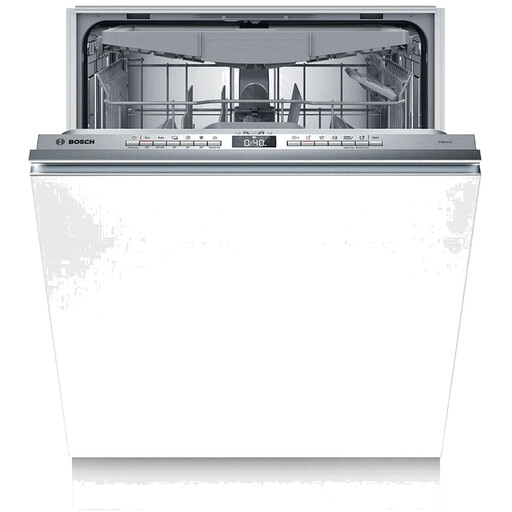 No image available
This 60 cm built-in model could be a good choice if your kitchen has a suitable space and you regularly have larger loads.
13 place settings; cabinet door not included.
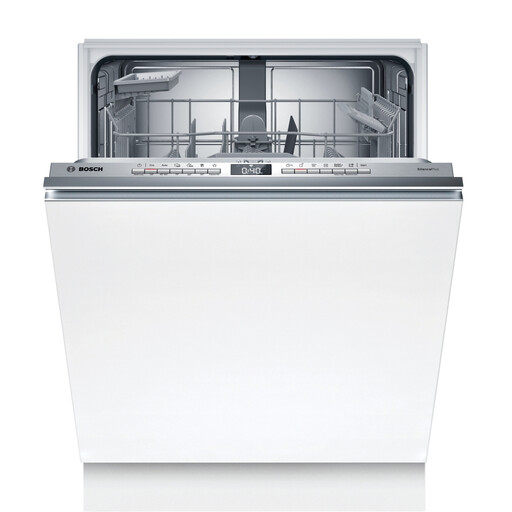 No image available
This fully integrated model is an option if its dimensions and cabinet door suit your kitchen, and a faster programme would be useful for occasional cooking sessions.
13 place settings; 42 dB(A); cabinet door not included.
 No image available
This freestanding 45 cm model could suit a narrower space if 9 place settings are enough for your usual shared load.
6 programmes; delay-start function; time-remaining display.
No. The symbol indicates that an item is suitable for contact with food. Check the cup manufacturer’s instructions to find out whether it can go in the dishwasher.
Not necessarily straight away. AEG notes that the door may open during the drying phase with AirDry. Wait until the programme has finished completely or check the time-remaining display; the exact sequence depends on the model.
The EU energy label includes the electricity used for 100 Eco cycles and the water used per Eco cycle, among other details. To estimate your own costs, you can combine these figures with the number of cycles you expect to run and your tariffs. Don’t compare figures for other programmes directly with Eco figures.
The German Environment Agency recommends running the dishwasher with a full load wherever possible, using the Eco programme and avoiding a warm-water pre-rinse. Load it so that the water can reach the surfaces, and follow the appliance and detergent instructions.
The European Commission explains that household dishwashers have been rated on a scale from A to G since 1 March 2021. The label includes Eco programme consumption, capacity, programme duration and noise levels, among other details. It helps you compare appliances but does not require you to buy a particular efficiency class.