Choose a dishwasher based on how much cutlery you need to wash per load, when you’ll need it again and which type will fit your course kitchen. A cutlery drawer can leave the lower basket free for other dishes. If space is tight, a slimline freestanding model may be an option. Commercial dishwashers require separate checks on connections, operation and how your course is organised. Eco figures describe the Eco programme; they don’t tell you how long a quick programme will take with your course load.
Who is this guide for?
Course leaders with lots of cutlery
If you need to wash a large amount of cutlery alongside other dishes after each session, the cutlery holder and basket layout matter. The Consumer Advice Centre recommends checking that the load suits your needs, as well as looking at the number of place settings.
Course leaders on a tight schedule
If you’ll need the cutlery again between sessions, compare the duration of the programme you actually plan to use, rather than looking only at the Eco figures. The Consumer Advice Centre also lists programme duration as a point of comparison.
Course leaders with limited kitchen space
If you have a set amount of floor space, a fixed alcove or specific connections, you’ll need a model that fits. Manufacturer specifications for slimline freestanding and built-in models show that dimensions and installation requirements vary by model.
What should you look for when buying?
Domestic dishwasher with a cutlery drawer
A good fit if: You have a lot of cutlery to wash and want to keep the lower basket free for other dishes.
Things to weigh up: The drawer, the rest of the basket layout, the alcove and the cabinet door all need to suit your course kitchen.
Slimline freestanding domestic dishwasher
A good fit if: You don’t have a wide built-in space and a typical course load will fit inside the narrower machine.
Things to weigh up: The number of place settings alone won’t tell you whether cutlery and cooking utensils will fit together.
Commercial front-loading dishwasher
A good fit if: Your setup and ongoing washing needs are more like those of a communal or catering kitchen.
Things to weigh up: Connections, detergent dosing, day-to-day operation and any applicable obligations all need to be checked separately.
| Buying priority | What to check | Who cares most about this? |
|---|
| Cutlery quantity and loading | Check the cutlery drawer or basket and the basket layout against a typical course load. | If I need to wash lots of cutlery along with other dishes, I want to know whether the load will fit properly. Around 29% of consumers prioritise cutlery quantity and loading. |
| Time until it’s needed again | Check the duration, load limits and cleaning instructions for the programme you’ll actually run during the course. | If I’ll need the cutlery again between two sessions, the duration of a suitable programme matters to me. Around 24% of consumers give this time requirement top priority. |
| Hygiene during the course | Check that the cutlery is dishwasher-safe, read the programme instructions and, where relevant, check your organisation’s hygiene plan. | If I’m cooking for other people, I want to plan the cleaning process and its requirements clearly. Around 18% of consumers put hygiene arrangements first. |
| Kitchen space and installation | Check the available floor space or alcove dimensions, door clearance, and water, drainage and electrical connections. | If the space in the course kitchen is fixed, the dishwasher must actually fit there. Around 17% of consumers prioritise the space available in their kitchen. |
| Eco consumption | Compare kWh per 100 Eco cycles, litres per Eco cycle and Eco programme duration on the EU label for the specific domestic model. | If the dishwasher runs regularly, I want to compare its stated Eco figures on a like-for-like basis. Around 12% of consumers prioritise ongoing electricity and water consumption. |
The percentages show which of these priorities consumers rank first when choosing a dishwasher. When comparing domestic models, the Consumer Advice Centre recommends looking at factors including energy consumption, water consumption, capacity and Eco programme duration. These figures don’t automatically apply to other programmes.
Common assumptions to avoid when buying
Assuming Eco figures apply to the quick programme you need
The energy label shows consumption and duration for the Eco programme. Your course may need a different programme.
Compare the Eco figures separately from the duration and instructions for the programme you actually plan to use during the course.
Confusing food-contact suitability with dishwasher safety
The glass-and-fork symbol indicates that a material is suitable for food contact. It doesn’t tell you whether the cutlery is dishwasher-safe.
Read the care instructions for your cutlery before choosing a programme.
Treating a hygiene or care programme as proof that cutlery will be hygienically cleaned
HOBART describes the PROFI FX hygiene programme, used with a tablet, as cleaning the inside of the tank. This alone doesn’t prove that cutlery will be hygienically cleaned in every situation.
Check the purpose of the programme separately from the hygiene requirements for your course. If the course operates as a food business, check the rules that apply.
Assuming similar model names mean identical products
A model number alone doesn’t tell you whether the version on offer has the cutlery holder or other key features you need.
Before buying, check the exact model number and the specifications for the specific version.
Key brands at a glance
Beko
Beko offers built-in dishwashers for larger domestic loads. The BG840EXTI is listed as a 60 cm model with capacity for 14 place settings and a cutlery drawer.
- The drawer and adjustable baskets may be useful when planning a mixed course load.
- Beko says its Schnell+ function saves time, based on its own laboratory tests. This doesn’t prove that it will reduce the time by the same amount with every load.
Siemens
The fully integrated SN87TX00CE is designed for a suitably planned fitted kitchen.
- Siemens lists an A energy rating, water consumption of 9.5 l per Eco cycle and varioSpeed Plus for this model.
- The installation and actual programme duration need to suit your kitchen and course. The manufacturer’s specifications don’t measure how it will perform in your individual course setup.
Midea
The freestanding MDWEF1034DW-WE is a slimline domestic option; Midea lists its width as 450 mm.
- Midea lists capacity for 10 place settings and a cutlery drawer for this model.
- When choosing, check the exact model number and the features included in the specific version.
Miele
The G 5811 SCU Active Plus is a specific under-counter dishwasher model with a cutlery drawer.
- Miele lists an A energy rating and QuickPowerWash for this model.
- Whether the programme and installation suit your course depends on the actual load and your kitchen layout.
HOBART
HOBART describes the commercial PROFI FX as suitable for dishes, cutlery and glassware in catering businesses.
- The manufacturer lists short and standard programmes, as well as equipment for dosing detergent and rinse aid.
- Connections, consumables and the actual workflow on site all need to suit the way your course is organised.
Dishwashers at Joybuy
The models below include slimline freestanding options and 60 cm domestic dishwashers with a specified cutlery holder. Compare the basket layout, programme details and installation type with your typical course load and kitchen.
 No image available
Beko BDFS26040XQ, 45 cm
The slimline freestanding design may suit you if space is limited and your course load fits inside.
Capacity for 10 place settings; cutlery basket; Schnell+ listed as a time-saving function; C energy rating.
Check the programme documentation to find out how long the specific programme will take with your course load.
 No image available
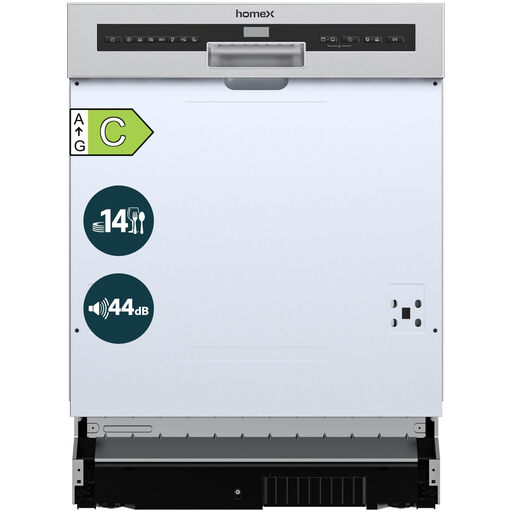
homeX DWSI601444C, semi-integrated
An option for a larger domestic load, if the 60 cm semi-integrated design suits your kitchen layout.
Capacity for 14 place settings; cutlery drawer; seven programmes, including ‘58 Minutes’ and ‘Short’; C energy rating.
No specific duration is given for ‘Short’; check the instructions for the version on offer.
 No image available
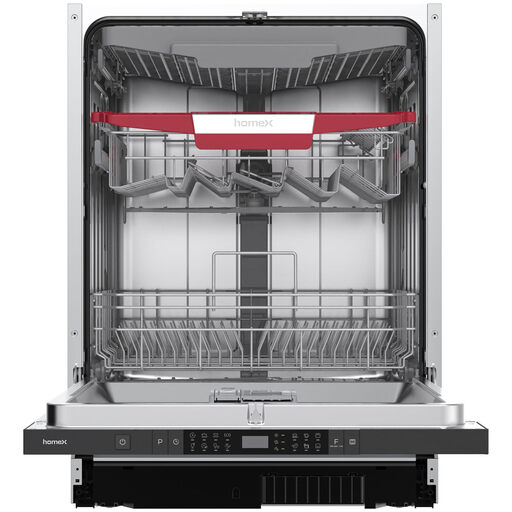
homeX DWFI601444C, fully integrated
The fully integrated design may suit you if it fits the built-in space and matches your kitchen cabinetry.
60 cm; capacity for 14 place settings; eight programmes; 90-minute cycle and express function; C energy rating; 44 dB.
Check which programme is suitable for your load and the care instructions for your cutlery.
 No image available
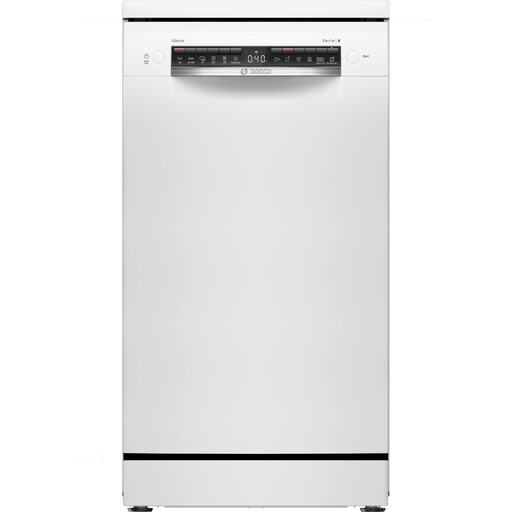
Bosch SPS4HKW49E Series 4, 45 cm
The 45 cm freestanding design may suit you if floor space is limited, provided your specific course load fits inside.
Capacity for 10 place settings; SpeedPerfect+; E energy rating.
The product details mention a cutlery holder but don’t specify its type. Also check the duration of the programme you want to use.
 No image available
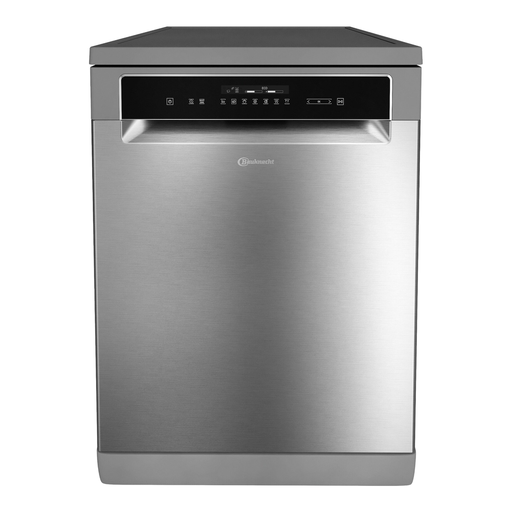
Bauknecht BFP 5041 PLT X, 60 cm
A freestanding option for a larger course load, if you have 60 cm of floor space available.
Capacity for 14 place settings; cutlery drawer; C energy rating.
The express programme is described as being for lightly soiled dishes. Check that this limitation suits the load you plan to wash.
Frequently asked questions
Is the number of place settings enough to plan how much cutlery you’ll need to wash for the course?
No. The number of place settings is a comparison figure for domestic dishwashers. Also check that your cutlery and the rest of a typical course load will fit together in the specific basket layout.
What should I check before positioning or installing the dishwasher?
Check the appliance dimensions and design against the available space or alcove. Then check door clearance and the water, drainage and electrical connections against the instructions for the specific appliance. A fully integrated built-in model and a slimline freestanding model have different installation requirements.
Does the glass-and-fork symbol mean cutlery can go in the dishwasher?
No. The symbol indicates that the material is suitable for food contact. The cutlery’s care instructions tell you whether it is dishwasher-safe and whether any programme restrictions apply.
How should I compare consumption and repair rights?
For domestic dishwashers, compare kWh per 100 Eco cycles and litres per Eco cycle using the same label basis. Don’t assume these figures apply to other programmes. The Consumer Advice Centre distinguishes statutory consumer rights from a voluntary guarantee. Since 31 July 2026, it has also highlighted repair rights for certain household appliances, including dishwashers. Check whether the appliance and circumstances in your case are covered.


