Choose the size to suit your available space and typical load: a 60 cm model may be suitable if you regularly have a full load to wash; if space or washing-up is limited, a 45 cm model could be a better fit. The German Environment Agency says the efficiency advantage of a 60 cm model depends on regularly running it with a full load. If you want plastic boxes to come out of the dishwasher as dry as possible, check the drying function of the specific model and the care instructions for the box, lid and seal.
Who is this guide for?
Households with several lunchboxes
If you want to load several lunchboxes along with the dinner dishes after a shared meal, interior space and basket layout are key. The German Environment Agency says the efficiency advantage of a 60 cm model depends on regularly running it with a full load.
Anyone dealing with damp plastic boxes
If you want to put boxes away soon after the cycle ends, check the drying information for the specific model. Bosch and Siemens list plastic-drying functions on selected models, but this does not guarantee results for every lunchbox or seal.
Kitchens with limited space
If you have little room for an appliance or usually have only a small amount of washing-up, a 45 cm model could suit your available space better, but it offers less room for boxes and plates. The German Environment Agency notes that smaller models use more electricity and water per item than larger ones.
What matters when buying?
First, check that the size and basket layout suit your typical load. Then compare the drying performance, cycle time and consumption of the specific programme you expect to use.
| What matters |
What to check before buying |
Who will find this especially important? |
| Taking plastic boxes out as dry as possible |
Check the drying function of the specific model and the care instructions for the box, lid and seal. Bosch describes PerfectDry in a comparison using standard plastic household items under specific test conditions. |
If I want to put boxes away soon after a cycle, the drying performance of the specific model matters to me. Around 33% of consumers are likely to put this at the top of their list. |
| Loading boxes and dinner dishes together |
Check the available space and installation dimensions, appliance size and basket layout against your own boxes and plates. The German Environment Agency considers a 60 cm model efficient when it is regularly run with a full load. |
If I want to fit several boxes and plates in one load, I need enough usable basket space. Around 27% of consumers are likely to prioritise fit and space requirements. |
| Finishing the cycle in good time |
Check the duration of the programme you plan to use and don’t assume it will be the same as the Eco programme. If the model has a time-saving function, check the details for that specific model too. |
If the lunchboxes will be needed again soon, it matters to me when the suitable programme finishes. Around 20% of consumers are likely to prioritise having the cycle finish in good time. |
| Considering electricity and water consumption |
Compare the energy label figures for the Eco programme with how you expect to use the appliance; they don’t automatically apply to other programmes. Also consider the size of your usual loads. |
If you’re factoring running costs into your choice, compare the label figures on a like-for-like basis. Around 20% of consumers are likely to consider consumption their most important concern. |
Avoid common buying mistakes
-
Confusing food-safe with dishwasher-safe
The glass-and-fork symbol indicates that an item is suitable for contact with food; it doesn’t mean it can go in the dishwasher. The German consumer advice centre distinguishes this symbol from care instructions.
Check the care instructions for the container, lid and seal separately.
-
Choosing the size of the appliance based only on place settings
The stated capacity doesn’t tell you whether your own boxes, lids and plates will fit in the baskets together. According to the German Environment Agency, the efficiency advantage of a 60 cm model depends on a full load.
Measure the items you regularly want to wash together, then check how they fit with the available space and basket layout.
-
Assuming Eco label figures apply to a quick programme
The energy label gives figures for the Eco programme. These don’t automatically show the duration or consumption of another programme.
Compare the details for the programme you’re actually likely to use.
-
Assuming plastic-drying functions guarantee every lunchbox will be dry
Bosch’s published comparison relates to standard plastic household items and specified test conditions. It doesn’t mean that every box, lid or seal will be completely dry.
Only associate the function with the model it’s specifically listed for, and check the care instructions for your containers.
Key brands at a glance
Bosch
Worth considering if you want to compare flexible baskets and plastic-drying functions available on selected models.
- Bosch lists Max-Flex baskets and PerfectDry for the SMV6ZCX25E.
- For PerfectDry, Bosch reports 2 x better drying results than a comparable Bosch appliance without this technology, using standard plastic household items on the Eco 50 °C programme with Finish Ultimate Plus. This is the manufacturer’s claim under those conditions, not a guarantee for every lunchbox.
Siemens
Worth considering if you’re looking at a slimline integrated model with model-specific plastic drying and a time-saving function.
- For its 45 cm SR65ZX22ME model, Siemens lists Zeolith drying and varioSpeed Plus.
- The advertised improvements are manufacturer claims. The slimline design offers less space for loading boxes and plates together than a larger model.
Beko
Worth considering if you’re comparing freestanding 45 cm and 60 cm models with different capacities and basket designs.
- Beko lists the freestanding BDFS26020WQ as 45 cm wide, with 10 place settings and a height-adjustable upper basket. For the freestanding BDFN26430S, the manufacturer lists a 60 cm width and 14 place settings.
- These model specifications don’t establish a ranking or guarantee that every lid will fit in the available basket space.
Miele
Worth considering if you want to compare basket features and automatic door opening on a fully integrated model.
- For the G 7260 SCVi, Miele lists features including ExtraComfort baskets, QuickPowerWash and AutoOpen.
- The features of this model don’t tell you what to expect from other Miele appliances or how well it will dry plastic lunchboxes.
Dishwashers at Joybuy
The selection below includes dishwashers for washing lunchboxes and dinner dishes together, including 60 cm models with flexible or height-adjustable baskets and a freestanding model.
 No image available
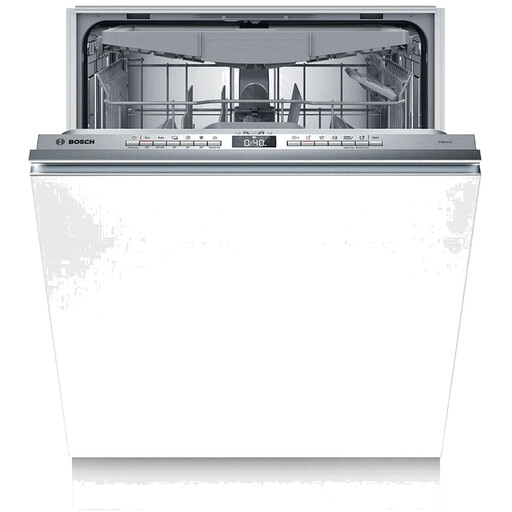
Bosch SMV4HVX03E Series 4, dishwasher, 60 cm, 13 place settings
The stated capacity and basket features can help you plan a combined load.
Fully integrated; this model is listed with PerfectDry, a height-adjustable upper basket and VarioFlex baskets. Whether its drying function suits your boxes depends on their care instructions.
View at Joybuy
 No image available
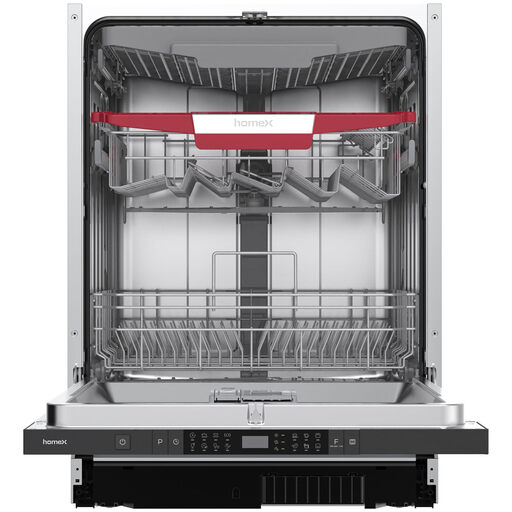
homeX DWFI601444C, fully integrated dishwasher, 60 cm, 14 place settings
The stated capacity and adjustable upper basket may be useful when planning a combined load.
Features listed include eight programmes, a cutlery drawer and automatic door opening. The product name also specifies 44 dB and energy class C.
View at Joybuy
 No image available
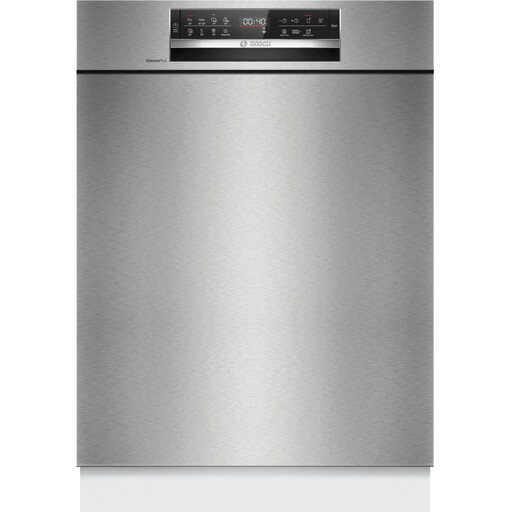
Bosch SMU6ECS12E Series 6, built-in dishwasher, 60 cm, 14 place settings
The stated capacity and basket features are important points to check when planning a combined load.
This model is listed with Max-Flex baskets, a cutlery drawer and height-adjustable baskets. The product details also specify Home Connect and 42 dB.
View at Joybuy
 No image available
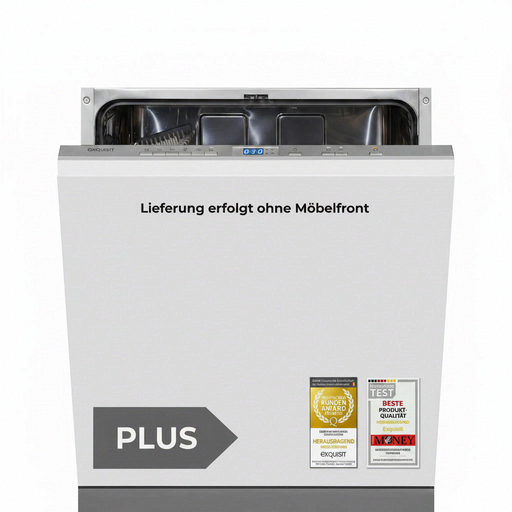
Exquisit PLUS EGSP52113-E-030E, fully integrated dishwasher, 60 cm, 13 place settings
The capacity and height-adjustable upper basket are useful to consider when planning a combined load.
This model lists six programmes, a delay start and Extra Drying. Check your lunchboxes’ care instructions independently of the appliance’s features.
View at Joybuy
 No image available
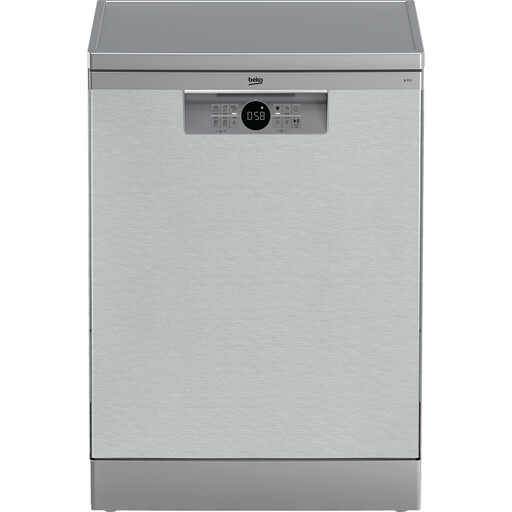
Beko BDFN16O45XW, freestanding dishwasher, 14 place settings
The stated capacity and height-adjustable baskets can help you plan to wash boxes and dinner dishes together.
Quick&Shine is described as a 90-minute cycle. SelfDry and a half-load function are also listed.
View at Joybuy
Frequently asked questions
Does the glass-and-fork symbol on a lunchbox mean it can go in the dishwasher?
No. The symbol indicates that an item is suitable for contact with food, not that it’s dishwasher-safe. The German consumer advice centre distinguishes between these details; check the care instructions for the container, lid and seal separately.
What should I measure before choosing a 45 cm or 60 cm model?
Measure the available space or installation niche and compare it with the dimensions of the specific model. Also check whether your boxes, lids and plates fit in the baskets together, and whether your usual amount of washing-up will regularly fill the appliance.
Will a plastic-drying function dry every lunchbox completely?
No, it doesn’t guarantee that every lunchbox will be completely dry. Bosch describes PerfectDry for standard plastic household items under specified test conditions; also check the care instructions for your boxes and lids.
Which energy label figures are useful for comparing models?
The energy label shows, among other details, electricity consumption per 100 Eco cycles, water consumption per Eco cycle, Eco programme duration and noise level. The German Environment Agency and European Commission describe these figures for the Eco programme; they don’t guarantee consumption figures for quick or intensive programmes.
Should I rinse lunchboxes before loading them?
Remove any large food scraps, but don’t rinse the dishes first. The German Environment Agency advises against pre-rinsing and recommends running the dishwasher only when it’s full.


